


Nagaland MLA Tseilhoutuo Rhutso seeks comprehensive pension audit and biometric verification amid rising expenditure and concerns over possible irregularities
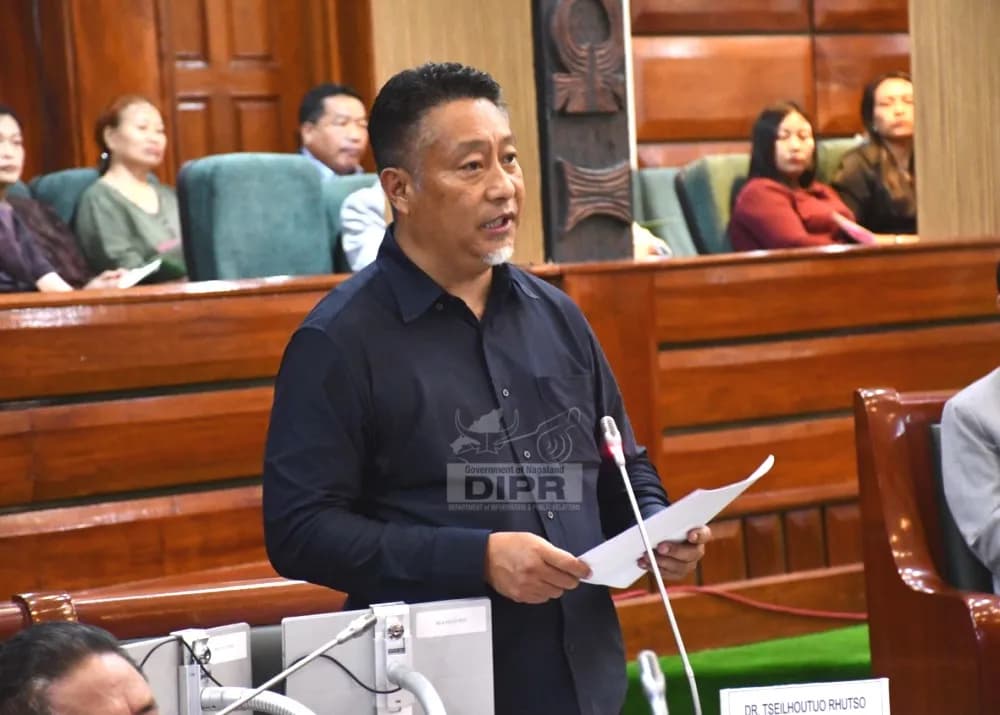
KOHIMA — Citing the scale of pension expenditure and possibility of unauthorised or duplicate pension drawals, MLA Tseilhoutuo Rhutso on Tuesday called for a comprehensive audit and Aadhaar-linked biometric verification of pensioners in Nagaland.
Raising the matter under Rule 49 during the Zero Hour on the first day of the Ninth Session of the 14th Nagaland Legislative Assembly, Rhutso said the pension system needed stronger verification mechanisms to protect genuine pensioners and prevent misuse of public funds.
According to data presented by the MLA, 63,370 retired government employees and nomineesare currently receiving pensions through the state treasury and the State Bank of India’s Computerised Pension Processing Centre (CPPC).
Of these, 31,714 pensioners receive payments through the SBI CPPC, comprising 20,406 life pensioners and 11,250 family pensioners, while 31,656 receive pensions through state treasuries.
The pension bill has also risen steadily, with the government spending INR 2,429.56 crore in 2023-24, INR 2,633.24 crore in 2024-25 and INR 2,679.12 crore in 2025-26.
Also read: FCRA Bill: Nagaland Assembly seeks withdrawal, wider consultations
Up to July of the current financial year, INR 1,049.63 crore had already been disbursed towards life and family pensions, according to the data.
Rhutso said the size of the pension system and its financial implications made regular verification essential. He raised concerns over possible cases in which pensions could continue to be drawn without timely reporting of a beneficiary’s death, as well as possible irregularities involving family pensions.
He pointed to issues such as delayed submission of death certificates, failure to report the remarriage or death of family pensioners and possible duplication of pension payments through the SBI CPPC and state treasuries.
The MLA also questioned the security of lost Pension Payment Order (PPO) books and the verification of pensioners who have settled outside Nagaland.
He sought greater scrutiny of life certificates and asked how physical verification was being conducted for beneficiaries residing outside the state.
Rhutso also raised questions over the eligibility of dependent parents and the possibility of fraudulent documentation being used in family pension claims. He called for such concerns to be investigated rather than treating them as established cases of fraud.
He proposed comprehensive, time-bound physical or Aadhaar-linked biometric verification of all pensioners and family pensioners through Jeevan Pramaan, the digital life certificate system.
He also proposed constitution of a high-level committee headed by the Finance Department, with representatives from the Department of Personnel and Administrative Reforms, Treasuries and the Accountant General, to conduct a detailed audit of pension records.
Another proposal was the creation of a centralised online pension portal for Nagaland to improve transparency and enable cross-verification of pension records.
Rhutso suggested that the Accountant General, Nagaland, obtain details of pensioners receiving payments through AG-to-AG arrangements from other states. These records, he said, could then be verified by the Finance and Treasury departments.
He further proposed that pensioners periodically update details of their spouses, children and other dependants, suggesting a 10-year cycle to reduce the possibility of manipulation of family pension records.
The MLA called for penal action against officials or other persons found to have deliberately manipulated documents or facilitated fraudulent pension claims.
He also proposed that the Assembly consider setting a deadline for voluntary disclosure of fraudulent pension drawals, suggesting December 31, 2026, or March 31, 2027. He said the measure could provide an opportunity to identify and verify questionable cases and recover funds where necessary.
Rhutso stressed that the measures were not intended to target genuine pensioners but to protect the rights and dignity of retired employees, widows and their families.
He said eliminating unauthorised pension payments, if identified through proper verification, could help reduce unnecessary expenditure and free public resources for development, healthcare, infrastructure and welfare.
“Pension is not a gift but a right and reward for decades of service,” Rhutso said, asserting that genuine pensioners should receive their dues on time and without difficulty.
JOIN OUR WHATSAPP CHANNEL