


TN Mannen said continued disunity is weakening the Naga movement while addressing the 70th General Conference of the Ao Students’ Conference in Chungtia village.
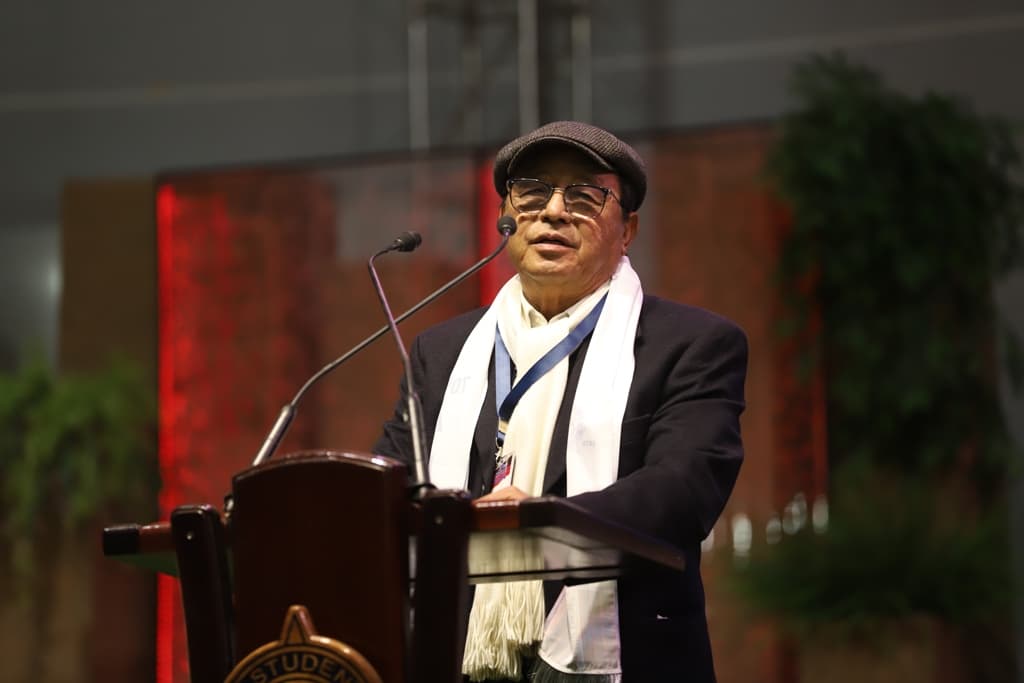
CHUNGTIA — TN Mannen, Advisor for Law and Justice and Land Revenue, on Thursday said the international community respects the Nagas for their perseverance in sustaining what he described as the world’s longest-running insurgency in pursuit of self-determination, but warned that continued disunity is undermining the original vision of the Naga movement.
Speaking as the valedictory guest at the 70th General Conference of the Ao Students’ Conference (AKM) held at Chungtia village in Mokokchung district, Mannen said the Naga movement, despite a shared objective, has fragmented into more than 20 factions. This lack of unity, he said, has steadily undermined the cause.
He urged the youth not to allow the sacrifices of thousands of Nagas and decades of hardship to go in vain, calling on them to take responsibility for carrying the struggle forward.
Mannen said that while Nagas aspire for a peaceful resolution, fragmentation extending to civil society organisations, churches and underground groups raises serious questions about the collective position and strength of the community.
Also read: Naga political leaders appeal to NSCN groups to end clashes in eastern Nagaland
Referring to the ongoing political processes, he said the Framework Agreement offers scope for deeper political negotiations or manoeuvre in the future, including shared sovereignty through defined competencies between India and the Nagas. In contrast, he said the Agreed Position adopts a more conciliatory approach to the political issue, with a stronger emphasis on economic packages.
In a democratic system where sovereignty ultimately rests with the people, Mannen said there was a need for the Naga public to reunite, participate actively and provide clear direction. He said the people must take direct action and firmly defend their rights.
Mannen said meaningful development in Nagaland would remain difficult until the political issue is resolved. “Our demand is straightforward: we seek an honourable, acceptable, and amicable solution,” he added.
Addressing the youth, he described them as the most valuable resource of the Naga people, with significant educational potential, but said this had not been effectively channelled towards economic growth.
He identified unemployment and slow economic growth as the two most pressing challenges facing the state, and said all stakeholders must consider ways to turn these challenges into opportunities.
Noting the rapid pace of change in today’s world, Mannen stressed the need for young people to stay updated with knowledge and information. He said the primary concern among Naga youth continues to be the lack of employment opportunities for a sustainable livelihood, and called for greater emphasis on productive investment, self-employment and private-sector opportunities.