


Samagra Shiksha Nagaland conducts SEL training for faculty and organises a science exposure trip to Guwahati for students.
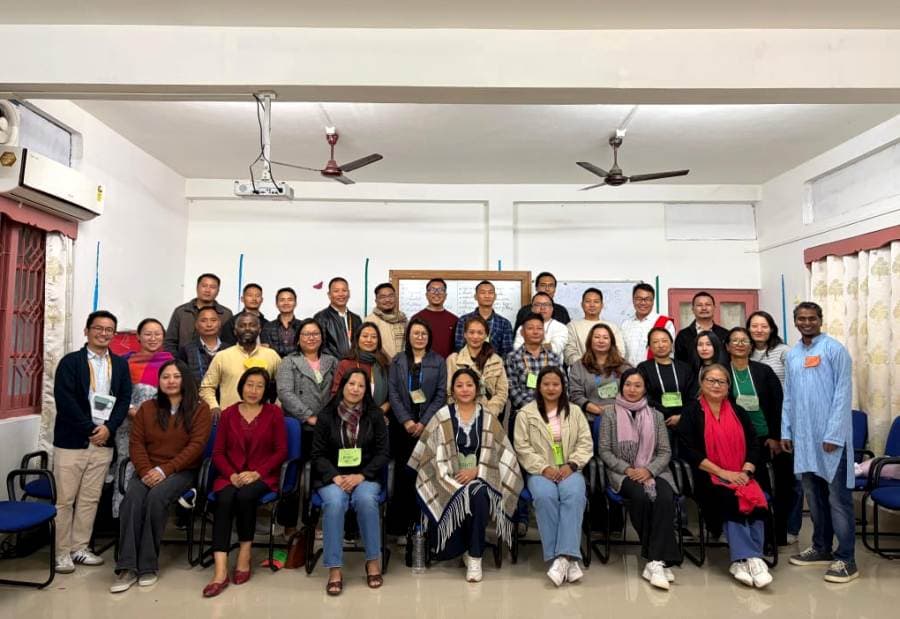
DIMAPUR — Samagra Shiksha Nagaland, in collaboration with Dream a Dream, conducted a three-day State Resource Group (SRG) training on Social Emotional Learning (SEL) for the Educational Block Resource Centre (EBRC) Trainer of Teachers (ToT) and District Institute of Education and Training (DIET) faculty from December 10 to the 12th at DAN, Chekiye, Chümoukedima.
According to an update, a total of 27 EBRC ToT and 2 DIET faculty nominated as SRG participants underwent intensive sessions designed to help them understand SEL as an approach to teaching and learning.
The training focused on four key areas: developing self-awareness, creating supportive learning communities, contextualising SEL within local realities, and building a joyful, inclusive learning environment.
Resource persons from Dream a Dream facilitated the sessions.
Officials from the Department of School Education and Samagra Shiksha noted that the SRG training is a crucial step toward integrating SEL into teacher education and classroom practices and that the trained SRG members will play a key role in future phases of teacher training and in supporting schools during SEL rollout.
Also read: Inclusive education workshop held in Kohima
Para Medical Training Institute renamed to Nagaland Institute of Allied and Healthcare
The four-day exposure programme was held from December 13 to the 16th with the objective of nurturing scientific curiosity and promoting research-orientated thinking among young learners.
During the visit, students were given first-hand exposure to advanced research facilities and laboratories. The interactions aimed to motivate students to explore careers in science.
The students were sensitised to various scientific programmes and facilities, including BIONEST–IASST services. They were encouraged to think innovatively and explore entrepreneurship opportunities in emerging sectors such as bioenergy, diagnostics, nanoscience, food processing and labelling, biopesticides, and allied fields.
Detailed demonstrations and discussions were also held on advanced instruments and research areas such as Atomic Absorption Spectrophotometry (AAS) and nanotechnology.