


Bumblebee Inclusive School, Kohima, host Training of Trainers programme.
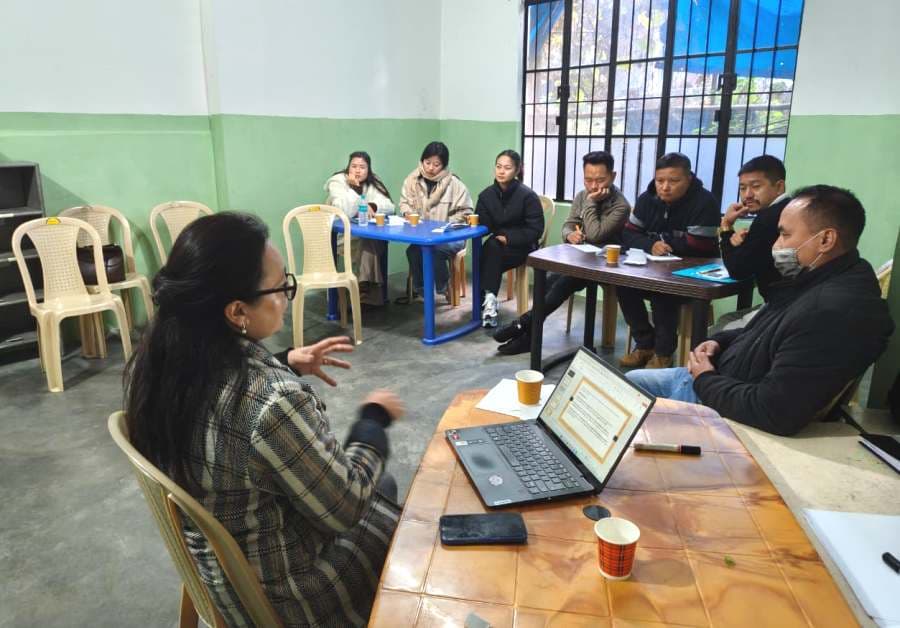
DIMAPUR — A one-day Training of Trainers (ToT) programme titled ‘From awareness to action: Inclusive teaching strategies for vocational education’ was conducted on Tuesday at Bumblebee Inclusive School, Kohima.
The programme was organised by Lend A Hand India, in collaboration with Samagra Shiksha Nagaland, under the Special CSR Project of LIC–Housing Finance Limited, an update stated.
The training was facilitated by Kopele Tepa, an inclusive education expert and founder of Bumblebee Inclusive School, who guided participants through structured sessions focused on strengthening inclusive teaching practices within vocational education.
The programme aimed to enhance trainers’ understanding of inclusive education and equip them with practical strategies to support learners with diverse needs.
The ToT brought together six vocational trainers from four Swadheen Direct Implementation Schools in Nagaland — Thinuovicha Memorial GHSS, Kohima; Dr N Kire GHSS, Kohima; GHSS Diphupar ‘A’, Chümoukedima; and GHSS Purana Bazaar, Dimapur , creating a platform for reflection, learning, and peer exchange.
Also read: NEP skill initiative: Capacity building ToT held in Dimapur
The sessions began with reflections from earlier ToT workshops, followed by an introduction to different types of disabilities. Key highlights included in-depth discussions on inclusive teaching methodologies, with a strong focus on Universal Design for Learning (UDL), classroom strategies, practical examples, and insights relevant to vocational education settings.
The latter half of the programme emphasised the importance of inclusion in vocational education, underscoring the need to create equitable learning environments that enable all students, including those with disabilities, to access skill-based education meaningfully.
An open discussion and Q&A session allowed participants to share experiences, clarify doubts, and explore ways to apply inclusive strategies in their respective schools.
The programme concluded with a collective reaffirmation of commitment by the trainers to implement inclusive practices in vocational classrooms, thereby contributing to more accessible and learner-centric skill education across Nagaland.