


Consultative meetings on Reform Utsav held in Mokokchung and Phek to foster citizen-centric governance.
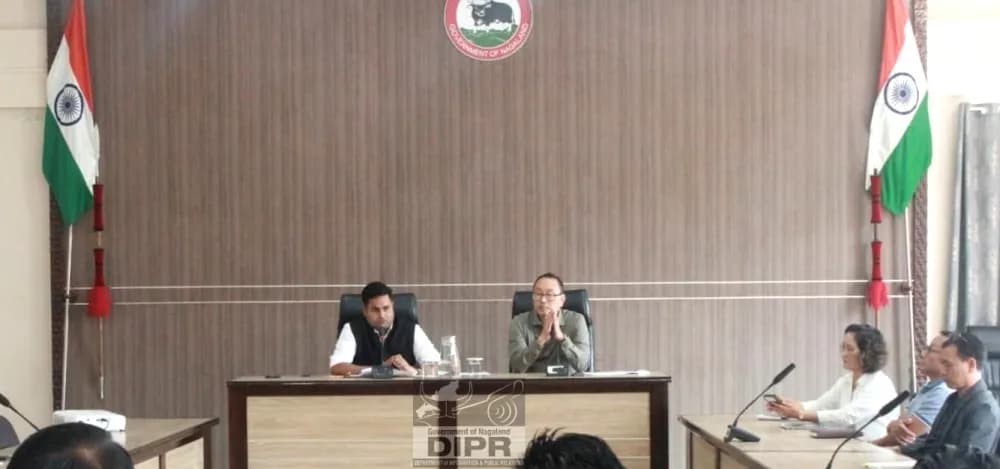
DIMAPUR — Consultative meetings under the State Level Governance Framework of Reform Utsav were conducted in Mokokchung and Phek districts on Monday to discuss administrative reforms and citizen-centric governance.
Mokokchung: A high-level consultative meeting was held at the deputy commissioner's conference hall in Mokokchung.
According to a DIPR report, the meeting was attended by Kekhrievor Kevichüsa, Commissioner and Secretary for Urban Development and Municipal Affairs and State Nodal Officer for Districts (SNODs), alongside Deputy Commissioner (DC) of Mokokchung Ajit Kumar Verma.
Senior officials from both Kohima and Mokokchung districts, tribal leaders, student leaders, village council members, and village development board (VDB) members participated in the discussions.
The agenda centred on the core objectives of Reform Utsav, covering key developmental topics including agriculture and marketing reforms, building bye-laws, VDB functioning, rural development, and skill development.
In his opening remarks, DC Verma provided the foundational background of the initiative. He stated that the primary aim of Reform Utsav is to institutionalise citizen participation in governance and effectively convert public feedback into actionable administrative and structural reforms to ensure efficient service delivery to citizens.
Read more local news: Peren, Tuensang DPDBs review development activities
Addressing the gathering, Kevichüsa outlined the structural timeline for the initiative's rollout across three primary operational phases: the establishment of governance frameworks, localised sensitisation activities, and department-level awareness campaigns throughout September; the official nationwide launch of the Reform Utsav public portal and community outreach activities on October 2; and the immediate prioritisation and rollout of quick-win operational reforms alongside charting long-term roadmaps for complex structural revisions in November.
Kevichüsa stressed that Reform Utsav is a bottom-up approach where ideas and suggestions are sought directly from citizens at the grassroots level to be carried up to the top level for effective public service delivery.
Clarifying the scope of the initiative, he made a clear distinction between constructive suggestions and individual grievances, urging all stakeholders and the public to focus strictly on offering suggestions aimed at systemic reforms.
Phek: A discussion meeting on the Reform Utsav for the Phek and Meluri districts was held at the DC's conference hall in Phek. DC Phek Rhosietho Ngouri chaired the programme.
Sarita Yadav, Secretary and Administrative Head of Department of the Higher Education Department and State Nodal Officer for Reform Utsav for Phek and Meluri, briefed the house about key components, functions, and features of Reform Utsav, such as sensitisation of the public in September and the launch of the portal on October 2. She requested both the DC of Phek and the DC of Meluri to constitute a district-level committee by September.
The meeting deliberated on the responsibilities of departmental officers across both districts regarding public sensitisation. DC Phek Ngouri stated that community participation is of utmost importance for all-round improvement, comparable to Viksit Bharat 2047.
DC Meluri Phuleshe K Yepthomi requested heads of Phek district offices who oversee Meluri district to guide subordinate officers posted in Meluri properly regarding Reform Utsav.
Neitsho Wezah, Liaison Officer for Higher Education and Nodal Officer (Reform Utsav), along with heads of departments of Phek and Meluri districts, attended the programme.