


Patkai Christian College in Chümoukedima observes World Philosophy Day with discussions on plural challenges
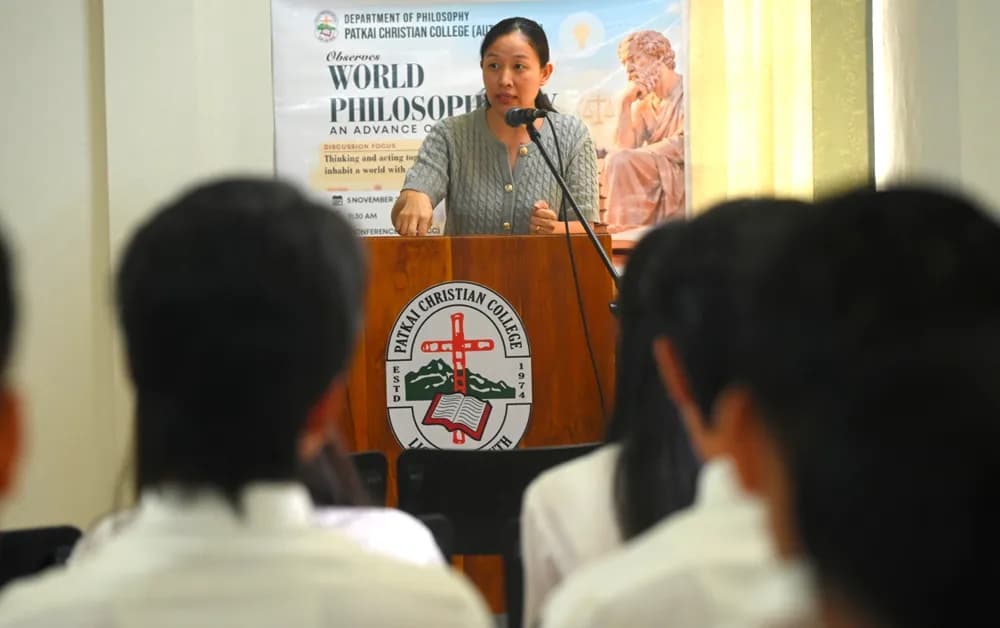
DIMAPUR — Patkai Christian College (Autonomous) commemorated World Philosophy Day in advance with a programme organised by the Department of Philosophy on the theme, “Thinking and Acting Together: Philosophy to Inhabit a World with Plural Challenges” on Thursday.
On the occasion, Assistant Professor and programme leader Dr. Wojanbeni S Yanthan noted philosophy's role in encouraging young people to think critically, reflect on their lives, and contribute to positive changes in the next generation's mindset.
She underscored UNESCO’s initiative to promote philosophical reflection, meaningful dialogue, and critical thinking as essential tools for addressing the challenges of an increasingly diverse world.
As part of the programme, third-year student in the Department of Philosophy Ngashikmi Zingkhai delivered a talk on the theme. He stated that differences in perspective do not necessarily indicate that one viewpoint is correct and another is incorrect. Instead, he underlined the importance of learning to think and act collectively despite differences of opinion.
Read more local news: Nagaland University creates awareness on single-use plastics
SAMETI conducts training on youth engagement in agriculture in Medziphema
He observed that many conflicts arise from the inability to acknowledge and accept alternative viewpoints and highlighted how philosophy encourages individuals to question their surroundings, examine the world critically, and develop a deeper understanding of diverse perspectives. In conclusion, he shared three key reflections: think beyond oneself, respect differences, and translate thoughts into action.
She further reflected on the importance of embracing differences as an essential aspect of philosophical thinking and collective living. She outlined five key principles for fostering a more inclusive and responsible society: acknowledging the possibility of error when thinking together; recognising that living together does not require uniformity of thought; critically examining even well-intentioned actions; understanding that knowing what is right entails responsibility; and extending responsibility to individuals beyond one's immediate community.