


Aspirants in Kohima have opposed alleged backdoor and contractual appointments, demanding transparent, merit-based recruitment through NPSC and NSSB.
-1791121229944.webp&w=1200&q=75)
KOHIMA — Aspirants have voiced strong opposition to alleged backdoor and contractual appointments in government departments, asserting that such practices undermine merit-based recruitment and the aspirations of job seekers in the state.
The concerns were raised during a public discussion on “Fair recruitment, transparency and merit” organised by the Nagaland NET Qualified Forum (NNQF) and Combined Technical Association of Nagaland (CTAN) at Old NST Parking, Kohima, on October 3.
The discussion focused on issues surrounding examinations conducted by the Nagaland Public Service Commission (NPSC) and Nagaland Staff Selection Board (NSSB).
Participants called for greater transparency in recruitment and demanded that genuine sanctioned posts be advertised through the appropriate recruitment agencies rather than being filled through contractual or other backdoor arrangements.
Also read: Application form is not Instagram, Nagaland State Selection Board tells aspirants
One of the aspirants said contractual engagements should not be converted into permanent government jobs through the backdoor, and called for transparency in the recruitment process.
He pointed out that Nagaland has 15 government colleges with 636 assistant professor posts, of which 491 are regular sanctioned posts and 145 are fixed-pay contractual positions. He also noted that no new posts had been created since 2017.
WATCH MORE:
Another aspirant said that if the government was sincere about the Manpower Rationalisation Committee and the state’s financial position, it should first reduce fixed-pay and contractual appointments and ensure that all genuine posts were advertised without delay.
A representative of the Naga Research Scholars Forum Shillong, a PhD scholar, expressed concern over the lack of clarity regarding career opportunities for research scholars after completing their doctoral studies.
She said pursuing a PhD was a long and arduous process, yet there was little clarity on how scholars could contribute to society when relevant positions were not available.
She pointed out that several government departments required specialised expertise but had no corresponding positions.
According to her, around 17 scholars who are members of the Naga Research Scholars Forum Shillong had completed their PhDs in the past year.
However, they continued to question what opportunities awaited them in society and their professional lives.
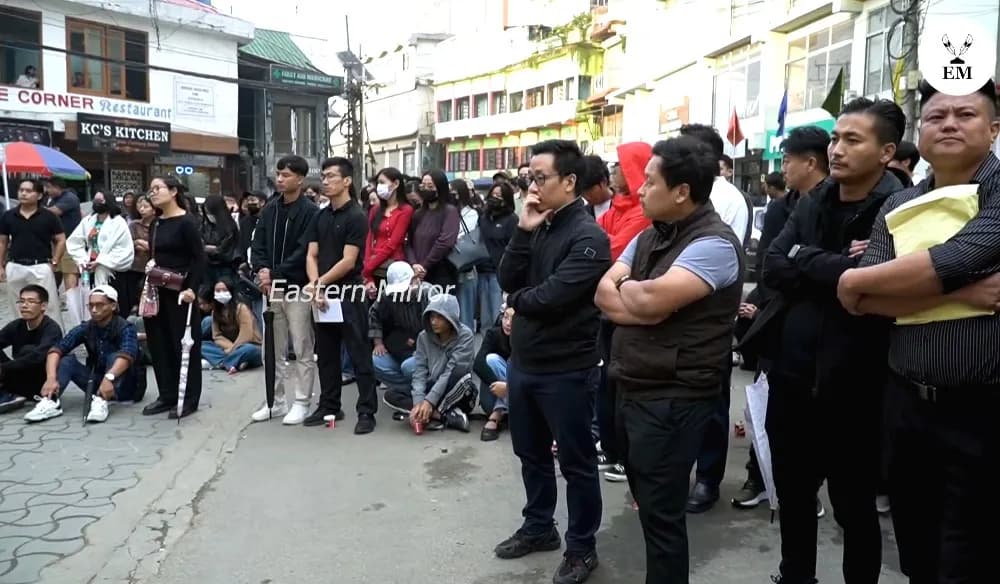
A representative of the All Nagaland Pre-Service Teachers Association said trained teachers should not be left without employment opportunities while backdoor appointees were given job security.
One of the organisers clarified that the public discussion was not intended to target individuals or create unnecessary confrontation, but to understand the issues, seek answers and identify constructive steps forward.
He said recruitment examinations were not merely about marks or appointments, but involved years of preparation, time, expectations, livelihood and the future of aspirants.
NNQF core member Dr. Videkhono described the recent High Court judgment concerning contractual appointments as a landmark judgment in favour of the petitioners.
She said that for nine years, many aspirants had lost faith in the system, but the judgment had helped restore their faith in the judiciary.
She said the dialogue was also aimed at restoring faith and trust in the system and among the people.
“We live in a highly corrupted society and therefore the idea of justice is diluted. You get confused about what justice is. But we have to start somewhere and this is where we start,” she said.
Videkhono said the judiciary had now done its part and that the responsibility was on the government to create posts and forward them to the NPSC for recruitment.
CTAN co-convenor Kaqheto said the dialogue was intended to remind people that government policies and decisions could have serious consequences for the future of young people.
He urged aspirants not to remain silent when they believed they were legally entitled to seek justice.
“When government does illegal work, we have to come to the street and ask what is rightfully ours,” he said, warning that aspirants could eventually be compelled to seek accountability from MLAs, bureaucrats, technocrats and government departments.
CTAN convenor Meshenlo Kath said the association would be compelled to return to the streets if its demand for deletion of a provision in the recent Office Memorandum was not addressed.
The CTAN had earlier demanded deletion, in toto, of Point 2 and its sub-points (a) to (f) and had submitted a representation to the Chief Secretary seeking action on the matter.
JOIN OUR WHATSAPP CHANNEL