


An international workshop at Tetso College, Chümoukedima, explored Naga food systems, seed preservation, indigenous knowledge, traditional crops and community well-being.
Seed preservation takes centre stage at Tetso College workshop
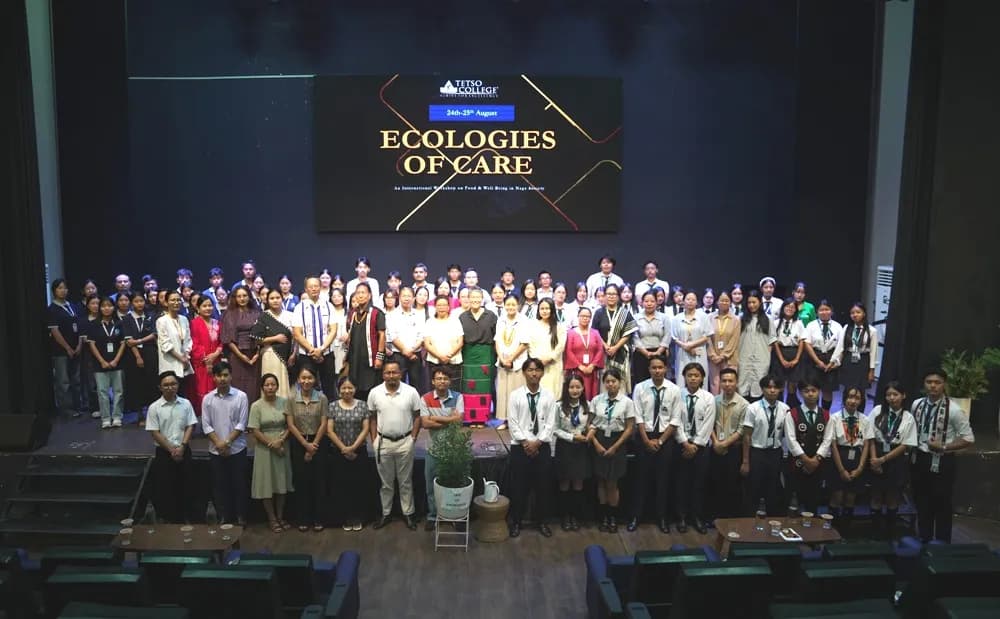
DIMAPUR — A two-day international workshop on “Ecologies of Care: An International Workshop on Food & Well-being in Naga Society” concluded at Tetso College, Chümoukedima, on Tuesday, bringing together scholars, academics, farmers, food practitioners and students to discuss Naga food systems, indigenous knowledge and community well-being.
Organised jointly by Tetso College, Unity College, Asufii Christian Institute (ACI), Mao, and the University of California, Santa Cruz, Centre for South Asian Studies, the workshop examined the links between food, culture, ecology, agriculture and well-being.
It also stressed the need to preserve traditional crops and seeds along with the knowledge, practices and cultural values associated with them, Tetso College stated in a press release.
The workshop opened on August 24 with a welcome programme and the watering of the ‘Tree of Knowledge’. Tetso College principal Dr. Hewasa L Khing stressed the importance of progress through collectivity and conservation through action.
Prof. Dolly Kikon, who delivered the vision of the workshop, highlighted the long-standing relationship of Naga communities with the land as food growers, custodians and knowledge keepers.
The keynote address was delivered by Indigenous Food Sovereignty activist Seno Tsuhah, who emphasised the inseparable relationship between seeds and food systems.
Also read: Help map Nagaland’s hornbills: Conservation forum seeks sightings, nesting sites
“There is no food system without the seed system,” she said, stressing that seeds, though small, have the potential to provide food and sustain future generations.
Tsuhah expressed concern over the growing disconnect between younger generations and traditional food systems and cautioned against excessive dependence on market-based food and seeds.
She called for greater intergenerational knowledge exchange, saying seed preservation could help restore dignity and indigenous knowledge while giving communities greater control over what, where and how they grow their food.
As part of the workshop, seed libraries were launched at Tetso College, Unity College and ACI Autonomous under the initiative “Save a Seed Today: Save the Future”.
The initiative, conceived under the guidance of Prof. Kikon, aims to promote seed preservation and encourage students to engage with biodiversity and ecological sustainability.
Dr Prithibi Prathibha Gogoi, HoD, Sociology, Tetso College, said seed saving was a traditional practice involving the gathering, selection, drying and storage of seeds for future use.
She stressed that preserving seeds for future generations was not a new concept but part of cultural traditions.
Students of the Sociology Department collected and catalogued seeds from more than six districts of Nagaland, including varieties sourced from weekly markets.
The seed library will maintain information on indigenous seeds and promote discussions on seed conservation and climate change. Representatives of the three institutions also signed a joint declaration pledging to preserve seeds, share knowledge and promote student interest in food sovereignty and ecological sustainability.
Day two featured technical sessions on ancestral foodways and the Naga food system.
In a session on “Forgotten Grains, Renewed Health”, Dr. Daili Neli of ACI highlighted the nutritional importance of millet among the Mao Nagas and its connection with ancestral knowledge and culture.
He noted that the decline of traditional grains also meant the loss of recipes, preparation methods, agricultural practices and memories associated with them.
Dr. Mary N Odyuo, associate professor of Agricultural Extension Education at Nagaland University, expressed concern over the decline of traditional seeds and agricultural practices, particularly as Naga traditions are largely transmitted orally.
She stressed that continued practice was essential to preserving indigenous knowledge.
Another session, “The Naga Plate: Where Does Our Food Come From?”, explored the relationship between food, farming and faith.
Chef Aketoli H Zhimomi of Ethnic Table, Dr. James Kalong of Oriental Theological Seminary and farmer Thejiano Makritsu participated in the panel moderated by Dr. Loina Shohe of Unity College.
Dr. Kalong described food as a relational element capable of connecting people and building relationships, while encouraging participants to reflect on where their food comes from, who grows it, how it is produced and how the environment is treated.
The workshop also featured a student and scholars’ session, where participants shared experiences and perspectives on food, identity and community, highlighting the importance of reconnecting everyday food choices with culture, ecology and well-being.