


NCCAF and Nature Conservation Foundation seek public sightings and nesting records to map Nagaland’s hornbills and guide conservation efforts
DIMAPUR — From a village elder’s memory of an old nesting tree to a birdwatcher’s phone photograph, Nagaland’s scattered hornbill records could soon be brought together under a state-wide community-led conservation effort.
The Nagaland Community Conserved Areas Forum (NCCAF), in partnership with Nature Conservation Foundation (NCF), has launched an initiative to identify and document hornbill nesting sites, regular sightings and important habitats across the state, seeking the help of village councils, community conservation groups, forest-dependent communities, birdwatchers, photographers, students, researchers and the public.
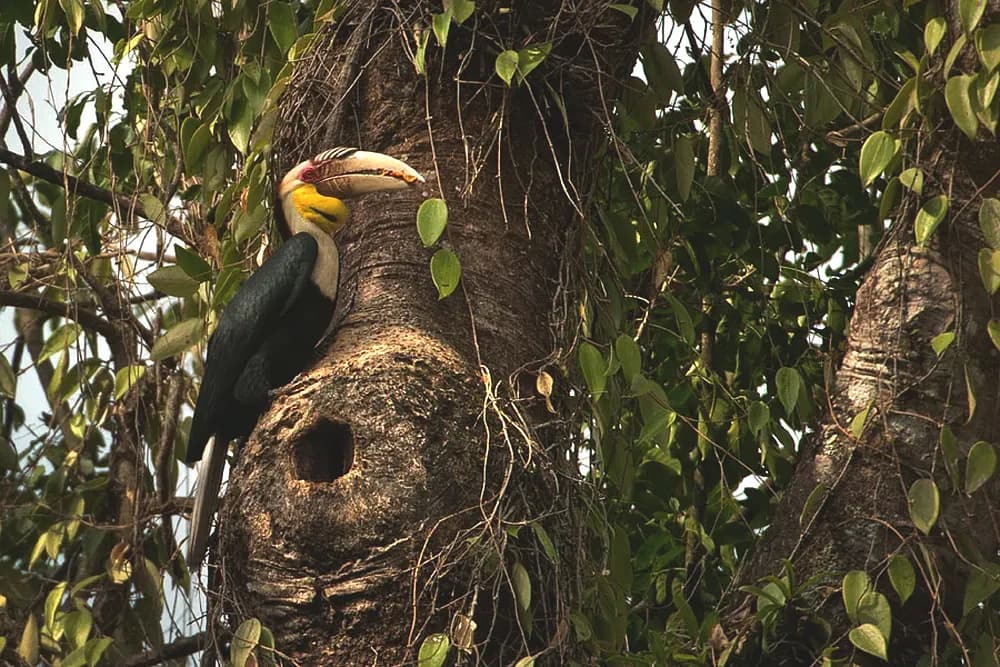
In a statement, the forum said that Nagaland’s forests support several species of hornbills, which play an important role in forest regeneration as major seed dispersers. Their continued presence can also indicate the condition and continuity of forests, it added.
However, much of the available information on hornbills in Nagaland remains scattered across local knowledge, individual observations and isolated records.
Under the initiative, NCCAF is seeking information on active and previously used nesting sites, regular sightings, feeding and roosting areas, repeated sightings of pairs or family groups, photographs or videos showing breeding behaviour, and local or traditional knowledge about nesting trees and habitats.
The forum said even an old photograph or recollection of a nest used years ago could help identify important hornbill landscapes.
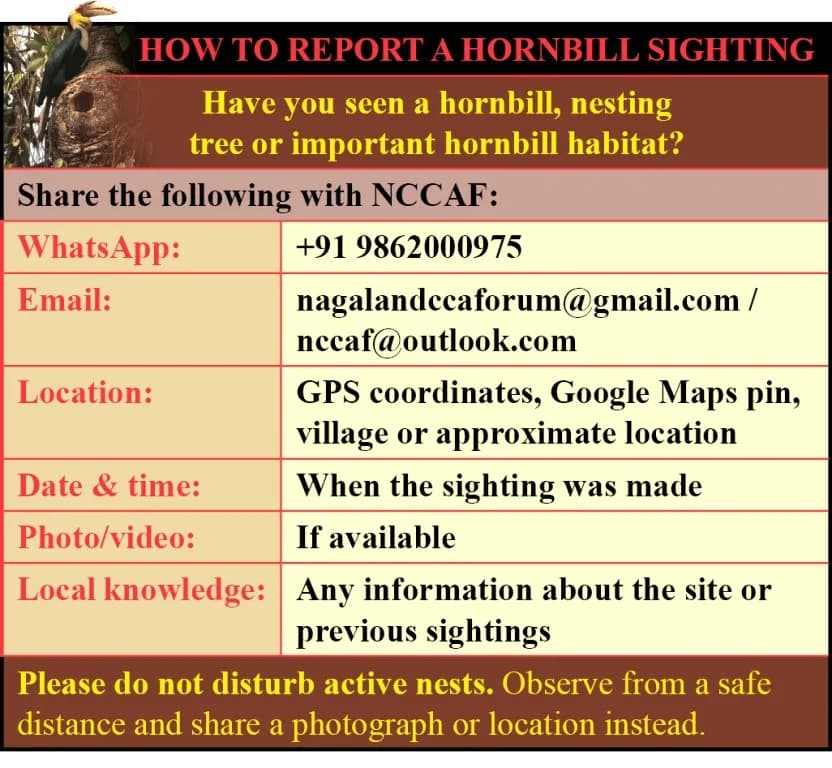
It is particularly encouraging people to submit photographs, videos and location information. GPS coordinates are preferred, though a Google Maps pin, village name or approximate location would also be useful.
According to the NCCAF, the records would help it and NCF build a better understanding of hornbill distribution, nesting locations and important habitats, identify sites for field verification and, where appropriate, develop longer-term community-based conservation measures.
These could include protecting important nesting trees, community-based monitoring of breeding sites, documenting local knowledge, identifying threats to nesting and feeding areas, and strengthening habitat protection around important sites.
The forum is also exploring the potential use of artificial nest structures for hornbills in suitable locations where natural nesting cavities are scarce.
It cautioned, however, that artificial nests would not be a one-size-fits-all solution and any such intervention would require assessment of habitat, hornbill species and nest-site requirements, along with technical guidance and the full participation and consent of the concerned community.
It added that the initiative draws on NCF’s experience with community-based hornbill conservation in the Eastern Himalayas, including its Hornbill Nest Adoption Programme in Arunachal Pradesh, where village-based nest protectors identify, monitor and guard hornbill nest trees on community land.
The programme has helped more than 200 hornbill chicks successfully fledge through community protection of nesting sites.
The forum also said it would not publicly disclose precise locations of sensitive active nests. GPS coordinates and other precise information would be kept confidential and shared only where necessary with the concerned landowning community and NCF for legitimate conservation, research and monitoring purposes.
It clarified that the initiative was not an enquiry into hunting and that information submitted would not be used to initiate action against individuals, families or villages on the basis of past hunting or other information disclosed through a hornbill record.
It further said no survey, monitoring exercise or field visit would be undertaken on community, clan or privately held land without prior consultation and approval from the appropriate village institution and concerned landowning authority.
The forum has invited people with hornbill sightings, photographs, videos or information about nesting sites to share the records with NCCAF through WhatsApp at +91 9862000975 or email at nagalandccaforum@gmail.com / nccaf@outlook.com.
JOIN OUR WHATSAPP CHANNEL