


Researchers discover India's largest stingless bee in Nagaland's Wokha, adding a new species to the country's biodiversity records
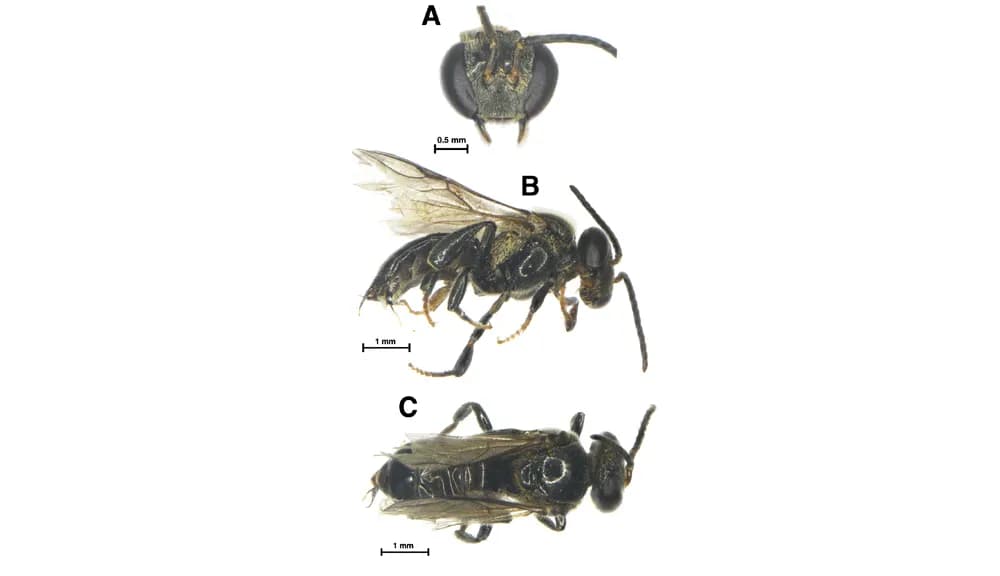
DIMAPUR — A team of researchers from Nagaland University (NU) and the Zoological Survey of India (ZSI) has discovered a new species of stingless bee in Wokha district, a finding that not only adds a new species to India's biodiversity but also identifies the largest stingless bee ever recorded in the country.
The new species, Tetragonula yikhumensis, named after Yikhum village where it was first collected, was formally described in the international journal Sociobiology, published on July 22.
Led by researcher Noyingbeni M Odyuo of NU along with scientists from the ZSI, the study found that the newly identified bee is a subterranean species that nests underground and is distinguished by its size, unique morphology and nest architecture. The researchers described it as the largest stingless bee species known from India.
According to the study, extensive fieldwork was carried out between November 2022 and June 2025 across 12 locations in Wokha district, where male and worker bees were collected and examined using detailed morphometric and taxonomic analyses.
Also read: In Nagaland’s forests, two new spider species spin a scientific surprise
Nagaland: Ancient caves in Noklak reveal 3,500-year-old human settlement
The researchers reported that T. yikhumensis measures about 5.59 mm in body length, making it the largest stingless bee recorded in India. The discovery increases the number of stingless bee species known from India from 25 to 26, while the genus Tetragonula now comprises 18 species in the country.
The study also marks several firsts for Nagaland. It is the first stingless bee species from the state to be described using detailed morphological characteristics of both male and worker bees, and the first subterranean Tetragonula species reported from Nagaland. It is only the second underground-nesting species of the genus documented in India.
Researchers excavated three nests during the study and found that the colonies were built more than two metres below the ground. The nests comprised distinct chambers for honey, pollen and brood, protected by hard layers of batumen and connected to the surface through narrow entrance tunnels.
The paper added that the Lotha community in Wokha refers to these subterranean stingless bees as "litsuk", or "ground bees", and highly values their honey and bee pollen for their medicinal properties.
Stingless bees are regarded as important pollinators and are widely valued for their medicinal honey and other hive products. Found mainly in tropical and subtropical regions, they have existed for more than 65 million years and play a crucial role in maintaining ecosystems and agricultural productivity.