


Zoological Survey of India researchers discover two new spider species in Nagaland’s forests.
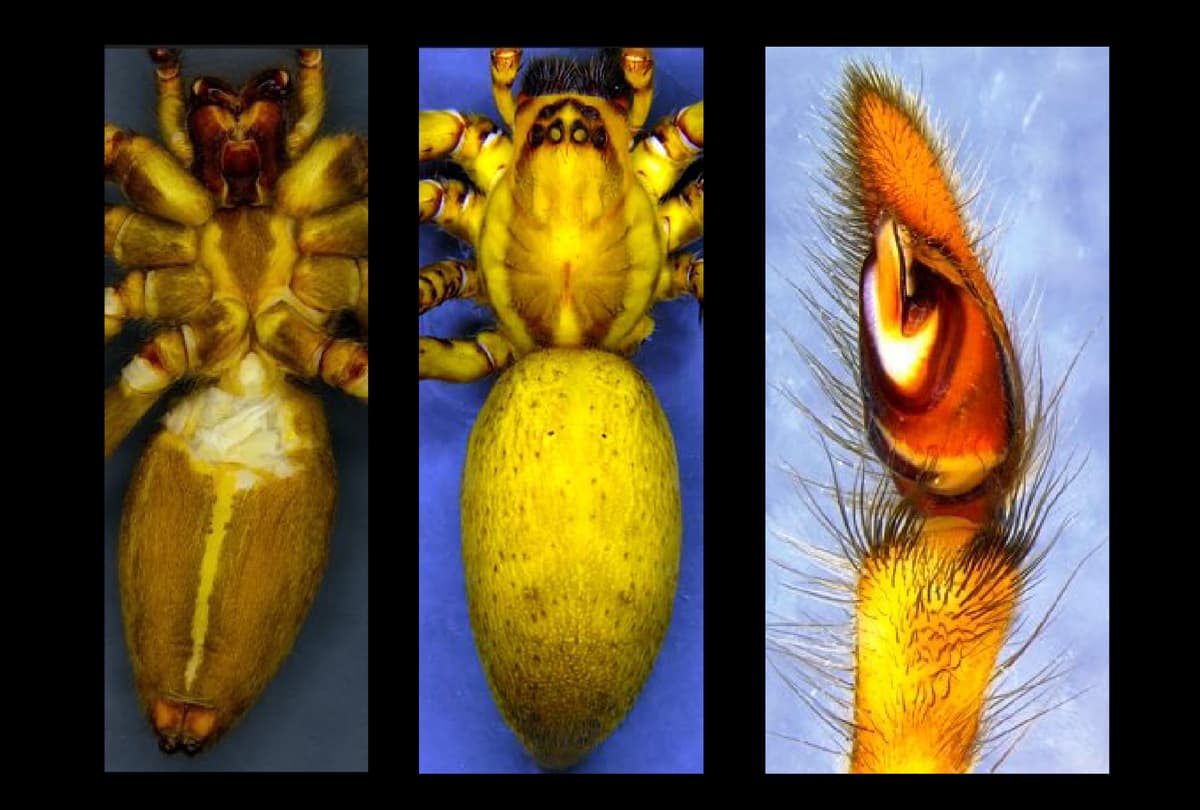
DIMAPUR — Two remote villages in Nagaland have crawled into the global science spotlight after researchers discovered two previously unknown spider species hidden within their forests, shedding fresh light on the Northeast’s vast but little-explored biodiversity wealth.
In what researchers describe as a major contribution to the understanding of Northeast India’s little-explored arachnid diversity, scientists from the Zoological Survey of India (ZSI) have discovered two new species of lace-sheet-weaver spiders during a pre-monsoon expedition through the forests of Ntu village in Peren district and Phenshunyu village in Tseminyu district.
The findings, recently published in the international journal Zootaxa, also include the first-ever Nagaland record of Psechrus himalayanus, significantly extending the known range of the species beyond the Himalayan belt into the Indo-Burma biodiversity hotspot.
The newly discovered spiders—Psechrus ntu and Psechrus phenshunyu—were named after the villages, where the species were first documented.
Also read: ULB bypolls announced in Nagaland; voting on June 16
In a press release, the researchers said that the naming honours the close ecological and cultural ties between Nagaland’s indigenous landscapes and its hidden wildlife wealth.
“Surrounded by dense subtropical forests, rocky terrain and mist-laden hills, these villages represent largely unexplored habitats that continue to reveal remarkable faunal discoveries,” they stated.
According to the researchers, the spiders possess elongated, slightly flattened bodies and unusually long legs that allow them to move rapidly across their webs.
Their natural camouflage and retreat-building behaviour beneath rocks, tree roots and roadside cuttings made them exceptionally difficult to detect during field surveys.
The study was carried out by arachnologists Dr. Puthoor Pattammal Sudhin, Shouvik Mali and Dr. Souvik Sen of the ZSI, with support from local spider enthusiasts Nathanael PA Newmai, Tesiding Newmai and Kvuthonglo Keppen.
The researchers said that one of the most fascinating observations during the expedition involved a male Psechrus himalayanus sharing the web of a female Psechrus phenshunyu—a rare instance of heterospecific cohabitation among psechrid spiders that could provide important clues into behavioural ecology and species interaction.
They expressed belief that the discovery may only scratch the surface of Northeast India’s unexplored spider diversity.
At present, only nine species of the genus Psechrus are known from India, many with fragmented distributions.
Researchers now suspect that many more species remain undocumented across the remote forests of the Northeast, where scientific exploration has remained limited for decades.
“The discoveries of P. ntu and P. phenshunyu therefore not only enrich India’s known spider diversity but also reinforce the importance of systematic biodiversity surveys in one of the country’s least explored ecological regions,” they stated.
Ntu village chairman Meranlubo Rentta and Head GB Tenginpingbo Newmai expressed happiness over the naming of Psechrus ntu after their village, while Phenshunyu Head GB Nyelo Kesen welcomed the recognition brought by the discovery of Psechrus phenshunyu.