


Naga Hospital Authority Kohima becomes the first district hospital in Nagaland to secure the National MusQan Certification.
Share


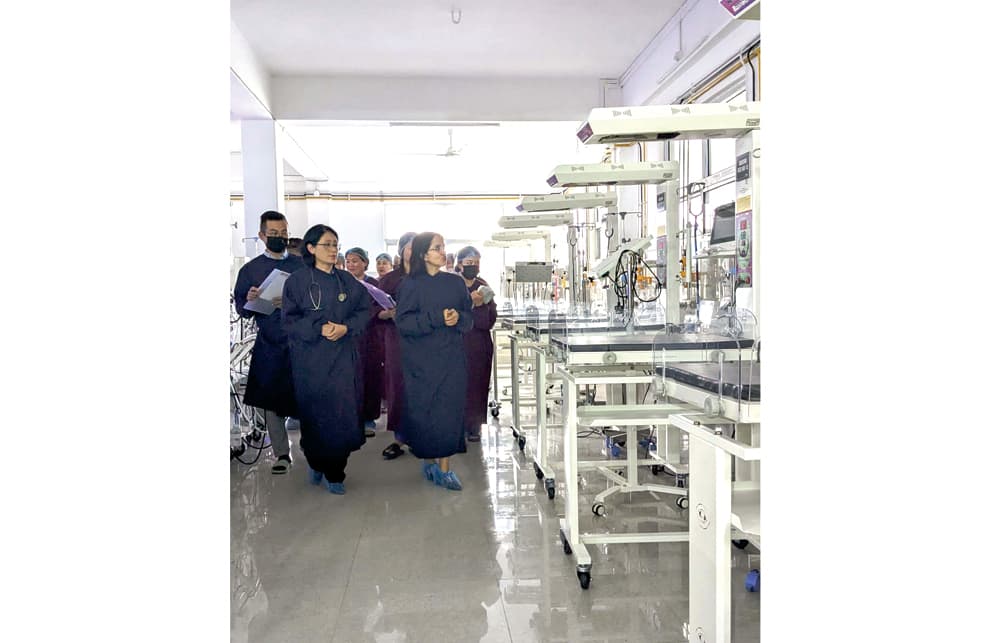
DIMAPUR — Naga Hospital Authority, Kohima (NHAK), has been granted the National MusQan Certification on May 18, making it the first among the district hospitals in Nagaland to receive this recognition.
According to an update, the hospital successfully underwent the National Quality Assurance Standards (NQAS) MusQan National Assessment on April 17 and 18 under the leadership of Dr. Rüütuo-ü Sorhie, Consultant and HoD of the Department of Paediatrics; Dr. Khriemenuo Koza, Senior Specialist (Paediatrician); and Dr. Avono Sophie, Senior Specialist (Paediatrician).
The MusQan National Assessment was conducted by Samiran Sarma from Assam and Krishna Kumari Sharma from Sikkim, who are empanelled NQAS National Assessors.
The nodal officers for extending facilitatory support for the assessment from the district and state were Dr. Asano Sophie, Deputy CMO of Kohima; Dr. Imnanoktsung Longchar, DQM of Kohima; and Dr. Longri Kichu, Senior Public Health Consultant, HEOC.
Also read: Nagaland fertility rate rises to national average of 2.0, says NFHS-6
Nagaland signs Jal Jeevan Mission 2.0 pact, targets universal tap water coverage by 2028
The overall MusQan score of the NHAK Paediatrics Department was 93.11 per cent. The Paediatrics ward scored 88.68 per cent, the Paediatrics OPD scored 91.28 per cent, the Special Newborn Care Unit (SNCU) scored 96.32 per cent, the Nutrition Rehabilitation Centre (NRC) scored 95.81 per cent, and the Patient Satisfaction score was 84 per cent.
MusQan is an initiative of the Government of India aimed at improving the quality of care for children up to 12 years of age in public health facilities.
The programme seeks to ensure the delivery of quality, child-friendly healthcare services and reduce preventable newborn and child morbidity and mortality.
The key strategies of MusQan include Emergency Triage Assessment and Treatment (ETAT), Kangaroo Mother Care (KMC) and Development Support Care, Infection Prevention Control (IPC) and Biomedical Waste Management, record-keeping, clinical protocols, and Respectful and Family Participatory Care (FPC).