


Three-day educational evaluation workshop concludes at Mokokchung College of Teacher Education in Mokokchung.
Share


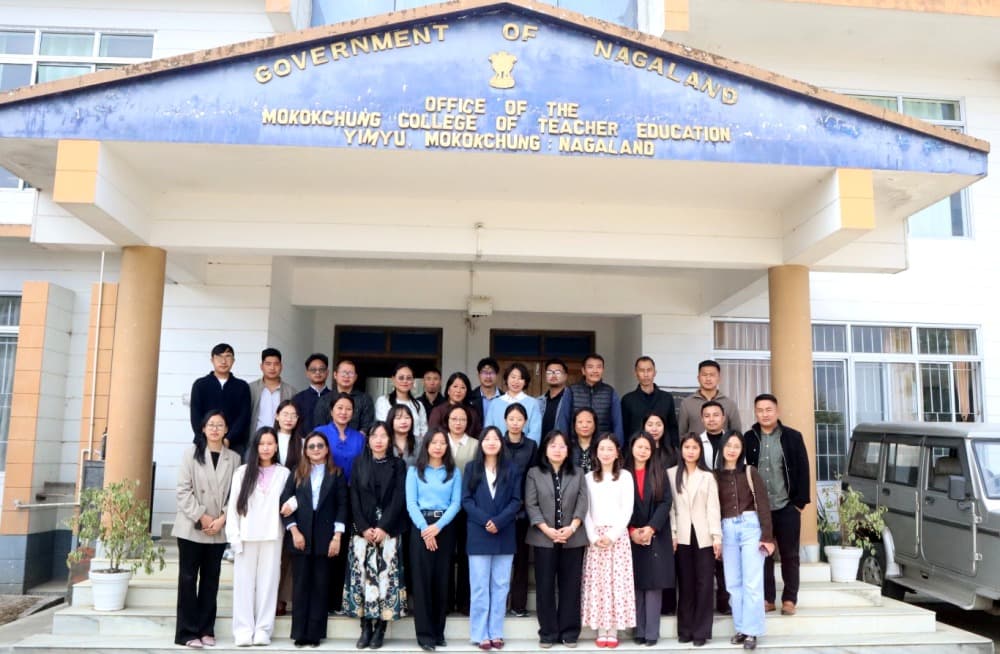
MOKOKCHUNG — A three-day intensive workshop on educational evaluation for faculty in higher education institutions concluded from on February 27 at Mokokchung College of Teacher Education (MCTE) in Mokokchung.
The programme sought to scrutinise prevailing assessment methods and build stronger evaluation expertise among college and university educators.
A total of 27 faculty members took part, with 17 hailing from government colleges and 10 from private institutions- ensuring broad representation from the state's higher education landscape.
The sessions were led entirely by MCTE's faculty, leveraging their scholarly knowledge and practical insights to guide discussions.
The workshop placed strong emphasis on clarifying the core purposes of evaluation in tertiary education, while equipping attendees with practical abilities to create robust and purposeful assessment instruments.
Also read: Mid-career training for Nagaland Civil Service officers concludes in Kohima
Nagaland: Dimapur, other districts to witness six more days of dry spell
Participants delved into real-world application of evaluation practices, exploring why traditional approaches remain prevalent, and examining their effects on classroom instruction, student engagement, and overall academic performance.
Among the central themes addressed were: defining the objectives and boundaries of educational assessment; crafting precise and measurable learning outcomes; ensuring alignment between assessments and curriculum goals; building trustworthy and consistent evaluation tools and analysing results to inform sound academic choices.
The format featured lively group discussions, self-reflection exercises, and extensive hands-on activities which prompted educators to pinpoint shortcomings in existing systems and reframe assessment not just as a grading mechanism, but as a powerful driver of genuine learning.
Feedback from attendees highlighted the event's value.
One participant called it an invigorating opportunity to revisit and solidify fundamental ideas in educational evaluation, gaining greater precision and insight while another lauded it as a pioneering effort in Nagaland - the first dedicated solely to assessment challenges in higher education.
The participants stressed that teacher-training colleges like MCTE offer frameworks (such as Bloom’s Taxonomy) that remain highly relevant for university-level teaching, challenging the outdated view that such programmes serve only school educators.
MCTE faculty said that by posing probing questions about the methods and rationales behind student assessment, the initiative acted as a vital catalyst, urging teachers and the broader academic fraternity to adopt more equitable, transparent, and growth-focused evaluation strategies in higher education.
The workshop wrapped up by stressing that thoughtful, effective evaluation has become an urgent priority amid evolving educational priorities and increasing student diversity.