


Lotha Lower Range Public Organisation elects its new executive council and discusses oil exploration and border issues.
Share


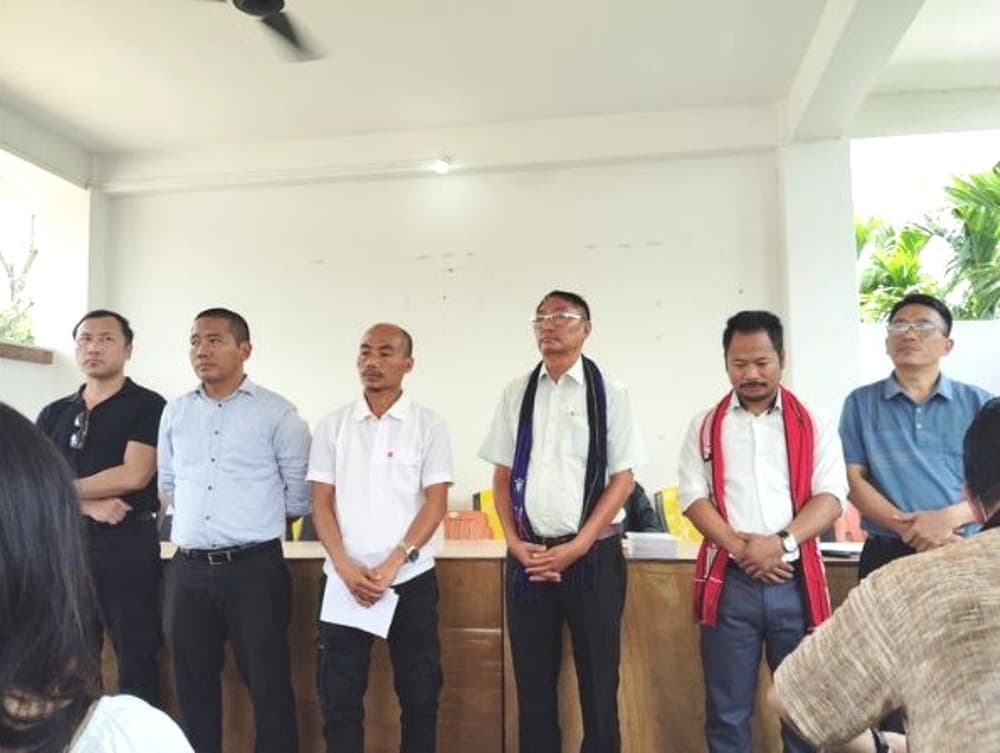
DIMAPUR — The Lotha Lower Range Public Organisation (LLRPO), representing 35 villages under the Lower Range area of Wokha district, convened its general assembly and unanimously constituted its new executive council for the 2026–2029 tenure.
The newly elected office bearers are President Dr. Khonsao Alex, Vice President Yansathung Jami, General Secretary Yanpvuo Kikon, Assistant General Secretary Zathungo Yanthan, Finance Secretary Shanchothung Odyuo, Treasurer Mhomo Kikon, and Information and Publicity Secretary Enoch Kithan.
According to an update, the house expressed confidence that the newly elected team will provide visionary leadership and work collectively towards the socio-economic advancement, resource management, and overall welfare of the Lower Range region and the wider Naga society. During the deliberations, the house discussed several issues of strategic importance concerning the Lower Range area and Nagaland at large.
The house took cognisance of the recent Tripartite Memorandum of Understanding signed between the Government of India, the Government of Assam, and the Government of Nagaland concerning hydrocarbon exploration and development in the Disputed Area Belt (DAB). The house noted that any future exploration and extraction activities must be undertaken with due respect and consultation with the landowners, customary ownership rights, environmental sustainability, and transparent, equitable benefit-sharing mechanisms.
The house further observed that the Changpang oil fields in the Lower Range area remain the only commercially producing oil fields in Nagaland's history. Oil production commenced in the early 1980s following discoveries made by the Oil and Natural Gas Corporation (ONGC) in the Changpang-Tsori belt.
Historical records indicate that between 1981 and 1994, huge amounts of crude oil were extracted from the area before operations ceased in 1994.
During this period, the state government reportedly received approximately INR 33 crore in royalty revenues, making the region the single most significant contributor to Nagaland's hydrocarbon revenues to date.
The house stressed that any future petroleum development in the region must ensure the inclusion of the main stakeholders, including landowners and the lower-range public, with the utmost transparency, accountability, equitable distribution of benefits, and meaningful participation of local stakeholders. It further highlighted that natural resources should become instruments for long-term prosperity and inter-generational development for the landowners, the Lothas, and the Naga public, rather than sources of conflict and division.
Recognising the strategic importance of connectivity for economic growth, trade, agriculture, and regional integration, the house strongly urged the government to prioritise the construction and maintenance of high-quality Foothills Road infrastructure. The house pointed out that the project must adhere to the highest engineering and quality standards to ensure durability, safety, and long-term economic benefits for the people of Nagaland.
The house also deliberated on the significance of the Seed Farm located within the Lower Range area. It noted that the facility possesses immense potential to strengthen agricultural productivity, seed security, rural livelihoods, and food sustainability.
Accordingly, the house urged the concerned authorities to prioritise the upgrading of infrastructure, modernisation of facilities, scientific management practices, and operational efficiency of the Seed Farm so that it can effectively serve the farming community and contribute to Nagaland's agricultural development.
Reaffirming that peace, unity, and harmonious coexistence remain indispensable prerequisites for sustainable development and prosperity, the house underscored the urgent need for the amicable and permanent resolution of the long-pending Assam-Nagaland border issues through dialogue, mutual understanding, and respect for the rights and aspirations of affected communities.
The house expressed the belief that a peaceful settlement would unlock opportunities for economic development, investment, resource management, and regional cooperation, benefiting not only the people of Wokha but all Nagas.
The house also appealed to all citizens, village authorities, community organisations, and stakeholders to ensure that the forthcoming Census is conducted in a rational and responsible manner to ensure accurate demographic data, which is essential for effective planning, equitable allocation of resources, infrastructure development, policy formulation, and representation for the area.
It urged every citizen to cooperate with census authorities and uphold the integrity of the process in the larger interest of the community and future generations.