


State Museum Kohima records over 400 visitors during International Museum Day celebrations promoting Naga culture and heritage.
Share


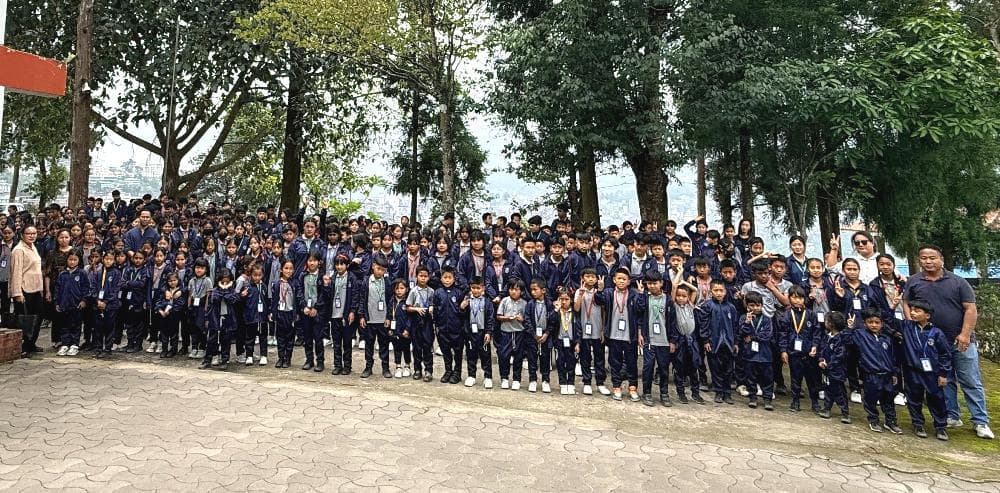
KOHIMA — The State Museum Kohima witnessed strong participation from students and teachers besides other visitors during the two-day observance of International Museum Day, held on the theme, “museums uniting a divided world.”
Free entry was offered to all visitors on May 18 and the 19th to mark the occasion, drawing schools from Kohima besides a school from Mao Gate in Manipur, along with national and international visitors.
Speaking to Eastern Mirror on Tuesday, Talitemjen, guide lecturer at the State Museum Kohima, said the museum authorities adopted a more open approach this year instead of inviting selected schools and students as done previously.
“In earlier years, we used to invite selected classes and specific numbers of students. But this year, we wanted schools and students to make their own choices freely,” he said, adding that examinations and assignments during this period often limit student participation.
He expressed happiness over the encouraging turnout and said the growing emphasis on culture and heritage under the new education policy may have contributed to the increased interest among students.
Talitemjen shared that museum visits are designed to be interactive, where students and visitors are encouraged to ask questions and engage in discussions while touring the galleries.
Also read: Nagaland urged to build 'legally airtight' child protection model rooted in Naga realities
Describing the role of the museum, Talitemjen said the State Museum Kohima serves as an ethnological museum showcasing the traditions and cultures of the indigenous Naga tribes.
He observed that many youngsters today may not have adequate opportunities to learn about their traditions and cultural practices outside their villages, and museums help bridge that gap.
“When visitors come here, they get to see different aspects of Naga life exhibited through separate dioramas representing different tribes,” he said.
He added that the museum not only helps visitors understand their own culture better but also provides insights into the traditions of other Naga communities.
Sharing his experience as a guide lecturer, Talitemjen said students and young visitors often engage enthusiastically by asking questions related to customs, festivals, and traditions displayed in the museum.
He further said the museum also houses an archaeological section in its basement, where exhibits and excavated materials provide insights into the origins and historical narratives of the Nagas.
Referring to excavations conducted at Khezhakeno, he said oral histories passed down by forefathers are, in some cases, supported by archaeological findings.
The museum has also displayed traditional coffins and artefacts reflecting cultural similarities shared with several Southeast Asian communities, he added.
On visitor footfall, he informed that the museum recorded more than 400 visitors during the observance period. He added that the museum usually records an average daily footfall of around 130 visitors, though the numbers vary.
Highlighting recent initiatives, Talitemjen said the museum has introduced scanner tags, touchscreen displays, and other visual aids as part of efforts to modernise visitor experience. He also informed that an audio guide system is currently under development.
He clarified that while Nagaland officially recognises 17 tribes, the museum specifically focuses on the 15 indigenous Naga tribes.
On the occasion, Government High School (GHS) Bayavu, Kohima, along with 290 students and staff, visited the State Museum with the objective of learning beyond the classroom.
Teachers and students described the visit as a “great learning experience” that enhanced their understanding of Nagaland and its people.
Meanwhile, Rajita Banerjee, an independent researcher from Kolkata, wrote in the visitors’ folio, “First time in Kohima, Nagaland. Excited to see what lies ahead. This was a very enriching experience — all the facts and artefacts are presented beautifully.”
Talitemjen maintained that museums should not merely be viewed as spaces for displaying objects, but as centres for education, cultural learning, and understanding among communities.
Referring to this year’s theme, he said, “In today’s time, when divisions and conflicts are seen in many places, museums can help people appreciate one another’s culture and strengthen mutual understanding.”