


Experts in Kohima stress early intervention as delayed action on speech and developmental disorders affects children’s growth.
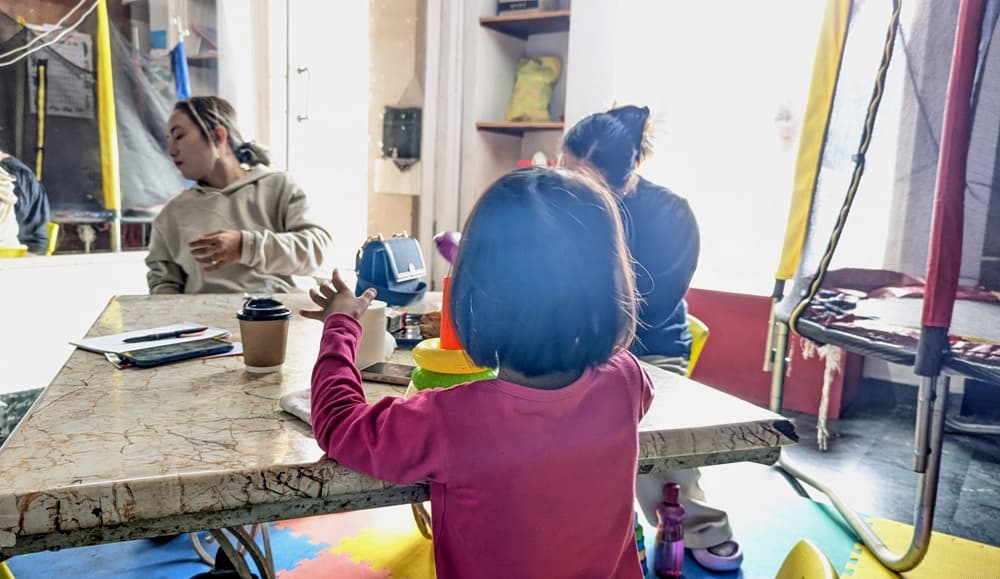
KOHIMA — The 'wait and see' approach adopted by many parents when it comes to speech-related and developmental disorders in children is affecting child development, parents and experts shared from personal experiences and observations during a free screening camp for children with disabilities held in Kohima earlier this month.
For Apila Rulho, whose first child was diagnosed with autism spectrum disorder at the age of two-and-a-half years, the signs were noticeable early on. But like many parents, she decided to wait.
“I was reluctant. I had to think so much just to go and have my son evaluated,” she said.
Rulho said she had already noticed symptoms when her son was around two years old. He would not respond when called, liked to play alone, did not mingle much with cousins and was scared of loud noises.
“Our society has this notion that girls learn to speak faster than boys. But as a mother, that instinct is always there that something is wrong with my son and I should seek help as soon as possible,” she said.
According to her, parents immediately take their child to a dentist if there is a toothache or to a paediatrician when fever hits. But when it comes to developmental delays, many continue to wait, hoping the child will eventually learn to speak after four or five years.
“But that mentality has to change. Waiting two to three years is already late for child development,” she maintained.
She said crucial developmental years are often lost because parents choose to delay intervention.
Rulho added that she has continued her son’s therapy consistently since diagnosis and encouraged other parents to remain committed to the process. Her son is now 11 years old and, according to her, progressing well.
“I want parents to know that we should be mentally prepared that it’s going to be a lifelong process and we have to accept the fact that it’s going to be like this. We can never compare them with normal kids,” she said.
She further said that therapy alone is not enough and parents also have to actively work with the child.
“We can’t fully depend on the therapists. Parents have to put in a lot of effort then only improvements will come. Otherwise, expecting therapists to fix everything is impossible,” she said.
Rulho said that when she returned to Kohima with her son after therapy outside the state, she realised there were very few therapists and no dedicated therapy centre, though inclusive schools existed.
This later prompted her to start the Beautiful Minds Centre for Child Development in Kohima, co-founded with Senior Audiologist and Speech Language Pathologist H Sweety Lorin Kin. The centre conducted the free screening camp earlier this month.
Another parent, Sekholu, who brought one of her twins for screening, shared that her younger child developed speech difficulties and has been undergoing therapy.
“Some children learn to speak faster and some take time, so we were waiting thinking it should be fine. But it didn’t happen, so we decided to go for a check-up,” she said.
She observed that many parents prioritise work and business and fail to give enough importance to their child’s developmental progress.
“Children have to go to school once they reach a certain age and compete with others. By that time, they may not be able to compete equally,” she said.
She added that parents need to carefully observe how their children are progressing and whether they are achieving developmental milestones on time.
Senior Audiologist and Speech Language Pathologist H Sweety Lorin Kin observed that while awareness about disabilities among parents has improved, acceptance is still lacking.
“But with acceptance comes action, and early diagnosis and early intervention are very crucial,” she said.
Kin noted that during the screening camp, the most common issues observed among children were attention deficit and speech-related problems.
Upon reviewing their histories, many children were found to have achieved speech milestones very late, which later contributed to developmental delays.
“A child has developmental milestones that he or she is supposed to achieve accordingly as they grow,” she explained.
She said that by around 18 months, a child is expected to say words like ‘mama’ or ‘papa’ and connect meaning to them.
However, in one case, a child with speech difficulties was only able to speak after the age of three-and-a-half years.
“In such cases, what the child could have achieved in five years gets delayed. If parents realise that their child is not speaking even when it is time and seek timely intervention, they would not face such difficulties later on,” she said.