


Nand Kishore Yadav calls for inclusive and sustainable development in Wokha, stressing youth empowerment, cultural preservation, eco-tourism and better public services.
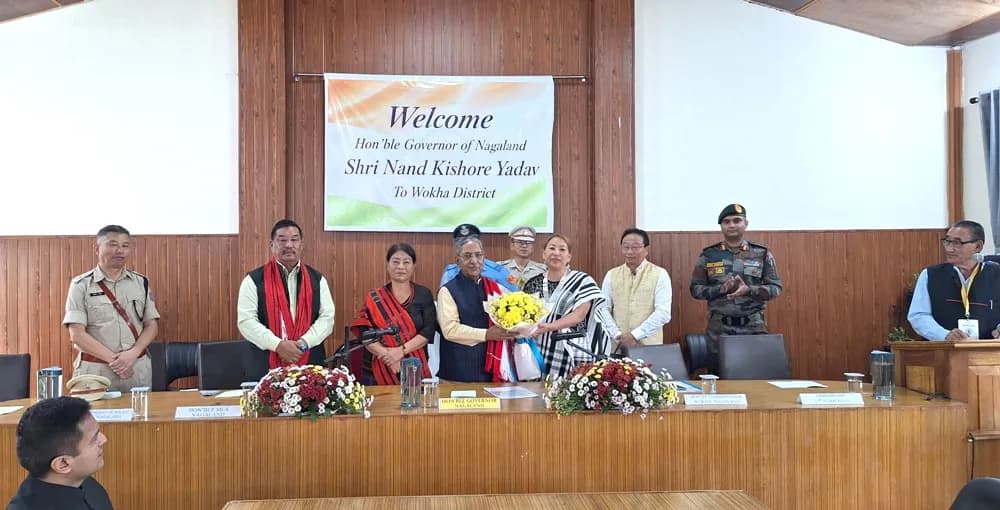
WOKHA — Nagaland Governor Nand Kishore Yadav, during his visit to Wokha district headquarters on Thursday, called for inclusive, sustainable and people-centred development while preserving the district’s rich cultural and natural heritage.
The governor was accompanied by MLA Y Mhonbemo Humtsoe, senior government officials, community leaders and representatives of civil society.
Addressing the gathering, Yadav lauded Wokha’s proud traditions, vibrant communities and fertile landscapes.
He said the values of the Lotha people—including mutual respect, collective responsibility and social harmony—remain relevant in a rapidly changing world.
Emphasising youth empowerment, the governor said government employment alone could not meet the aspirations of the younger generation.
He urged the youth to explore entrepreneurship, innovation, skill development and self-employment opportunities in sectors including agriculture, tourism, technology, handicrafts and creative industries.
“The youth must acquire skills relevant to the changing economy and see opportunities within their own communities,” he said.
Yadav also stressed the need to balance modernisation with cultural preservation. He said festivals such as Tokhü Emong embody values of thanksgiving and solidarity that continue to hold significance in contemporary society.
Also read: Nagaland, NETC explore power sector collaboration
The governor praised Wokha’s community-led conservation initiatives, particularly the protection of Amur falcons, describing them as a model of environmental stewardship.
He encouraged the promotion of responsible eco-tourism that respects local communities while safeguarding biodiversity.
Focus on governance, public services
Calling for effective administration, Yadav urged district officials to uphold transparency, accountability and responsiveness in delivering public services.
He highlighted the importance of technology in improving governance while maintaining meaningful engagement with citizens.
He said education and healthcare must remain key priorities. Schools, he noted, should nurture creativity and responsible citizenship, while healthcare services should focus on accessibility, preventive care, and maternal and child welfare.
The governor emphasised that development was a collective responsibility involving elected representatives, traditional institutions, civil society, churches, youth and women’s organisations, entrepreneurs and citizens.
“Wokha has many strengths upon which to build—a proud cultural heritage, natural resources, agricultural potential, a strong community spirit, and a talented younger generation,” he said, calling on all stakeholders to work together towards inclusive growth.
Yadav outlines vision for Wokha
Outlining his vision for the district, Yadav expressed hope that Wokha would emerge as a place where farmers earn better incomes, youth have meaningful opportunities, women are empowered, natural resources are protected and tourism develops without harming the environment.
“The progress of Wokha will ultimately be measured not merely by the number of projects completed, but by whether those projects improve the lives of ordinary people,” he said.
Concluding his address, the Governor thanked the people of Wokha for their warm hospitality and extended his wishes for peace, prosperity and continued progress.
During the visit, chairman of the Lotha Hoho, Mhondamo Ovung, submitted a reminder memorandum urging the Governor to consider upgrading the Wokha–Bokajan road to National Highway status.
Meanwhile, Lotha Eloe Hoho president Thungbeni N Ngullie submitted a representation seeking the establishment of a handloom centre in Wokha district.
The proposal highlighted the need to preserve and promote the district’s rich indigenous culture and traditional handloom practices.
Representatives of the Wokha District Hindu Union, Lotha Students’ Union and Lotha Youth Hoho also participated in the programme.