


The Dimapur Naga Students’ Union opposed moves to make Sanskrit compulsory in Nagaland schools and raised concerns over other education-related issues.
DIMAPUR — The Dimapur Naga Students’ Union (DNSU) has opposed any move to make Sanskrit compulsory in schools in Nagaland, arguing that such a policy would place an additional burden on students and fail to reflect the state’s linguistic diversity.
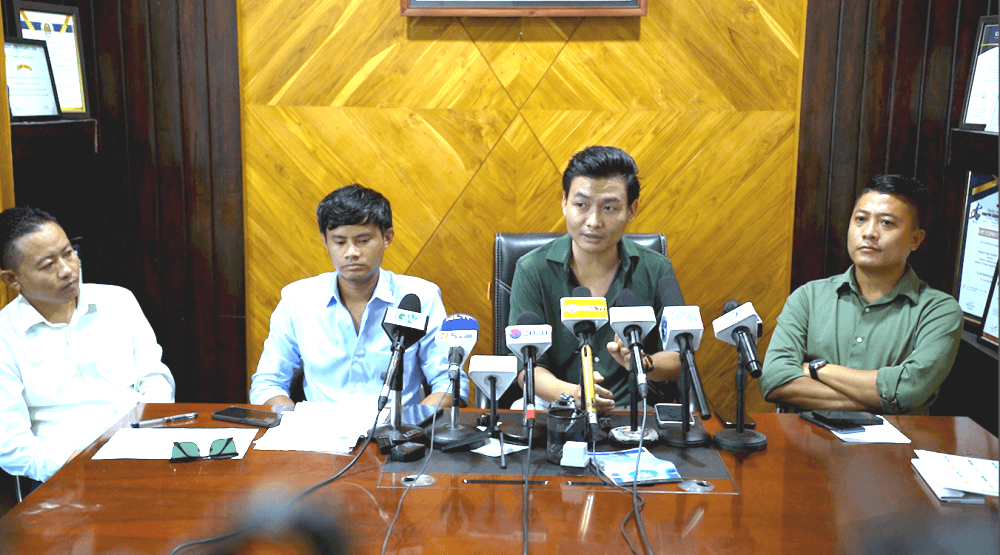
The union reiterated its stand during a press conference held at the DNSU office in Dimapur on Tuesday, where it also raised concerns over the proposed shifting of the Government Hindi Institute from Dimapur to Medziphema, the unresolved issue of the health sub-centre at Government Middle School (GMS) Midland, and reports of corporal punishment in schools.
Speaking on the Sanskrit issue, DNSU general secretary Michael Kath said the union respects all languages but opposes any attempt to make Sanskrit a compulsory subject in Nagaland schools.
He questioned the need for compulsory Sanskrit when students are already studying English, Hindi and their respective mother tongues, and urged the government to withdraw any proposal mandating the language. Kath also called on the government to consult students, parents, educators, tribal bodies and civil society organisations before implementing any language-related policy, while stressing the need to preserve and promote indigenous Naga languages.
Read more: Leaking roofs, missing textbooks: Reality check from Longleng schools
Crumbling schools, lone teachers: KSU flags education crisis in Mon
Gonmei said students are already facing challenges in learning Hindi and that making Sanskrit compulsory would add to their academic burden. He maintained that Sanskrit should remain an optional subject and added that the union was still awaiting a response from the Governor.
WATCH MORE:
Responding to queries, DNSU president P Hinoto Awomi said the union’s opposition stemmed not from the language itself but from any attempt to make it compulsory. He also pointed to the lack of trained Sanskrit teachers in the state and noted that the existing three-language formula already accommodates English, Hindi and mother tongues.
Commenting on the Vande Mataram issue, Awomi said patriotism should not be linked to religious practice and maintained that loyalty to the nation cannot be measured through participation in religious expressions.
On the proposed shifting of the Government Hindi Institute at Oriental Colony, Gonmei said DNSU had received information that the institute might be relocated to Medziphema due to alleged encroachment of its land.
Following a site inspection, the union found that while encroachment had taken place, sufficient land remained available for development. Describing it as the only Government Hindi Institute in Dimapur, DNSU opposed its relocation and instead urged the government to upgrade and develop the existing facility.
The union argued that shifting the institute would inconvenience students, as Dimapur remains the most accessible location due to its transport and communication links. Awomi maintained that encroachment could not be used as justification for relocation and urged the government to act against encroachers while retaining and developing the institute at its present location.
The DNSU also renewed its opposition to the health sub-centre located within the premises of GMS Midland.
Gonmei said the matter has remained unresolved since last year and appealed to the authorities to settle it before the school's golden jubilee celebrations later this year. According to the union, the land was originally acquired for educational purposes and school infrastructure.
Awomi reiterated that the school land should be used solely for educational development and said the Health department should identify an alternative location if a sub-centre is required. He added that DNSU would continue pursuing the matter until it is resolved.
The union also expressed concern over reports of corporal punishment in educational institutions.
Gonmei said DNSU continues to receive complaints from students and urged schools to strictly comply with the prohibition on corporal punishment.
While acknowledging the importance of discipline, he appealed to schools to adopt alternative disciplinary measures.
He further alleged that some students had been threatened against reporting incidents to school authorities or law enforcement agencies, creating fear and trauma among children. The union urged school authorities and teachers to ensure that students are protected from both physical and mental abuse.