


KSU tour reveals unsafe schools, teacher shortages, failing healthcare and poor connectivity across remote villages in Mon district
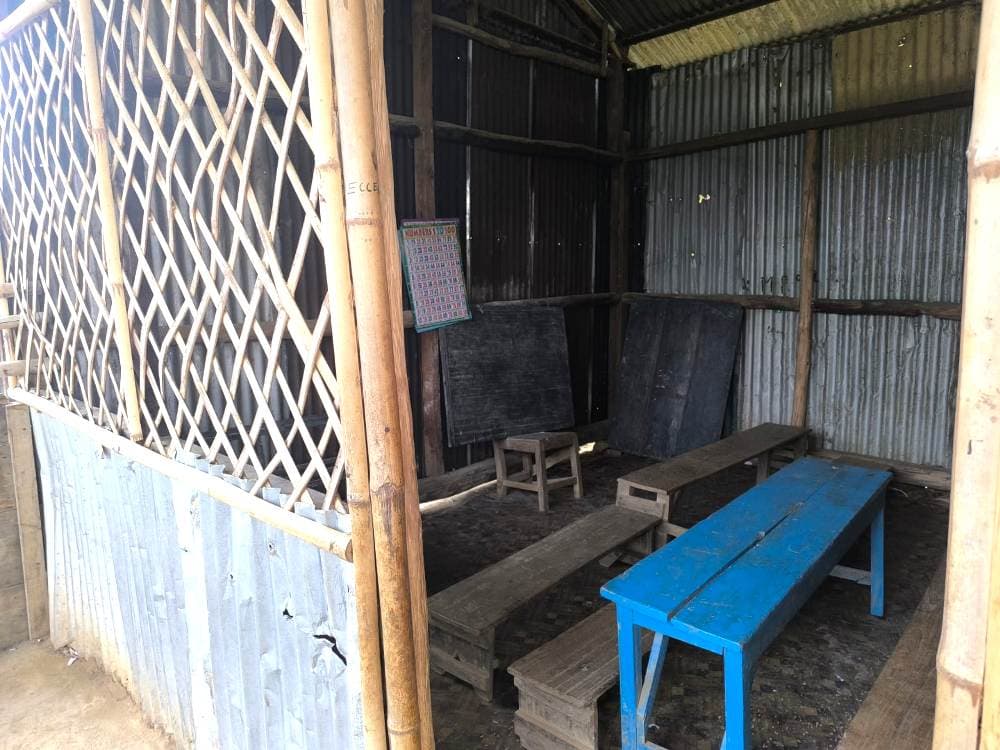
DIMAPUR — Government schools in Mon district are operating from dilapidated buildings and structures supported by slanting pillars, exposing students to daily safety risks and disrupting learning, according to the Konyak Students’ Union (KSU).
Poor road connectivity to villages has further compounded the situation, highlighting wider infrastructure gaps in Nagaland’s government education system.
The findings emerged during the KSU’s ‘Education Wheel Tour Phase-III’, an eight-day initiative covering 124 villages across Mon district to assess conditions in the education and health sectors.
Speaking to Eastern Mirror, KSU president Temwang Konyak expressed concern over what he described as lapses in various government sectors affecting the development and welfare of the region. He said the future of the region depended on awareness, education, discipline and collective participation of the people.
Having covered more than 90 villages in five days—including areas under Tobu, Mopung, Longchang, Aboi, Chen, Tizit, Naginimora, Wakching, Tapi and Phomching—the union found many government schools functioning under poor conditions.
Also read: Nagaland: Education hangs by a thatch roof in remote Longleng village
According to Konyak, several schools were operating with only one teacher, many buildings had not undergone renovation since their construction, and enrolment had declined due to lack of manpower and limited awareness among students about their basic rights.
He said four government primary schools visited during the tour were being run by a single teacher each. “Most schools we visited were understaffed.
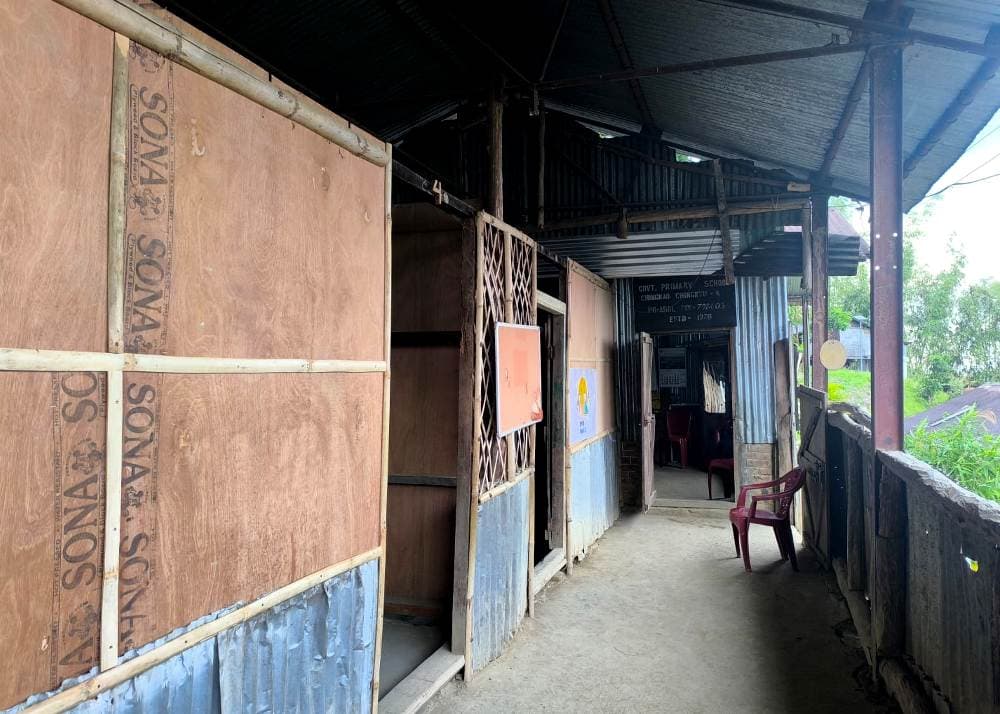
In one case, a lone teacher requested a transfer because she could not manage four classes at once. When she is on sick leave, the children have to miss school. This is the condition of our schools,” he said.
As an interim measure, the KSU has suggested temporary arrangements through village organisations until the government intervenes. In several schools, church workers and student leaders have been volunteering to teach in the absence of adequate staff.
At Government Middle School Mokok, an associate pastor of Sheanghah Mokok Baptist Church has reportedly been helping with classes during spare time as only three teachers are available to manage nine classes.
Konyak also pointed to a government primary school constructed in 1978 that continues to function without renovation. According to him, teachers contribute money themselves to repair the school, including desks and benches, which remain in poor condition.
He said the shortage of teachers was not only affecting school functioning but also reducing enrolment, as many parents were reluctant to send their children to poorly functioning schools.

“This is also encouraging children to work as domestic helpers in urban towns in exchange for education. Unless the education system is fixed in remote areas, there will be no end to children migrating to towns like Dimapur, Kohima and Mokokchung,” he said.
The student leader also expressed concern over the lack of awareness regarding menstrual hygiene schemes in government schools.
In several villages, churches, village councils and student leaders have stepped in to support state-run schools by arranging volunteers to conduct classes in the absence of adequate government intervention, he added.
Health sector and connectivity in shambles
Konyak said the health sector was facing similar challenges, with most primary health centres functioning without doctors and nurses managing facilities on their own. He said medicines were either unavailable or nearing expiry in many centres visited during the tour.
He suggested that at least one General Nursing and Midwifery (GNM) staff member should be posted alongside Auxiliary Nurse Midwives (ANMs) in primary health centres located in interior areas.
Read more: ‘Education must match real-world challenges’
Apart from the state of schools and healthcare facilities, Konyak said many villages lacked electricity and mobile network connectivity because of poor road infrastructure. “With no motorable roads in several areas, villages remain cut off from basic services,” he said.
Recalling the construction of temporary classrooms and a staff room at Government Higher Secondary School ‘C’ in Mon town in 2024 due to shortage of classroom space, Konyak said the union had appointed six teachers on monthly honorariums for six months.
However, he said the KSU was still bearing the cost of running the arrangement, spending around INR 90,000 every month due to the absence of government support.
He further pointed to the shortage of higher education institutions in the district, stating that Wangkhao Government College, the only government-run college in Mon district, could not accommodate the increasing number of students passing out from schools.
While a private college exists in the district, he said many students could not afford to study there.
Konyak said the union had requested the government to introduce additional academic streams at New Model College in Wakching, which currently offers only BSc courses, to accommodate increasing student numbers. He added that the matter was under process.
The tour is being conducted in collaboration with the district administration and security forces to ensure effective outreach and transparency.