

Kohima Science College organises a state-level workshop to train scholars in scientific reporting and publishing.
Share


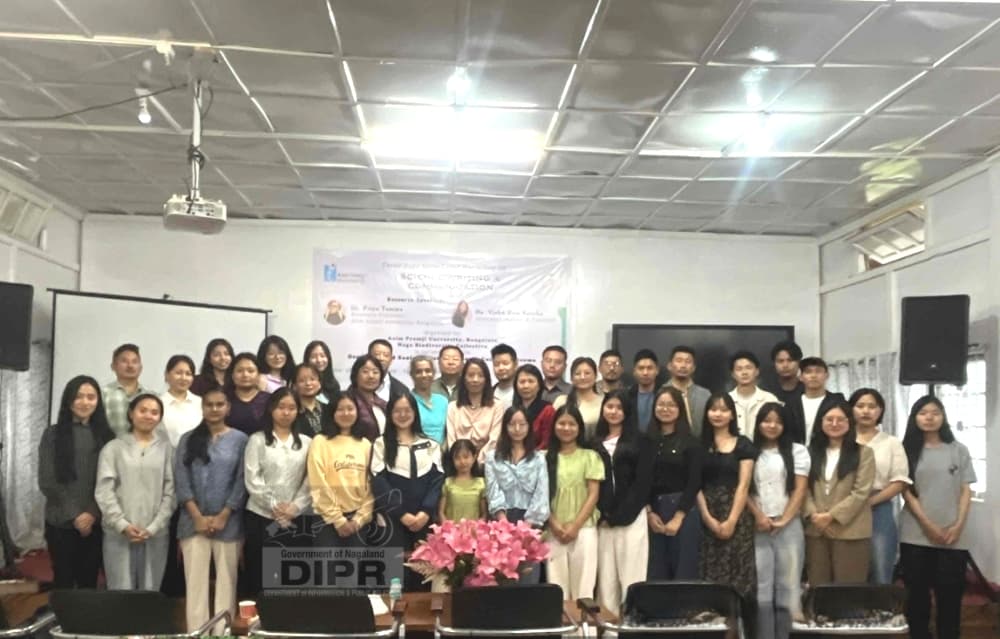
DIMAPUR — The Department of Zoology at Kohima Science College, Jotsoma, in collaboration with the Naga Biodiversity Collective, conducted a three-day state-level workshop on ‘Science writing and communication’ from June 10 to the 12th.
The initiative aimed to bridge the gap in scientific publications from the region and equip postgraduate students, doctoral scholars, and lecturers with tools for effective scientific reporting, creative writing, and media publishing, according to a DIPR report.
The technical sessions for the first two days were led by Associate Professor at Azim Premji University, Bangalore, Dr. Priya Tamma. Dr. Tamma guided the participants through the structure of research papers and the Introduction, Methods, Results, and Discussion (IMRaD) format.
She highlighted the importance of mind mapping and paragraph construction to organise data, maintaining consistency in tense and voice, and designing accessible, colour-blind-friendly charts and tables for visual communication.
Read more local news: Nagaland Governor's Awards for Meritorious Students conferred on toppers
Khet Bachao Abhiyaan reaches over 1,800 farmers in Zunheboto
Speaking on publishing and media, Vishü Rita Krocha detailed the journey of a manuscript from submission and technical formatting, including acquiring International Standard Book Numbers (ISBN), to printing and market promotion.
She advocated for localised content, urging young scholars to ground their narratives in regional realities. Krocha also explained the principles of journalism, such as the five Ws and one H (who, what, when, where, why, and how), and how news is prioritised. Participants also engaged in mock interviews and news report writing.
At the valedictory session, Dean of Sciences at Kohima Science College Prof. Limatemjen expressed gratitude to the resource persons and challenged the attendees to apply their newly acquired skills to elevate the standard of scientific literature from the state.