


A workshop on community conserved areas was held in Meluri to strengthen community stewardship and biodiversity conservation.
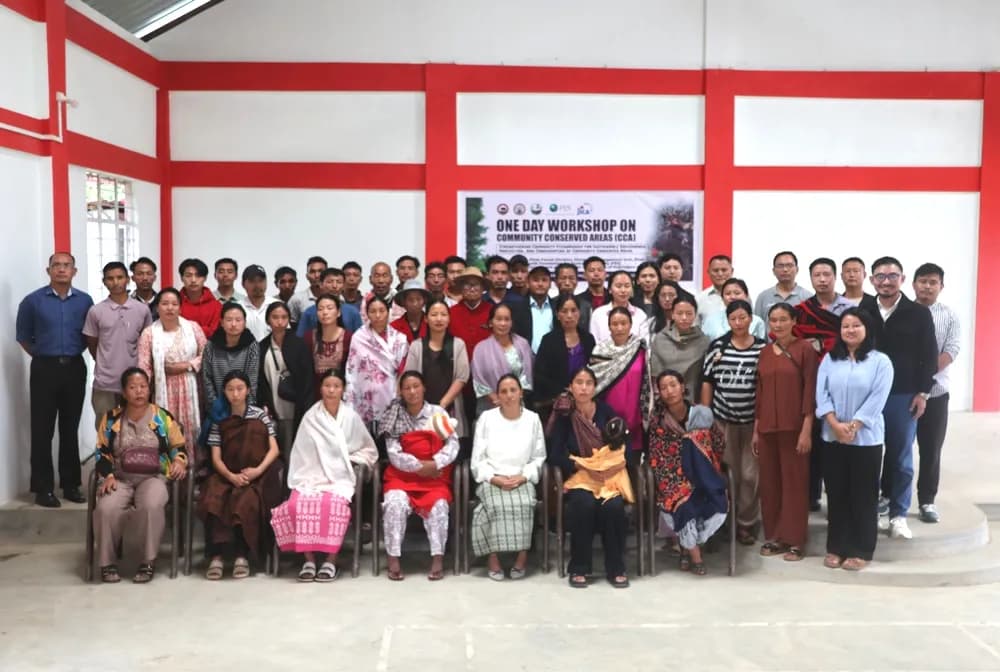
DIMAPUR — A one-day workshop on community conserved areas (CCAs) was held at the Kükhegwo Village Council Hall in Meluri on September 1, focusing on strengthening community stewardship for the sustainable governance, protection, and conservation of CCAs.
According to an update, the workshop was organised by the Nagaland Forest Management Project (NFMP), Divisional Management Unit (DMU), Phek, in collaboration with the Foundation for Ecological Security (FES) and the Joint Forest Management Committees (JFMCs) of Kükhegwo and Akhegwo villages.
A session on "Understanding Community Conserved Areas" was facilitated by Chenibemo Odyuo, Senior Project Manager of the Foundation for Ecological Security and FNGO Team Leader of NFMP Phek.
The session explored the significance of CCAs for biodiversity conservation and community well-being, different forms of community conservation in Nagaland, and the importance of local institutions, knowledge, and collective decision-making in strengthening community stewardship.
Odyuo pointed out that the strength of a CCA lies in the community itself, highlighting the importance of the inclusive participation of elders, women, and youth in conservation and decision-making.
Read more local news: Lions Club of Dimapur Blue Venda holds panel discussion on social emotional learning
He also highlighted the work of FES on commons and community-led governance of natural resources, encouraging communities to build upon their existing knowledge, institutions, and practices.
The workshop also featured a session on the genesis and evolution of CCAs in Nagaland, led by Keneivito Christopher Sophi, Joint Secretary of the Nagaland Community Conserved Areas Forum (NCCAF) and former Executive Secretary of Khonoma CCA, who shared experiences and lessons from early community conservation initiatives.
Community members from Kükhegwo and Akhegwo, including elders, women, youth, and community leaders, participated in group discussions on their CCA journeys, existing governance systems, rules and regulations, and changes observed since establishment.
The discussions further examined challenges and opportunities related to forests, biodiversity, water, climate, and community institutions, followed by the development of a five-year vision and the identification of priority actions for conservation.
Participants also discussed the institutional, technical, financial, and human resources required for effective CCA management, including the roles and support required from communities, government departments, NGOs, and other external agencies.
The programme concluded with presentations from the two village groups, consolidation of key priorities, and a way-forward session led by Imlikumba, Senior Project Manager of FES.