


Neiphiu Rio stresses unity beyond borders, urging cultural, political integration to advance Naga issue and secure honourable settlement forward.
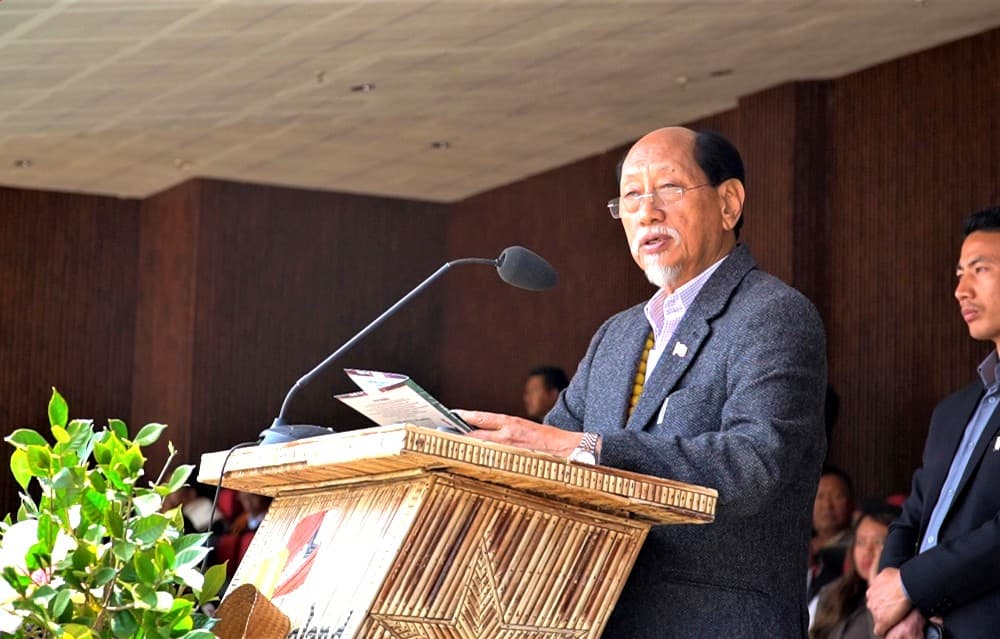
KISAMA — Chief Minister Neiphiu Rio on Wednesday asserted that even if physical integration of Naga-inhabited areas is not immediately feasible, unity in other forms is crucial to advancing the Naga political issue and achieving an honourable settlement.
Addressing the first Tenyimi Youth Cultural Festival at Naga Heritage Village, Kisama, Rio said, “We are pursuing a Naga movement, which we all are trying our best to resolve,” reiterating that integration has remained a central issue for the Nagas.
He pointed out that the Nagaland Legislative Assembly has passed unanimous resolutions on integration multiple times under different chief ministers, reflecting the consistent political position of the state on the matter.
Acknowledging present realities, however, he said that Nagas must focus on strengthening unity beyond territorial boundaries. “Though we cannot be physically united, we should be politically, emotionally, socially and culturally integrated,” he said, adding that shared traditions, culture and customary laws continue to bind the people together.
“It is a duty for all of us to unite and reconcile so that the future of Nagas will not be forgotten,” he said, questioning, “When others recognise us, how can we not recognise or accept ourselves—our history, our identity, our culture, and our customary laws?”
Also read: Reimagining Naga future: From fractured paths to shared destiny
He stressed that unity among communities, including the Tenyimi group, would contribute to strengthening the larger Naga identity. “Our (Tenyimi) strength can strengthen the common Naga family to preserve our identity and to come together as a Naga—Nagaism, so that other people will have more respect and take the Nagas seriously,” he said.
Unity and identity
Rio said that the Tenyimi community, though spread across different tribes, regions and even states, shares a common heritage, traditions and values that serve as a strong foundation for unity.
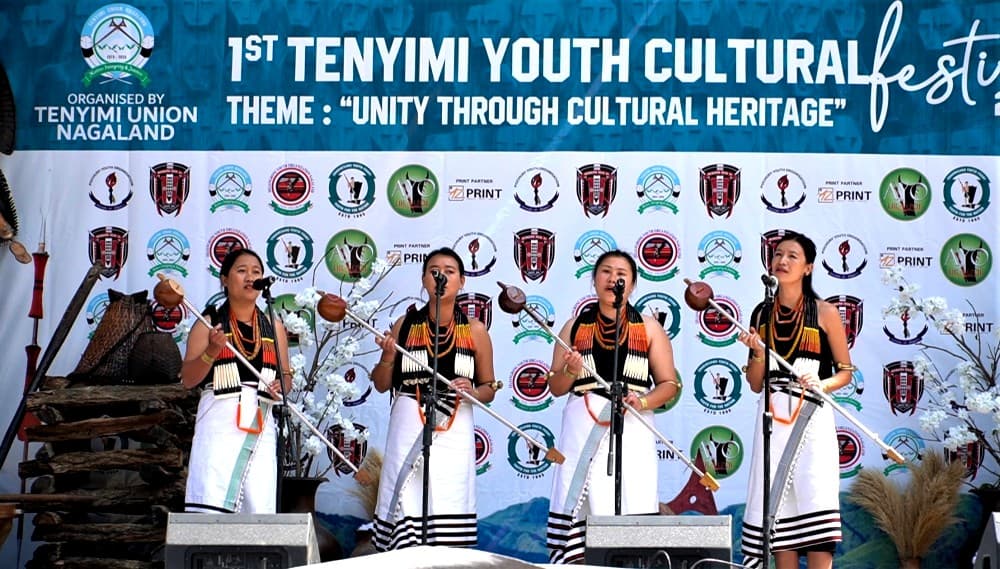
Referring to the festival theme, ‘Unity through cultural heritage,’ he said the event was not merely a recollection of the past but a reaffirmation of identity for the future. “The songs we sing, the stories we tell to engage and encourage, and the clothes we wear are all threads that bind us together as a people,” he added.
He urged people to carry forward their traditions with pride and purpose in a rapidly changing world, emphasising that cultural preservation is key to sustaining identity and togetherness.
The chief minister also recalled historical contexts, noting that protective mechanisms such as the Inner Line Permit system under the Bengal Eastern Frontier Regulation of 1873 and the special provisions under Article 371A have played a role in safeguarding Naga identity.
WATCH MORE:
He acknowledged the efforts of elders in bringing communities together and said platforms such as the Tenyimi Union Nagaland (TUN) should further strengthen unity among Nagas.
Promote Tenyidie
Highlighting the importance of language, Rio called for greater efforts to promote Tenyidie, stating that it would be a matter of pride if people could communicate in their own language. “How great it would be, and how proud it would be, if we can understand and speak to one another in Tenyidie,” he said.
Referring to the language system in Navodaya Vidyalaya schools in Nagaland, he noted that English, Hindi and Assamese are currently taught, and suggested that Tenyidie could be considered as a third language.
He also acknowledged the role of Ura Academy in promoting and developing the language, stating that it has reached the university level and is among the first regional tribal languages to gain such recognition.
Appealing for further institutional support, he said that greater efforts are needed to strengthen and expand the use of Tenyidie.
Describing the youth as custodians of heritage, Rio urged them to take responsibility for preserving traditions and cultural values. Emphasising the role of education, he said that those who learn must also teach, as knowledge and history are preserved through transmission across generations.
He also highlighted the need for youth to build skills, discipline, integrity and resilience in a fast-changing world. “Success comes to those who are prepared and persistent,” he said, adding that failure should not discourage them as “it is only a stepping stone.”
Tenyimi platform
Deputy Chief Minister TR Zeliang, who attended the afternoon session as special guest, described the Tenyimi community as “a family closely knit by blood,” tracing its lineage to a common ancestor, ‘Tenyiu’. He said that shared cultural elements such as dialect, lifestyle, food habits and traditional attire reflect this common identity.
He also called for continued leadership and support from the Angami community, citing their historical role in spreading education and promoting the use of Tenyidie.
Emphasising unity, he said that genuine care and mutual support are essential to sustaining the idea of a common family, adding that such initiatives would strengthen cooperation among Tenyimi tribes.
He further urged scholars and researchers to document Tenyimi history, stating that written records are vital for preserving identity for future generations.
TUN president Kekhwengulo Lea said that the festival aims to promote unity and preserve the shared cultural heritage of the Tenyimi people.
According to him, while the Tenyimi People’s Organisation represents the community across regions, the formation of TUN provides a platform to address state-specific issues while fostering unity, peace and mutual respect.
The programme featured cultural performances by various Tenyimi organisations and artistes, showcasing traditional practices, songs and dances.