


Theja Rio brings TIFF-winning film Angh home to Nagaland as the team prepares for an Oscar campaign and theatrical release

DIMAPUR — From the international stage in Toronto to a homecoming in Dimapur, filmmaker Theja Rio has brought back more than the Platform Prize won by his debut feature Angh — he has a film rooted in Naga culture preparing for an Oscar campaign.
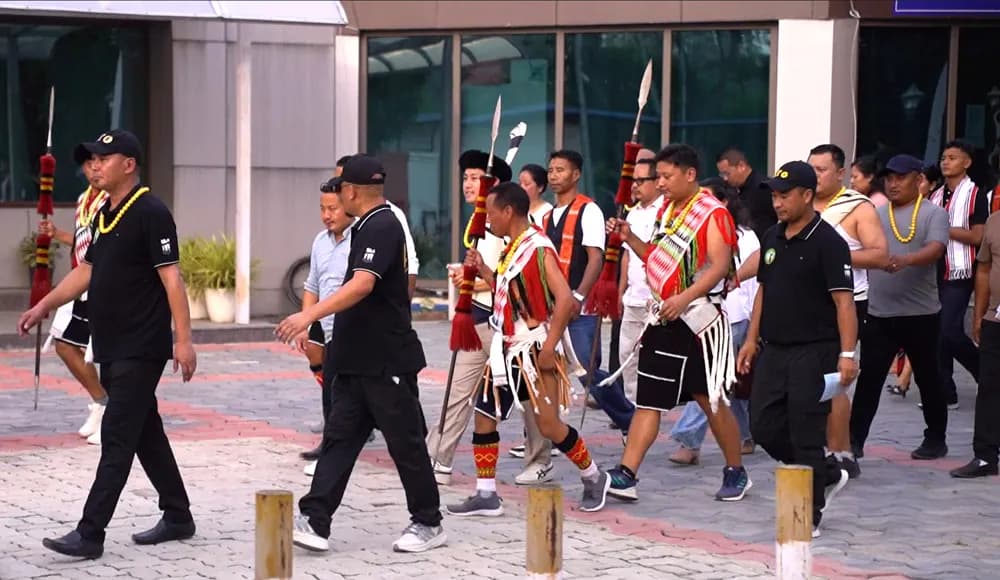
Rio was welcomed by members of the Angami community and well-wishers at Dimapur Airport on Tuesday, following the film’s success at the Toronto International Film Festival (TIFF). The reception was organised by the Angami Youth Organisation (AYO).
For Rio, the recognition was significant, but bringing the film home meant more.
“We shot it here, we cast our people here, and the majority of the people who worked on our film were from Nagaland,” he said, thanking the community for its support.
“To take our film to a platform like Toronto and be blessed with an award like the Platform Prize is huge. But bringing our film here means more to us than anything else we will ever achieve,” he added, dedicating the film to Nagaland.
Also read: Theja Rio’s ‘Angh’ wins TIFF’s Platform Prize
Rio also introduced members of the cast and crew who travelled with the film to Toronto.
.JPG-1790699286755.webp&w=1200&q=75)
The film, rooted in Konyak culture, grew out of a short film Rio made in 2019. After the film travelled to festivals internationally, he began developing it into a feature, writing the first draft in 2021 before production began in 2024.
Rio said making Angh had changed his understanding of his own cultural roots. Having lived outside Nagaland and set earlier scripts in different parts of the world, he had to research Naga history and customs, study Konyak culture and work closely with the cast on traditional clothing and practices.
“I’ve learned so much about the Konyak culture, and through that, about Naga culture. It made me understand how important where we come from is,” he said.
WATCH MORE:
The production drew on support from communities across Nagaland, including people who helped with research and villagers who opened their homes to the crew during filming. Rio credited mentor and producer Nancy Nisa Beso, the cast and crew for helping bring the project to life.
“There’s no film industry where we come from, but I keep saying this — we have an industry of love, we have an industry of support, and we have an industry of people willing to shed their blood, sweat and tears to support their own people,” he said.
“That is why I want to dedicate this film to Nagaland.”
.JPG-1790699277129.webp&w=1200&q=75)
Oscar campaign ahead
The team is now preparing for an Oscar campaign in the United States, with Angh eligible to compete in the International Feature Film category following its recognition at TIFF.
“From here on, it’s going to be an Oscar campaign. The team will fly to the US, stay there, lobby and campaign for a nomination,” Rio said, appealing for continued public support.
Beso said the film had been selected for TIFF’s Platform competition from around 900 submissions, with 12 films competing. She recalled the emotion of receiving the call announcing the win while the team waited together.
She also outlined the film’s next steps. After its world premiere at TIFF, Angh is expected to have Asian and European premieres before continuing on the festival circuit, followed by a theatrical release and eventually a digital premiere.
The team hopes to bring the film to theatres in Nagaland around February or March next year. If access to theatres proves limited, Beso said, they are prepared to travel across the state with projectors so audiences can watch it on the big screen.
Naga stories, told from within
For Rio, the film’s significance goes beyond awards. He hopes it will encourage greater interest in Nagaland and create space for more local filmmakers to tell their own stories.
He said films about the state made by outsiders could sometimes reflect an outsider’s perspective, making it important for Naga filmmakers to represent their own communities and experiences.
“We don’t simply want to be showcased; we want to be understood as a culture, as a society. We need more filmmakers from here telling our stories — that will be the most authentic representation of who we are,” he said.
Asked what advice he would offer young filmmakers working with limited budgets, Rio stressed the importance of writing, research and collaboration.
“When you build a house, you need a strong foundation. Writing a great script is that foundation,” he said, urging aspiring filmmakers to watch world cinema while remaining true to their own stories.
Rio said he hoped Angh would prompt audiences to learn more about Nagaland and its people. “If it can prompt a simple Google search about Nagaland, that would be a huge victory for us,” he added.
JOIN OUR WHATSAPP CHANNEL