


Jacob Zhimomi urges Nagas to embrace self-reliance, strengthen cooperatives, reduce subsidy dependence, and build sustainable village economies together
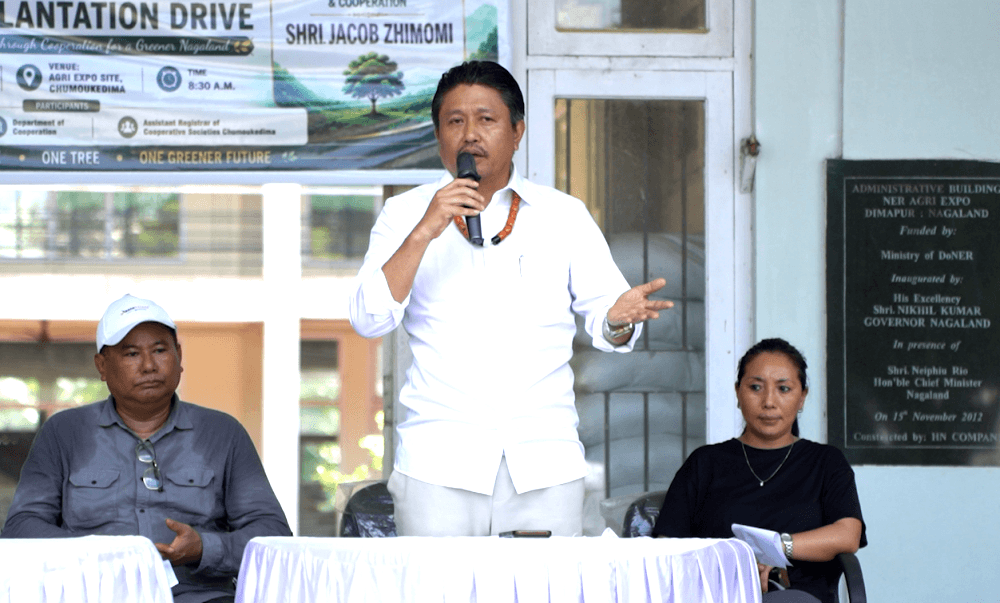
DIMAPUR — Minister for PHED and Cooperation Jacob Zhimomi on Monday called for greater accountability in cooperative societies, saying Nagas must move beyond dependence on subsidies and build a self-reliant economy.
Addressing the culmination programme of Cooperative Week 2026 and a tree plantation drive at the Agri Expo site in Chümoukedima, the minister said that very few people succeed through subsidies alone, while many beneficiaries end up defaulting on bank loans, resulting in poor recovery rates and making financial institutions reluctant to extend fresh credit.
"Not even 10% out of 100% succeed through subsidies alone," he said, adding that the mindset of relying solely on government assistance must change if the state is to achieve sustainable growth.
Zhimomi stressed the need for Self-Help Groups (SHGs) and cooperative societies to work together under a Project Management Unit in every village. He said that membership records should be updated every three years to ensure transparency and accountability.
"If one person holds a position for life, it leads to corruption at all levels," he said.
Highlighting ongoing reforms, the minister said that the Centre is computerising all Primary Agricultural Credit Societies (PACS). Once digitised, the data would be accessible to both the Centre and the state government, improving monitoring and governance.
Describing cooperatives as institutions "for everyone, on behalf of the village and unemployed youth," he called for self-correction and shared prosperity through collective effort.
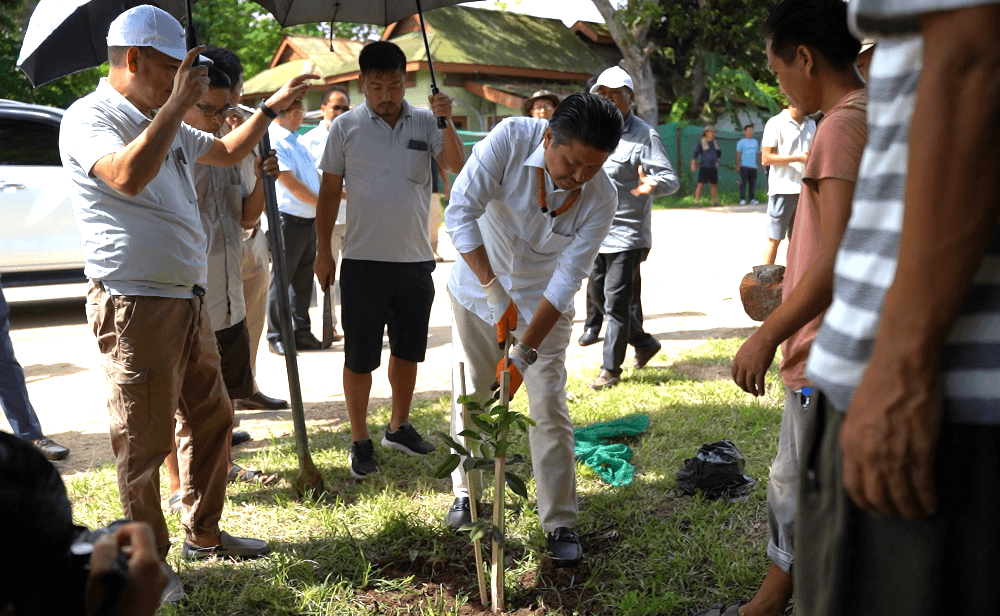
The minister also linked the cooperative movement with environmental stewardship, saying the tree plantation and cleanliness drive organised during the programme reflected the responsibility of cooperatives towards nature conservation.
He maintained that Nagaland's forests, land and rich biodiversity remain the backbone of people's livelihoods and should be protected alongside efforts to improve rural incomes.
WATCH MORE:
Noting that many SHGs associated with cooperative societies are engaged in handicrafts, traditional occupations and agriculture, Zhimomi said that these sectors, although contributing modestly to the state's Gross Domestic Product, play a significant role in strengthening village economies.
He observed that the government of India is giving renewed importance to the cooperative sector, recognising that a strong village economy is essential for overall state development.
Calling for a shift towards local production, the minister said that Nagaland has numerous retail outlets selling garments and consumer goods, but most of the products are manufactured outside the state.
"For sustainable development, Nagas must establish a self-dependent economy. If we only consume and borrow without manufacturing anything, what will we survive on?" he asked.
He urged cooperative societies to identify products that can be produced locally and utilise support available from both the state and central governments. He also pointed out that the National Cooperative Development Corporation (NCDC) has established a regional headquarters for the Northeast to assist cooperative societies.
Zhimomi reminded that central assistance would increasingly be linked to the performance of cooperative societies rather than merely their existence.
Also read: Union Minister Nityanand Rai Inspects DoNER projects and healthcare facilities in Nagaland
He explained that factors such as operational performance over the previous two to three years, capital formation, profitability and risk management would determine eligibility for grants and financial support.
"If they are convinced by these factors, they will provide support," he said, cautioning that societies focused only on subsidies would ultimately fail.
The minister said that although Nagaland has over 8,200 registered cooperative societies, only about 2,000 are currently operational. He proposed creating an annual platform where successful cooperatives could share their experiences with others.
"Others can then emulate them and learn how they are succeeding. Success stories and failures combined will help increase overall productivity. Failure is not the end. If we do not fail, how will we learn?" he said.
Emphasising financial independence, Zhimomi said that Nagaland cannot continue to depend heavily on the state government and, in turn, on the Centre.
"We are largely dependent on the state government, and the state government is 90% dependent on the central government. We do not have sufficient internal revenue, but we cannot continue like this," he said.
Referring to the ongoing House Listing Operation under Census 2027, the minister urged citizens to provide accurate information and register at only one place of residence.
"We estimate the population to be around 20.5 lakh. But whether it is electoral registration, the census or house listing, we must provide our genuine identity and original representation. Whether you reside in Dimapur, Pughoboto, Kohima or Phek, you have to choose one place where you want to be registered," he said.
He said that accurate population figures are critical for development planning and equitable allocation of resources, adding that Chümoukedima, Dimapur and Niuland are emerging as the state's future business hubs and should work together through stronger cooperative networks.