


State-level conference in Kohima discusses challenges, opportunities, and reforms in veterinary services.
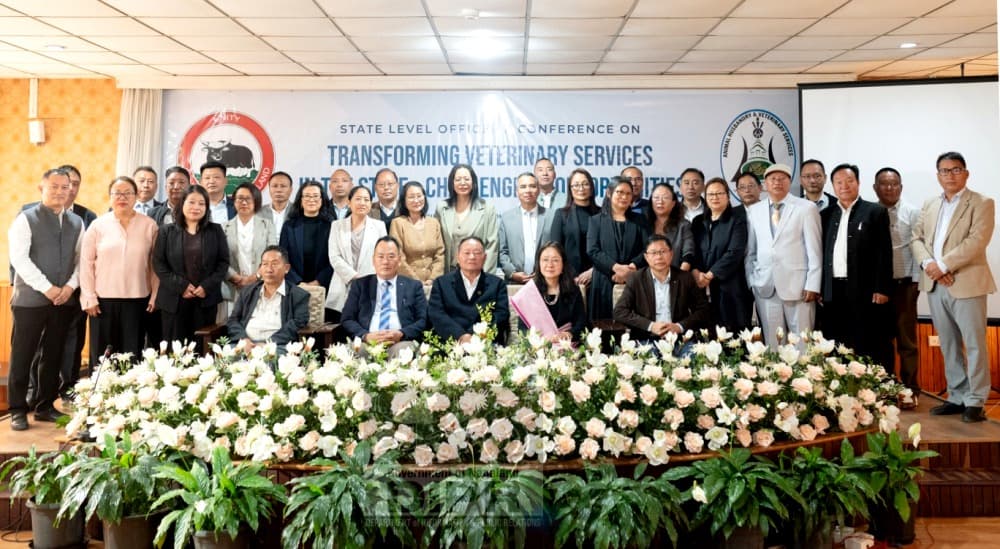
DIMAPUR — A state-level officers’ conference on transforming veterinary services, focusing on challenges and opportunities, was held at De Oriental Grand in Kohima on March 20.
Addressing the gathering as special guest, Advisor for Animal Husbandry & Veterinary Services and chairman of SAWAB-N, Kazheto Kinimi, emphasised that such conferences are not merely formal events but important occasions for reflection, reassessment of goals, and renewed commitment, according to a DIPR report.
He underscored the critical role of officers in translating policy into action and vision into tangible results, stating that the strength of any department lies in the dedication and commitment of its officers rather than its structure alone.
Highlighting evolving governance demands, Kinimi said that citizens today expect efficiency, transparency, and timely delivery of services, making it essential for departments to adapt and respond effectively.
He also stressed the significance of livestock in rural livelihoods, describing it as more than an economic asset. “Livestock represents security, income, nutrition, and hope for many rural families,” he said, adding that it plays a vital role in sustaining livelihoods and safeguarding communities.
Further, he noted that livestock farmers should not be viewed merely as beneficiaries but as partners, and that the responsibilities of the department extend beyond treatment and vaccination.
Read more local news: Meeting on March 30 to elect Kohima Municipal Council chairperson, deputy
Kinimi pointed out that such conferences provide a valuable platform for officers to share experiences, openly discuss constraints, and collectively develop practical solutions. He added that the event offers an opportunity to review achievements, identify gaps, and exchange best practices across the state.
He expressed hope that constructive dialogue during the conference would lead to measurable progress in the days ahead.
Secretary, Department of AH & VS, Angelina Tajen, in her address, stated that in a small state like Nagaland, where many marginal farmers depend on agriculture and allied sectors, animal husbandry is not just an occupation, but an important source of livelihood, food security, and economic stability.
She stated that the state’s demand for meat is among the highest in the country, and therefore strengthening piggery, poultry, cattle rearing, and other livestock activities in Nagaland has great potential to improve rural incomes.
In this context, she said the role of the Department of AH & VS becomes extremely important. Through veterinary healthcare, disease control programmes, breed improvement, and extension services to farmers, the department is making valuable contributions to the rural economy and the well-being of livestock owners.
Tajen stated that veterinarians are the backbone and the face of the government for farmers and livestock owners. The work in the field, often in remote and challenging locations, ensures that veterinary care and government programmes reach the grassroots level.
She also urged officers on the need to constantly upgrade their skills and knowledge because of ever-emerging technology and evolving knowledge, and expressed hope that the conference will provide an opportunity for officers to introspect and retrospect their roles and responsibilities as veterinarians, and inspire new ideas, stronger collaboration, and renewed commitment towards building a vibrant and sustainable livestock sector in the state.
Later, in the technical session, Amba Jamir, senior policy analyst and development strategist, spoke on the topic transforming veterinary services in the state, highlighting challenges and opportunities.