


Solar morungs light up Hornbill Festival, promoting clean energy, sustainability, and uninterrupted power in Naga Heritage Village.
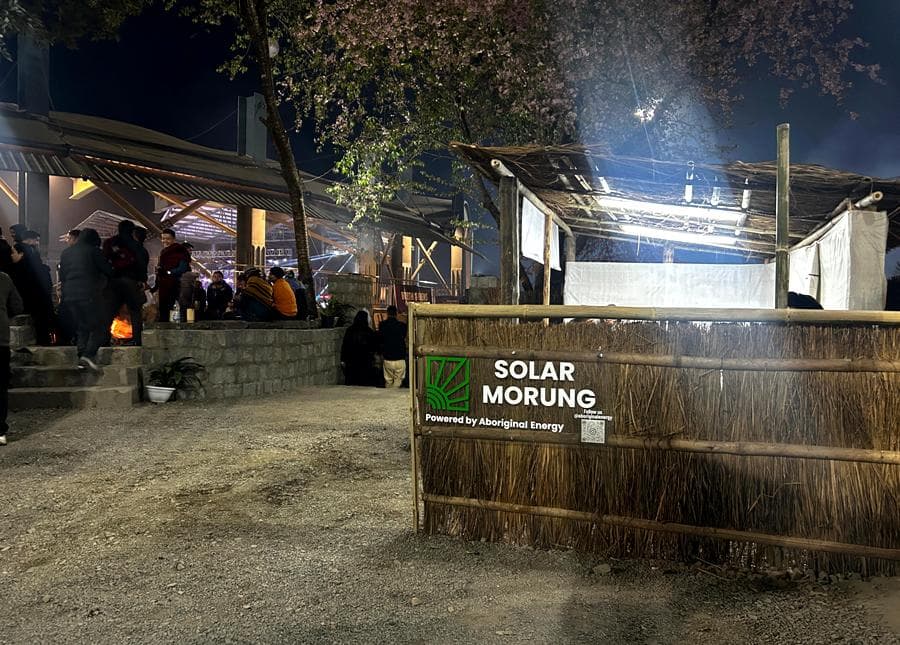
KISAMA — In the evolving landscape of tourism, the Hornbill Festival continues to showcase Naga culture, heritage, cuisine, and innovation. This year, one initiative drawing particular attention is the ‘solar morung,’ which promotes clean energy while ensuring uninterrupted power supply to tribal morungs at the Naga Heritage Village, Kisama.
Behind the initiative is Aboriginal Energy, a Dimapur-based green power solutions company. Its founder, Anguvika, told Eastern Mirror that the company was established in 2019 out of a commitment to promote clean and sustainable energy. With around 15 staff, the company operates across Nagaland and has provided solar power to more than 200 villages, 130 health centres and 30 schools to date.
While this is not the company’s first contribution to the festival, it is the first time solar morungs have been installed. Earlier initiatives included solar street lights.
The solar morung, he explained, was conceptualised to show that Naga communities hold firmly to their traditions while embracing modern solutions.
Also read: Morungs at Hornbill Festival 2025 go digital with QR-linked tribal archives
This year, seven bamboo solar street lights were installed at Kisama, along with solar back-up systems in six morungs. Each morung has been equipped with two solar panels, an inverter and a large battery.
The bamboo poles were chosen deliberately, the founder said, to emphasise the use of local resources and environmentally friendly alternatives.
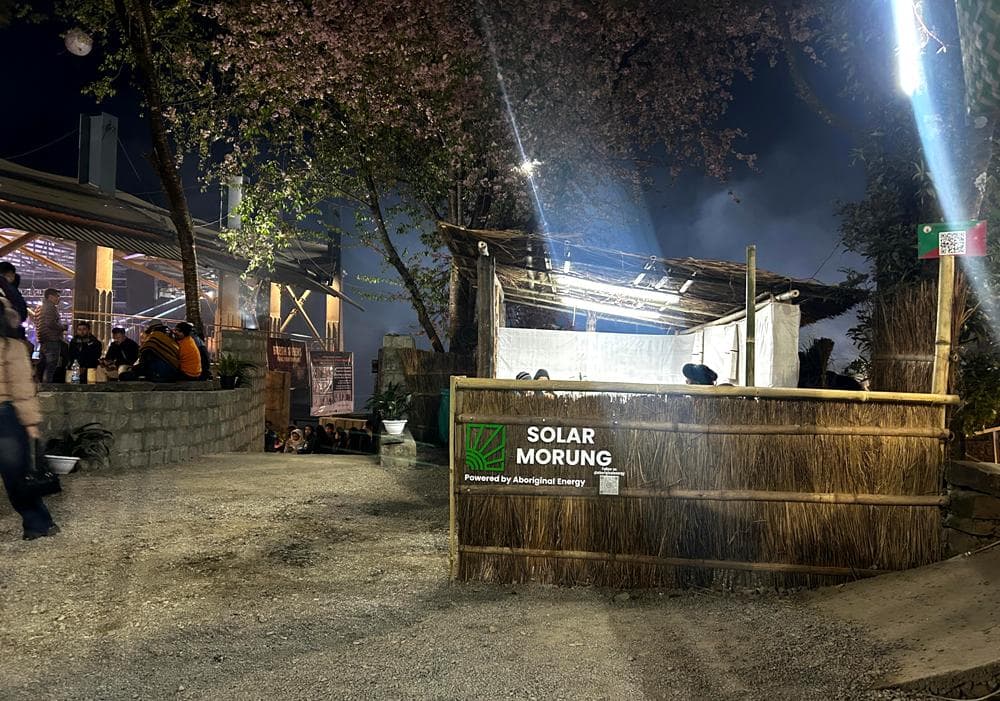
The solar morungs were installed as a contingency measure in case of power outages, ensuring that visitors would not face disruptions during performances or activities.
He added that the installations were a free contribution by Aboriginal Energy, although the company was unable to cover all morungs. If departments or morung owners express interest, the company is open to selling the systems.
Although the installations are meant only for the festival period, they may remain if purchased by stakeholders. “The idea is to show that even in Nagaland, we are promoting solar and clean energy alongside sustainable tourism,” he said.
He added that Nagaland’s electricity situation “is not very strong” compared to other states and that start-ups, the public and the government need to work together to meet future energy needs through alternative sources.
Reducing carbon footprints
Estimating the environmental impact of the initiative, the founder said that each morung saves about one kilogram of CO₂ emissions per day. While modest in scale, he noted, the cumulative reduction reinforces Hornbill Festival’s attempt to become more environmentally responsible.
For Aboriginal Energy, the solar morung represents the idea that while Naga society is rooted in rich heritage, it must continue to move forward with technological advancements.
An elder from one of the morungs told this newspaper that the solar installations made the space well-lit and more convenient for workers, while using cleaner and more efficient energy.
Aboriginal Energy has set up a stall at the Handloom and Crafts Pavilion, where visitors can learn more about the company’s work. It also operates from its head office in Dimapur.
Services include residential and commercial solar systems, rooftop solar solutions under the PM Surya Ghar subsidy scheme, operations and maintenance, equipment procurement, electrical wiring and renewable energy integration in rural areas.
The company also provides solar street lights, water heaters and information on government subsidy schemes.
The initiative aligns with the Nagaland Tourism Policy 2024, which aims to make Nagaland a green destination.