


ICAR-KVK Wokha trained SHGs and FPOs in food processing and agripreneurship under Tribal Sub Plan initiative.
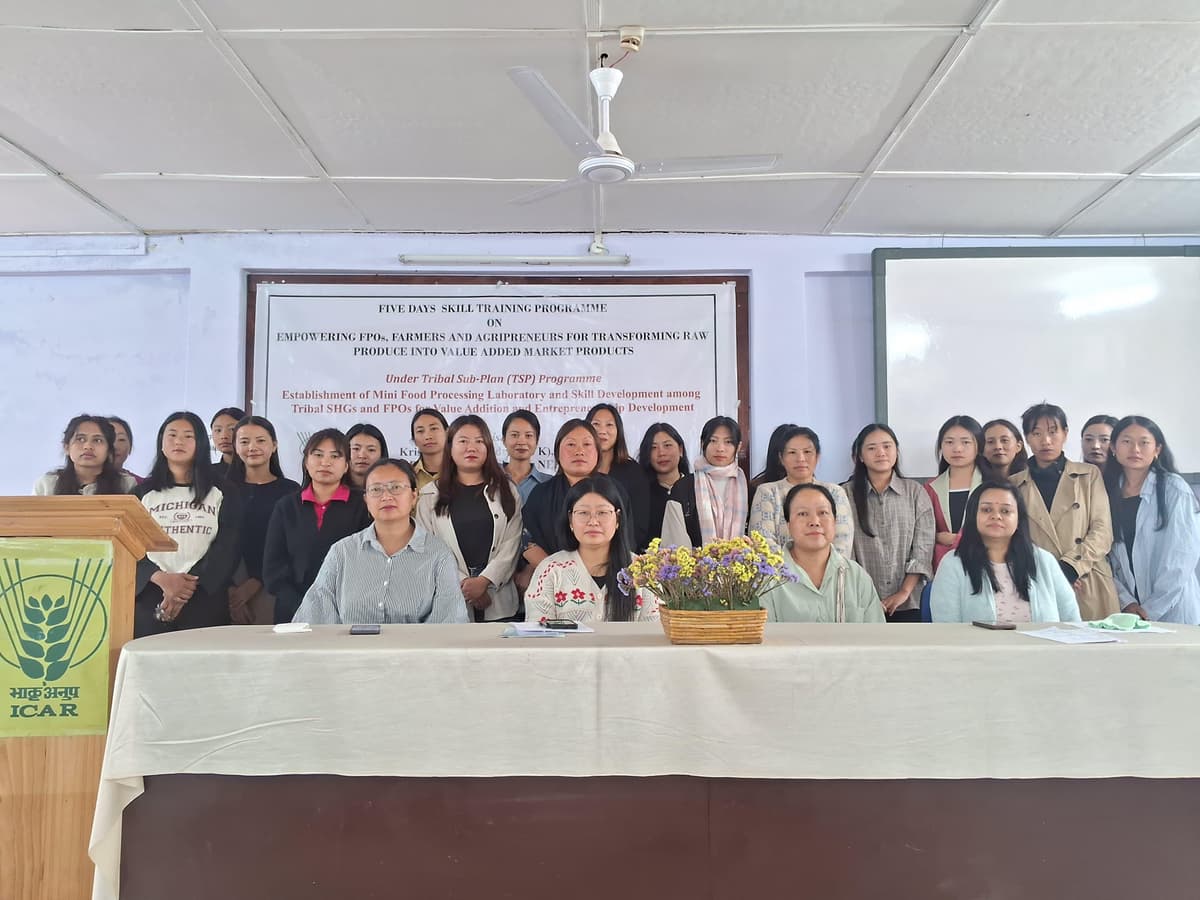
WOKHA — The ICAR-Krishi Vigyan Kendra (KVK), Wokha, conducted two five-day skill training programmes under the Tribal Sub Plan (TSP) initiative, aimed at strengthening entrepreneurship and establishing mini food processing laboratories among tribal Self-Help Groups (SHGs) and Farmer Producer Organisations (FPOs).
The first programme, held from April 27 to May 1, focused on “Processing of locally grown crops for nutritional security and livelihood enhancement.”
Course Director Dr. Sandeep Deshmukh, Senior Scientist and Head of KVK Wokha, highlighted the importance of value addition to local crops and the role of small-scale processing units in enhancing rural income and livelihood opportunities.
Also read: Youth Eco Club, NPCB conduct plantation drive in Dimapur
Technical sessions led by Thungchano Ezung introduced participants to low-cost equipment suitable for mini food processing laboratories and demonstrated practical strategies to reduce post-harvest losses.
Hands-on training included preparation of fruit-based items, pickles, and bakery products, with emphasis on hygiene, nutrition, and packaging.
The second programme, conducted from May 11 to the 15th, was themed “Empowering FPOs, farmers and agripreneurs for transforming raw produce into value-added market products.”
The training combined lectures, demonstrations, and a field visit to local enterprises such as Yuthi Delights, Dream Bake, and Tchutho FPOs.
Participants interacted with successful entrepreneurs, gaining insights into their journeys and challenges.
Practical sessions covered banana chips, dehydrated banana, cassava chips, bakery processing, and candy making.
Resource persons including Anuranjan Singh, Zuchobeni L Tsopoe, and Merizali Kikon shared their expertise, motivating participants to explore business opportunities in food entrepreneurship.
Both programmes witnessed enthusiastic participation from SHG members, rural youth, and women.
Certificates were distributed during the valedictory sessions, marking the successful completion of the trainings.
The organisers expressed confidence that the initiative would contribute significantly to enhancing livelihoods, ensuring nutritional security, and promoting sustainable rural enterprises in Wokha district.
By equipping participants with practical skills and exposure to local enterprises, the programmes are expected to foster agripreneurship, reduce post-harvest losses, and transform raw produce into market-ready products, thereby strengthening the rural economy.