


Salhoutuonuo Kruse inaugurates seed bank and learning centre at Khonoma to promote women livelihoods and indigenous seeds.
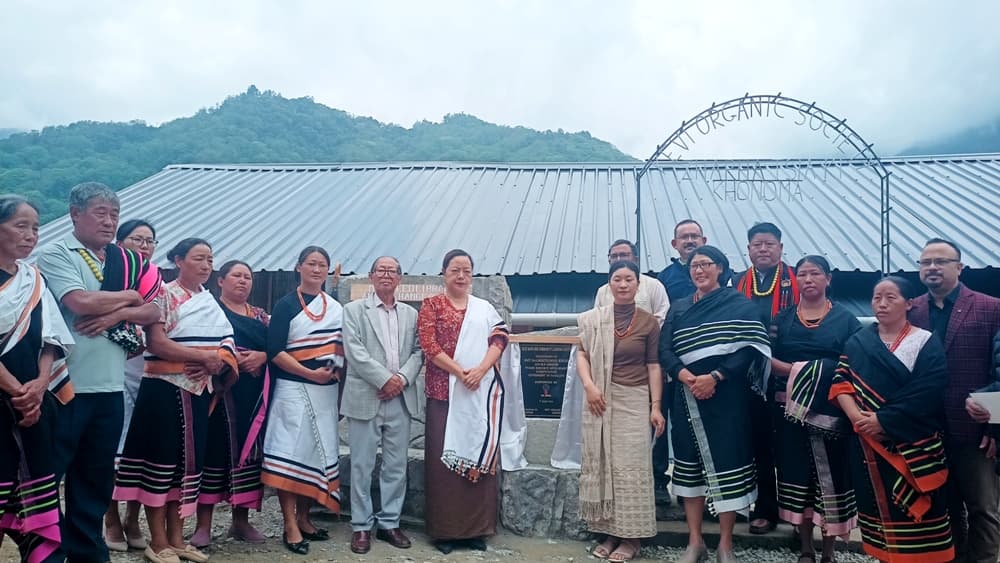
KHONOMA — Nagaland's Minister for Women Resource Development (WRD) and Horticulture, Salhoutuonuo Kruse, on Thursday inaugurated a seed bank and community learning centre at Khonoma Village, Kohima district.
The project was funded by the Oil India Limited and implemented by Aaranyak with Pabhoi through Kevi Organic Society Khonoma.
Addressing the event, the minister expressed delight and gratitude to Aaranyak for the initiative, “Empowering women with sustainable livelihood in Khonoma, Nagaland,” supported by Oil India and implemented in close collaboration with Kevi Organic Society Khonoma.
Kruse said the programme was not merely a project but a movement towards building a more inclusive, equitable and self-reliant society.
Stating that the initiative primarily focuses on empowering women, she said empowering women through sustainable livelihood is one of the most effective ways to improve families, communities and economies.
She asserted that the initiative should not remain only an idea but must be implemented and practised in reality.
The minister maintained that women play a significant and indispensable role in society, from nurturing families to contributing to the economy.
Also read: Sovima exhibition showcases timeless Naga basketry skills
However, women continue to face barriers in accessing opportunities, resources and financial independence, and described the project as a decisive step towards breaking such barriers, Kruse said.
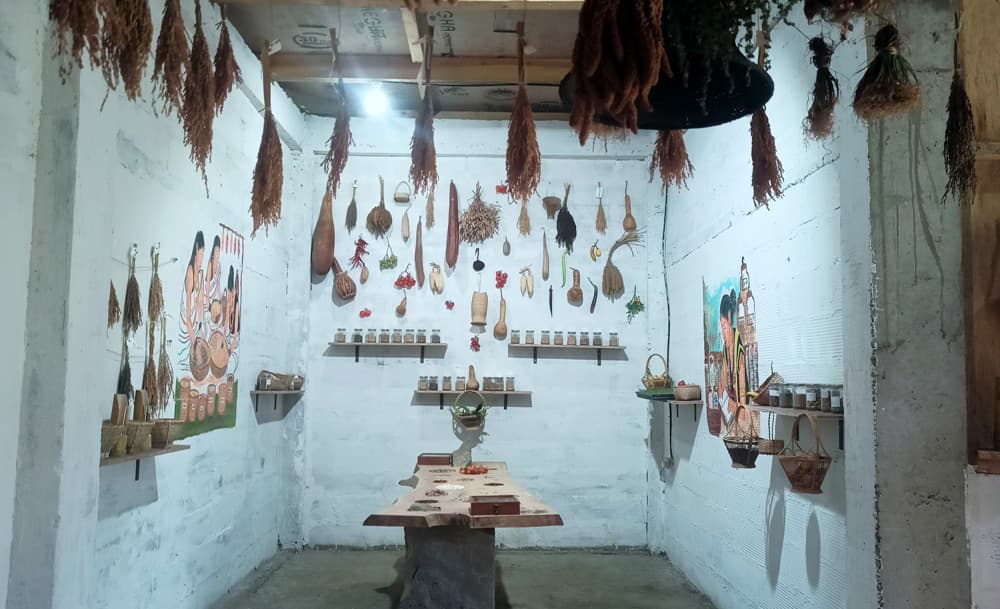
She also appreciated the aim of the seed bank and community learning centre, which focuses on conservation and promotion of indigenous crop varieties, strengthening local seed systems, building capacities in sustainable agriculture, and serving as a knowledge and training hub for the area.
Citing examples, she said the villagers are known for farming by utilising alder trees as manure, while garlic cultivation remains another area where the village is doing exceptionally well and where production can further be enhanced.
She also pointed to weaving, drying of fruits and vegetables and other traditional practices as areas with strong potential for improvement and livelihood generation.
The minister further stated that the Department of Horticulture has implemented various schemes for plantation and cultivation of horticulture crops in the village and surrounding areas.
She also stressed the importance of marketing and suggested creating a mechanism where some cultivate and produce while others undertake marketing.
Meanwhile, Nilam Dutta, agriculture entrepreneur and owner Pabhoi Green, Assam, shared his association with Khonoma Village since 2008, which eventually led to the start of the women cooperative society initiative in 2014.
He said the initiative initially started with saving seeds at Khonoma, mostly vegetables, because while the village had rich diversity in rice, he felt that the number of vegetables had declined over the years.
Dutta stated that in 2019, along with two of his friends, small poly structures were set up for 11 women involved in the cooperative, enabling them to grow vegetables and sell or barter seeds among themselves.
He remarked that seeds are not merely commodities but a shared heritage inherited from forefathers and therefore carry a responsibility to be preserved for future generations.
Recalling the development of the present initiative, he said one of his friends, Vinod Seshan, Joint Secretary in the Ministry of Petroleum and Natural Gas, visited Khonoma in 2025 and was impressed with the work being carried out in the village.
However, at that time, the cooperative had not yet been formally registered and lacked financial resources.
Dutta said the initiative later gained momentum after discussions with Dr. Bibhuti, who suggested implementing it together through Aaranyak.
He also acknowledged the contribution of Aaranyak and stated that he had been associated with the organisation since his teenage years.
He further stated that eco-architects Neha and Ankur assisted in designing the building using sustainable materials such as bamboo and wood with minimal use of cement.
Dutta said that although the project received a contribution of INR 15 lakh, a structure covering around 2,000 square feet was built largely with the help of women involved in the initiative.
Dr. Bibhuti Prashad Lahkar, Deputy Executive Director, Aaranayk said the Seed Bank and Community Learning Centre would become an important facility for the entire Khonoma landscape and surrounding areas.
Describing Khonoma as a significant region for biodiversity conservation, agro-ecology and the rich heritage culture of Nagaland, he said the quality of indigenous seeds has been declining and therefore requires preservation.
Lahkar stated that with technical guidance from Nilam Dutta, the initiative could finally be realised after years of discussion. He informed that while the initial plan was to construct a 550 square feet facility, the final structure expanded to around 2,000 square feet through the collective efforts of cooperative members, villagers and Dutta’s team.
He further stated that the centre would function like a living laboratory where multiple activities could be carried out, including preservation of traditional seed exchange practices through a mini seed exchange library.
Expressing happiness over the presence of the Northeast Network (NEN) team, Lahkar said the platform could also facilitate seed exchange and preservation with other groups and communities.
Dr. Bibhab Kumar Talukdar, Secretary General and Executive Director of Aaranyak said Aaranyak’s association with Khonoma stemmed from the village’s commitment towards conservation and community initiatives.