


A technology demonstration on scientific ericulture was held at New Terogyungu, Tseminyu, training 80 farmers on CSB technologies, seed self-reliance and value addition.
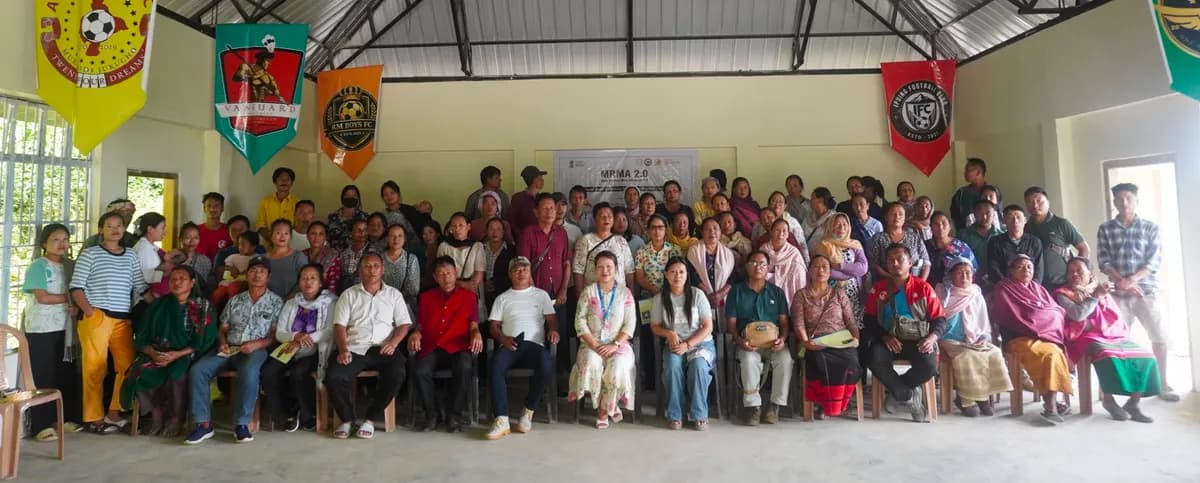
DIMAPUR — A comprehensive technology demonstration programme on scientific ericulture was conducted at New Terogyungu in Tseminyu district on August 12 under the MRMA 2.0–National Technology Transfer Campaign.
The programme, organised jointly by Dr. Kaiho Kaisa, Scientist-B, CSB-CMERTI, Jorhat, and Vilhousienuo Khro, District Sericulture Officer, Tseminyu, was attended by around 80 stakeholders and eri farmers from Henbenji, Terogyungu, New Terogyungu and Giju villages, an update stated.
The participants were sensitised to various Central Silk Board (CSB) technologies for eri culture, covering both pre-cocoon and post-cocoon activities. The technologies included the C2-improved eri silkworm breed, eri chawki rearing, platform rearing, loose egg production, disinfection practices and improved host-plant varieties.
Practical demonstrations were also conducted on black boxing to achieve more uniform hatching, addressing a common concern raised by farmers. Appropriate disinfection practices were demonstrated in response to disease-related issues reported by the participants.
Farmers were encouraged to adopt a diversified and sustainable approach to eri culture rather than focusing primarily on pupae production and consumption. Emphasis was placed on retaining a portion of the crop for seed multiplication and maintaining their own seed stock to ensure continuity of rearing across generations.
The approach is expected to reduce dependence on externally supplied disease-free layings (DFLs), particularly during periods of irregular availability, while promoting better utilisation of available castor leaves.
To support technology adoption, CSB-CMERTI leaflets on “Eri silkworm Samia ricini preservation technology” and “From Cocoon to Yarn – Eri Silk Post-Cocoon Guide” were distributed among the participants.
The C2-improved eri silkworm breed was also distributed to selected farmers, who were encouraged to multiply and maintain the seed stock as part of a self-reliance strategy.
Improved kesseru saplings were distributed to selected leading farmers to strengthen the host-plant base for eri silkworm rearing.
The programme also encouraged farmers to explore post-cocoon activities, including value addition and silk processing, as additional sources of income beyond the production and sale of cocoons and pupae.
Participants were further introduced to muga and oak tasar culture as potential new ventures, taking into consideration the availability of their primary host plants in the locality.
The scope for diversification into these silkworm cultures was discussed as an additional livelihood opportunity.
Overall, the programme provided farmers with practical exposure to multiple CSB technologies while addressing field-level concerns and promoting diversification, seed self-reliance, host-plant development and post-cocoon value addition to strengthen and sustain eri-based livelihoods in Tseminyu district, the update added.