


SCERT Nagaland releases books on road safety, arts and computational thinking to boost teaching and learning.
Share


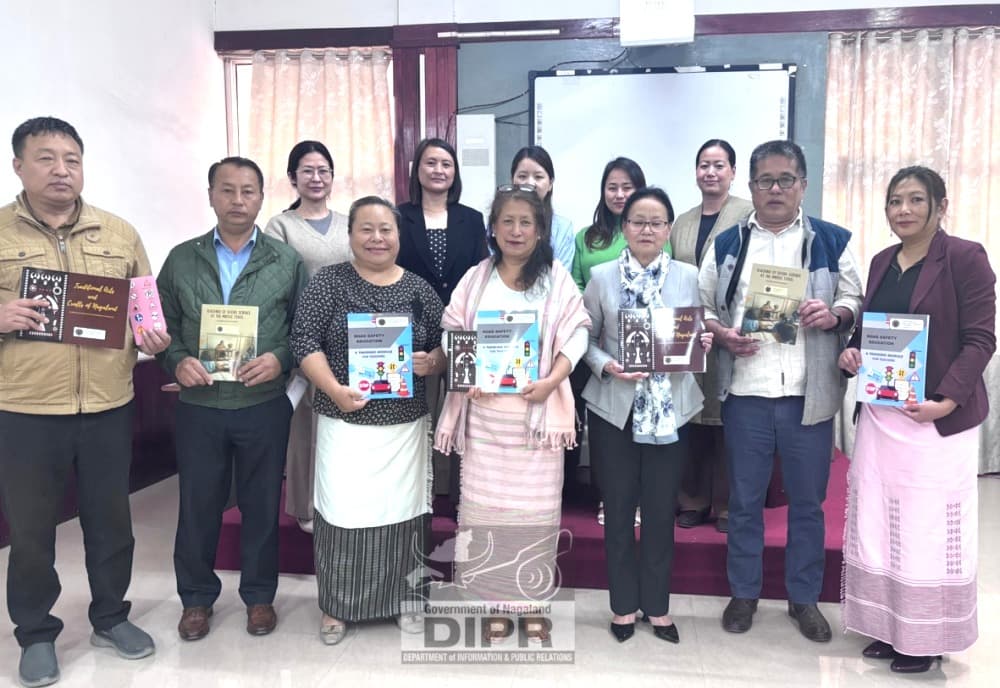
DIMAPUR — A series of educational publications developed by the Social Science and Mathematics cells of the State Council of Educational Research and Training (SCERT), Nagaland, was released on March 27 by Director SCERT Keviraleü Kerhüo in the presence of academic officers of the department.
According to a DIPR report, the publications include pamphlets on road safety education for school students, a module on road safety education for school teachers, a coffee table book on the traditional arts and crafts of Nagaland, a teacher resource book on the teaching of Social Science in the middle stage, and a book titled ‘Computational thinking: Your first steps.’
The road safety education pamphlets and the teacher training module were developed by the Social Science Cell to promote awareness among students and to support teachers in integrating road safety education into classroom teaching and school practices.
The module focuses on building road safety awareness among children and adolescents from an early age and on developing responsible behaviour, safety consciousness, and life skills among students.
It has been prepared in alignment with the vision of the National Education Policy (NEP 2020) and the National Curriculum Framework for School Education (NCF-SE), the report stated.
Also read: Nagaland rolls out DSSL PLC to boost reforms in education
The coffee table book on the traditional arts and crafts of Nagaland and the teacher resource book on the teaching of Social Science in the middle stage were also developed by the Social Science Cell.
The coffee table book documents traditional arts and crafts from different tribes of the state and aims to promote awareness among students and teachers about local culture and identity. The teacher resource book has been developed for teachers of Classes VI to VIII.
The Mathematics Cell of SCERT Nagaland developed “Computational thinking: Your first steps,” designed as a clear, accessible, jargon-free guide for elementary teachers and interested readers.
Through “unplugged” activities that require neither digital devices nor specialised resources, the book illustrates how computational thinking can be integrated across subjects and classroom contexts.
The publication aims to strengthen foundational skills such as logical reasoning, problem-solving, and creativity among students.
“The publications reflect SCERT Nagaland’s effort to provide teacher-friendly, context-based, and culturally relevant learning resources for schools across the state.
“The release of these materials is expected to benefit teachers across Nagaland and contribute to improving classroom teaching and learning,” the report stated.