


Six candidates share common platform in Khensa, jointly declaring bids for Koridang by-election before voters and supporters.
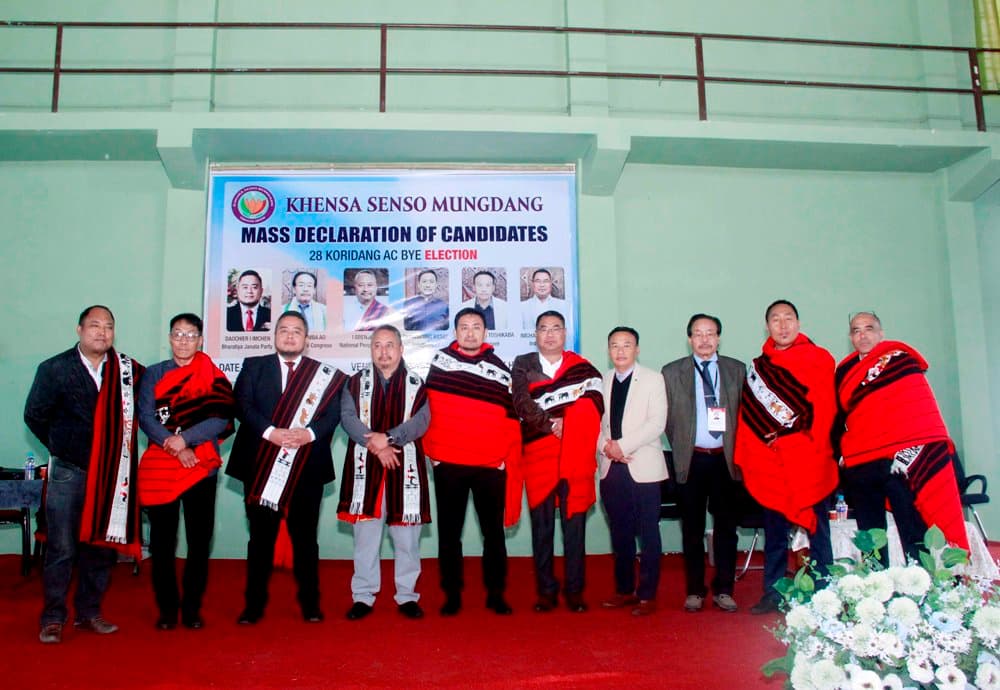
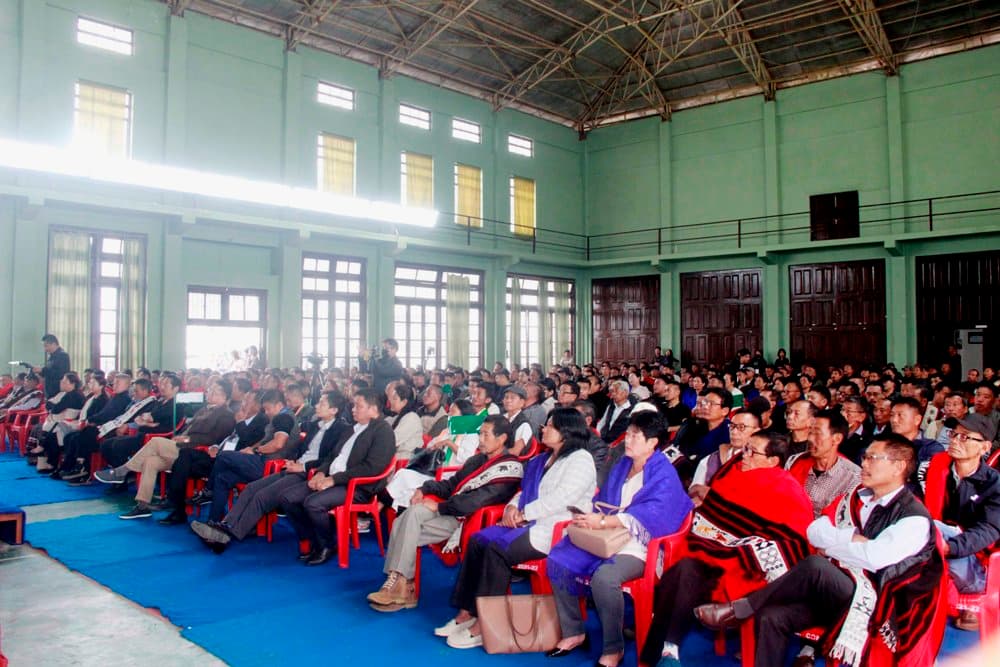
KHENSA — Six candidates, one stage, and a constituency watching closely—Khensa village witnessed an uncommon political gathering on Saturday as all contenders for the Koridang seat declared their bids together.
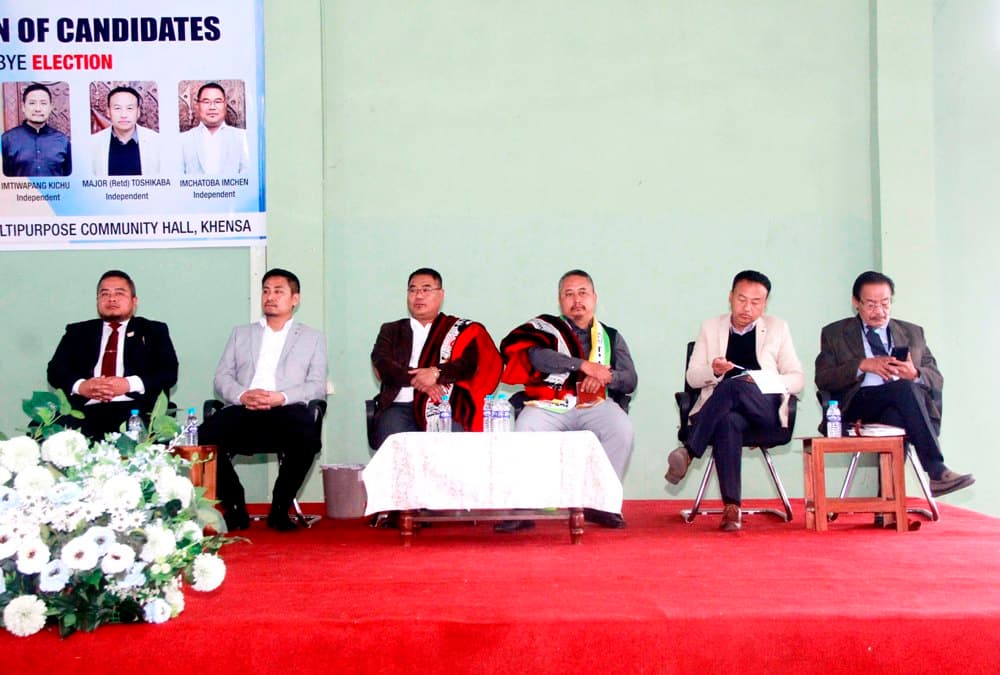
The mass declaration programme, organised by Khensa Senso Mungdang at the multi-purpose community hall, saw candidates across party lines—BJP, Congress, NPP and three Independents—share the stage, each outlining their vision and seeking public support in what is shaping up to be a closely watched contest.
The candidates—Daochier I Imchen (BJP), T Chalukumba Ao (Congress), I Abenjang (NPP), Imchatoba Imchen (Independent), Major (Retd.) Toshikaba (Independent), and Imtiwapang (Independent)—addressed the gathering one after another, presenting their priorities for the constituency.
Opening the series of speeches, BJP candidate Daochier I Imchen described the presence of multiple candidates as a “healthy sign of democracy,” adding that the common platform allowed voters to directly evaluate each aspirant’s ideas and commitments.
He acknowledged the relatively short tenure of the remaining Assembly term—around one year and six months—but said that he would treat it as a personal challenge to deliver with urgency and determination. Drawing emotional connect, he invoked the legacy of his late father (Imkong Imchen), stating that while leadership faces may change, the vision to serve the people must remain constant.
He also urged the electorate, particularly the youth, to unite and define clear agendas, stressing the importance of securing representation within the ruling establishment to ensure that the constituency’s voice is heard effectively in the Assembly.
Congress candidate T Chalukumba Ao, contesting the seat for the fourth time, struck a contrasting note by highlighting the importance of a functioning opposition. He argued that an opposition-less government weakens democratic accountability and called upon voters to uphold democratic principles through their mandate.
Describing the by-election as a crucial moment for Koridang, the Congress candidate said that the outcome would influence not just representation but also the broader political direction of governance.
He commended the organisers for providing a neutral platform and appealed to voters to let the “sacred ballot” decide the future.
NPP candidate I Abenjang emphasised the need for a “political revival” in Koridang, calling for renewed hope and collective progress. He assured that development, if entrusted with responsibility, would be shared equitably across all villages without bias.
Highlighting the party’s ideological positioning, Abenjang pointed to its focus on tribal welfare, youth engagement and women empowerment, while reaffirming his commitment to remain accessible to the people as a representative and counsellor.
Independent candidate Imchatoba Imchen positioned himself as a non-partisan voice, stating that he had declined offers from major political parties in order to contest independently and serve without constraints. Drawing from his experience in student and civil society organisations, he said that his political approach is rooted in addressing core Naga issues alongside local developmental needs.
He stressed that Koridang must prioritise youth and women empowerment, along with strengthening agriculture and allied sectors, to build a sustainable economic base. While acknowledging the constituency’s strong historical grounding in Naga nationalism, he observed that its core values need renewed clarity and direction.
Another Independent candidate, Major (Retd.) Toshikaba, presented an ambitious and structured vision for the constituency, outlining sector-specific initiatives ranging from youth and women empowerment to infrastructure and economic development.
He proposed dedicated timelines for empowerment programmes and highlighted infrastructure priorities such as road connectivity, while also suggesting initiatives aimed at boosting tourism and local enterprise. Urging voters to prioritise leadership qualities over financial influence, he framed the electoral choice as one between “money and vision.”
Imtiwapang, also contesting as an Independent, focused on the need for a shift in mindset and greater unity among the people. He pointed out that despite the availability of numerous central schemes, benefits often fail to reach the grassroots due to systemic and social challenges.
He stressed that meaningful development requires collective responsibility, including willingness to support infrastructure expansion and move beyond divisive politics. Presenting a broader development vision for the constituency, he called for inclusive growth, reduced disparities and long-term socio-economic progress.
Imtiwapang also underscored Koridang’s strategic importance within the district, citing its advantages in terms of geography and connectivity, and urged the electorate to capitalise on these strengths through cohesive action.