


Nagaland Art & Culture department hosts programme on ‘Living Morung’ and traditional farming to preserve indigenous knowledge systems.
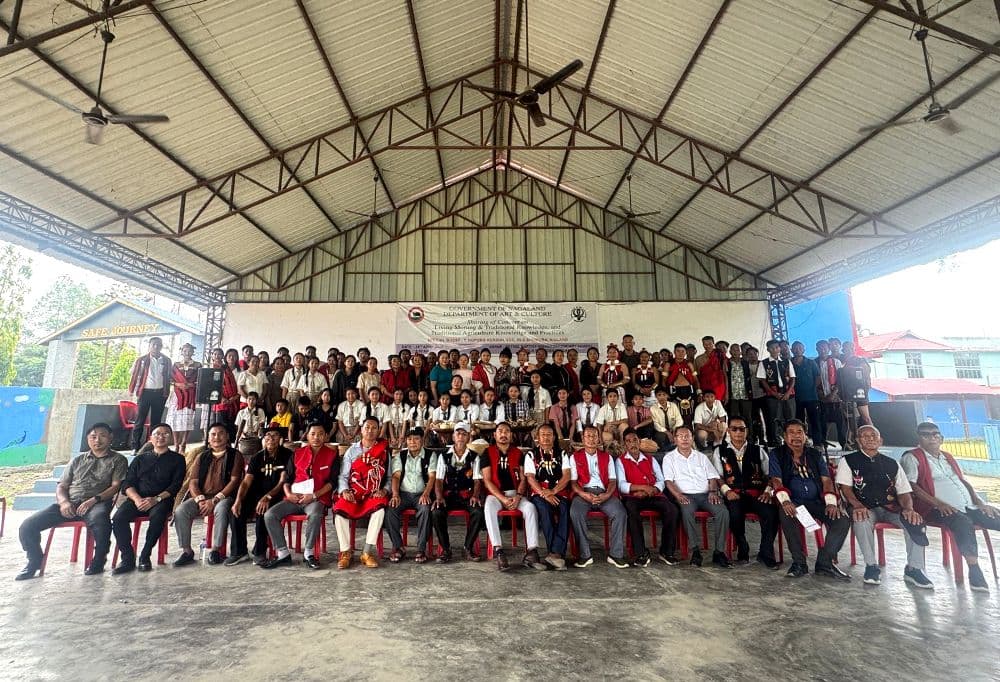
DIMAPUR — The Department of Art & Culture, Government of Nagaland, organised a one-day programme on “Sharing of concept on Living Morung & traditional knowledge, and traditional agricultural knowledge and practices,” on Saturday at Bethel Baptist Higher Secondary School, Old Showuba Village, Niuland district.
The event was held to document and promote indigenous knowledge systems and concluded successfully, an update stated.
In his keynote address, Teisovikuolie Therie, Deputy Director of Art & Culture, highlighted the concept of ‘Living Morung’ as a traditional institution where youth are taught indigenous knowledge, social discipline, and agricultural practices by elders and community experts.
He stated that the department is documenting such living traditions to safeguard intangible cultural heritage.
Y Hopung Kussun, the special guest for the event, appreciated the Department’s efforts to bring traditional knowledge into public discourse and encouraged youth to learn from community elders.
The cultural segment included a folk tale narration by R Tokam, GB, and a folk dance by Loyilo Cultural Club.
Read more local news: Officials discuss Nagaland urban strategy 2025–2050
Viksit Nagaland @2047: Consultative workshops held in Tuensang, Longleng
K Kehoto, GB, presented a narration on the role of the morung in transmitting agricultural knowledge across generations.
The main session on traditional farming was conducted by resource persons Nokrunba, who shared insights on seasonal and ecological indicators used in farming and S Shokum, who explained traditional crop selection and practices.
They were assisted by W Lakiumong, M Luyanba, K Hilumong, and H Thrunso, who gave live demonstrations of traditional methods including slope-based cropping, use of indigenous tools, and seed preservation techniques.
A hands-on demonstration of traditional farming practices was held in the afternoon, followed by an open discussion where participants shared their experiences.
Certificates were distributed by Teisovikuolie Therie.
The programme showcased sustainable, organic, and community-led agricultural practices of Naga communities, with emphasis on how festivals, rituals, and the morung system are integrated with the farming calendar.
Earlier, the programme commenced with a prayer by Rev. B Tochumong, pastor of SBC, followed by a folk song presented by Shorih Cultural Club.
Documentation from the event will be archived as part of the department’s ongoing initiative to create a digital repository of indigenous knowledge.
The Department of Art & Culture is conducting documentation programmes to promote, preserve, and propagate the diverse cultural traditions of Nagaland, Therie stated.