


President Droupadi Murmu grants assent to the Frontier Nagaland Territorial Authority Bill, covering six eastern Nagaland districts
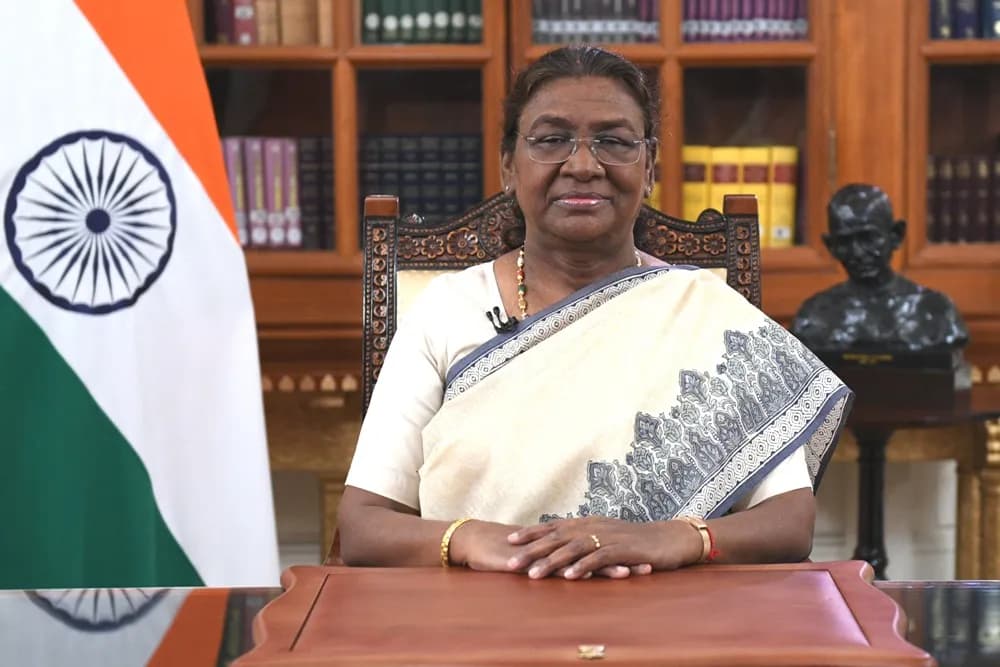
DIMAPUR — Dimapur, Oct. 25 (EMN): President Droupadi Murmu has granted assent to the Frontier Nagaland Territorial Authority (FNTA) Bill, 2026, Chief Minister Neiphiu Rio announced on Sunday.
In a post on X, Rio thanked the president and the Union home ministry for coordinating the process. He described the assent as “a key step towards realising the aspirations of the people of Eastern Nagaland”.
The Nagaland Legislative Assembly had unanimously passed the Bill on September 3. The legislation provides for an authority covering Mon, Tuensang, Longleng, Kiphire, Noklak and Shamator, with powers over 46 subjects.
The next steps include formal publication and commencement of the Act in accordance with its provisions. Section 1(3) of the Bill states that the Act will come into force on a date appointed by the state government through a notification in the official gazette.
The FNTA will have 62 members, including 40 directly elected representatives from single-member territorial constituencies. One-third of the elected seats will be reserved for women.
Also read: Nagaland Assembly passes FNTA Bill after months of legal, political wrangling
President Droupadi Murmu to inaugurate Hornbill Festival on December 1
The remaining members will comprise 20 MLAs whose constituencies fall within the Frontier Nagaland Territory (FNT) and two members nominated by the governor. The MLAs will be ex-officio members without voting rights and will be barred from joining the authority’s executive council. The two nominated members, drawn from recognised tribes that are unrepresented or under-represented, will have voting rights.
The elected members will normally serve five-year terms. The state government will determine the boundaries of the 40 constituencies, while elections will be conducted under the control of the state election commission.
The Bill also provides for an interim council until the elected authority is constituted. The state government may establish the interim body, with the governor nominating up to 13 members recommended by the Eastern Nagaland Peoples’ Organisation (ENPO) in consultation with the respective tribal councils.
The governor may also nominate up to four elected representatives from the territory—one MP and three MLAs—as advisors to coordinate with the Centre and the state government.
The interim council can function for up to one year or until the first elected FNTA is constituted, whichever comes earlier.
The agreement to establish the FNTA was signed on February 5 by the Centre, the Nagaland government and ENPO after prolonged negotiations over the region’s demand for a separate administrative arrangement.