


Nagaland Assembly passes revised FNTA Bill, creating a regional authority for Eastern Nagaland after months of consultations and legal review
KOHIMA — The Nagaland Legislative Assembly on Thursday passed the revised Frontier Nagaland Territorial Authority (FNTA) Bill, 2026, paving the way for a special regional authority covering the six districts of eastern Nagaland.
The FNTA will comprise Tuensang, Mon, Longleng, Kiphire, Noklak and Shamator districts.
The Bill provides for the constitution of the FNTA as a decentralised self-governing authority within the state of Nagaland, with powers and responsibilities aimed at addressing the region’s developmental, social, economic, educational, cultural and linguistic needs.
The matter was taken up for discussion on Thursday before the Bill was passed. Twelve legislators, including six from eastern Nagaland and six representing various political parties, participated in the discussion.
The MLAs described the legislation as “historic”, while stressing that it was “not to separate” but “to unite” the people.
Chief Minister Neiphiu Rio, in his closing remarks, said the FNTA was envisaged to promote comprehensive economic development in eastern Nagaland and align the region’s development with the rest of the state.
Also read: What the revised FNTA Bill means for eastern Nagaland
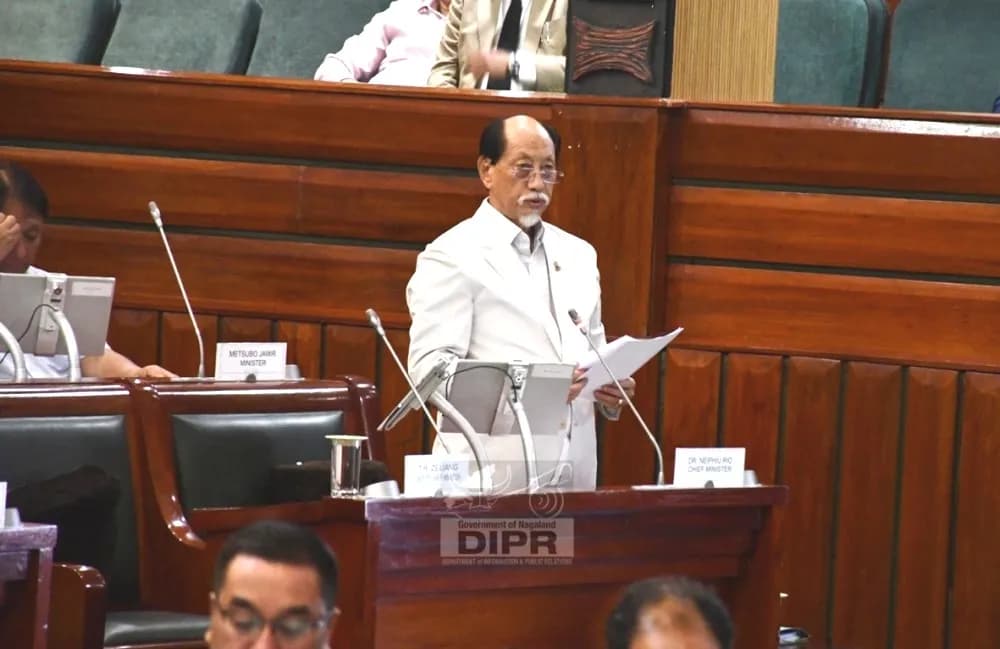
He said the authority would provide democratic, decentralised self-governance at the regional level and enable the people of eastern Nagaland to fulfil their social, economic, educational, cultural and linguistic aspirations.
Under the proposed arrangement, the state government will allocate funds to the FNTA based on its population and area. The government of India, taking into account the region’s underdevelopment and infrastructure deficit, will provide special development grants under various schemes and programmes for infrastructure development within the FNTA.
The authority will identify development projects in consultation with the state government and prepare its own annual plan within the funds allocated for departments and subjects under its control. It will also have its own planning and finance set-up to formulate development plans based on grassroots needs.
Rio said the state government would ensure timely release of funds in accordance with the laid-down norms of the state and central governments.
Read more from NLA session: ‘Nagaland is peaceful’: Assembly seeks end to Protected Area Permit
He said the FNTA was the result of a long-standing demand for a special institutional arrangement to address genuine concerns relating to development, accelerate economic growth and ensure all-round progress in eastern Nagaland.
“Through this Authority, we seek to bring about comprehensive and inclusive development, bridge the developmental gaps and take governance and development right to the doorsteps of every citizen, particularly those residing in the remotest corners of our state. This is not just an administrative arrangement, but a reaffirmation of our collective commitment to ensure equitable development, unity and progress for all sections of our people,” he said.
MoA lays foundation for FNTA
The FNTA process stems from a Memorandum of Agreement (MoA) signed on February 5, 2026, between the government of India, government of Nagaland and Eastern Nagaland Peoples’ Organisation (ENPO) for constitution of the authority within Nagaland.
Rio said Clause 3.3 of the MoA provides for constitution of the FNTA through special legislation to be enacted by the state government in consultation with the Ministry of Home Affairs (MHA).
Following the signing of the MoA, the state government prepared a Bill incorporating its provisions and sought legal advice from the advocate general of Nagaland. The question of conferring legislative powers on the FNTA through state legislation, as envisaged in the MoA, was identified as requiring further clarity and brought to the notice of the MHA.
A draft Bill was subsequently submitted to the MHA on March 17. The ENPO, representing the eight tribes of eastern Nagaland, meanwhile requested the state government on March 24 to pass the Bill during the ongoing Assembly session.
The Bill was introduced in the Assembly on March 26. However, later that day, the MHA requested the state government to take further action regarding the legislation. The government also received an appeal from ENPO to uphold the provisions of the MoA, while the Eastern Nagaland Legislators’ Union (ENLU) sought deferment of the Bill until concerns were addressed and clarity attained.
The Bill was accordingly deferred and referred back to the state government for further examination.
Revised Bill after consultations
The state government subsequently revisited the provisions of the MoA and consulted various stakeholders. During the process, it reiterated that Article 371(A) of the Constitution should not be amended or diluted.
On June 10, ENPO urged the state government to expedite constitution of the FNTA in accordance with the MoA and initiate consultations with the MHA under Clause 3.3.
On June 24, a Cabinet delegation led by Rio met Union Home Minister Amit Shah in New Delhi to discuss the constitution of the FNTA, including its constitutional and legal aspects. The delegation requested the MHA to hold discussions with ENPO on outstanding issues for their amicable and early resolution.
ENPO also wrote to the Union home minister on June 23 seeking urgent intervention for creation of the FNTA in accordance with the MoA.
On July 3, ENPO issued a circular calling for peaceful rallies at all district headquarters in eastern Nagaland. It said the rallies were intended to reaffirm the people’s commitment to the MoA and urge the governments of India and Nagaland to facilitate its implementation without delay.
The state Cabinet on July 6 reiterated that the safeguards under Article 371(A) were inviolable and should neither be diluted nor altered. It also decided to seek an increase in the proposed special development grant under the MoA from INR 5,000 crore to a minimum of INR 10,000 crore.
The Cabinet further decided that a delegation led by Rio, including members of the ENLU, would travel to New Delhi for further advice, approval and guidance from the Government of India.
A revised draft Bill, incorporating provisions relating to legislative powers of the FNTA and aligned with the constitutional framework, was subsequently prepared on the advice of the advocate general.
Rio, along with Cabinet colleagues and senior state officials, later met MHA officials and submitted the revised draft Bill to the ministry on July 16 for examination and advice under Clause 3.3 of the MoA.
The state government also requested enhancement of the special development grant under Clause 11.2 of the MoA. The MHA said during the July 16 meeting that it would examine the revised draft and hold further consultations before reverting to the state government.
On August 11, the MHA communicated its response after examining the revised Bill in consultation with the Ministry of Law and Justice. It also discussed the draft with ENPO, which had made several suggestions.
The MHA suggested changes to the preamble relating to the autonomy of the FNTA, expansion of consultation with the authority over postings of officers and officials within the region, and enhanced powers concerning transfers and postings within the FNTA.
The state government examined the suggestions in light of the MoA and obtained the advocate general’s opinion.
A meeting chaired by Rio, with Cabinet colleagues, members of the ENLU and ENPO, was held on August 25 to discuss the constitution of the FNTA and the MHA’s suggestions.
Following the discussions, the Cabinet approved the necessary changes and cleared the revised Bill for tabling in the Assembly.
The earlier Bill was withdrawn on September 1, paving the way for the revised legislation passed by the House on Thursday.
Rio said the constitution of the FNTA would go a long way towards fulfilling the aspirations of the people of Eastern Nagaland.
The legislators who participated in Thursday’s discussion were P Bashangmongba Chang, A Nyamnyei Konyak, P Longon, A Pongshi Phom, Sethrongkyu, S Keoshu Yimchunger, Temjen Imna Along, Jwenga Seb, Dr. Sukhato, Z Nyusietho, Dr. Kekhrielhoulie Yhome and Achumbemo Kikon.
JOIN OUR WHATSAPP CHANNEL