


Phek Town Baptist Church Women Department observes Women Welfare Day with a focus on preserving tradition and embracing progress.
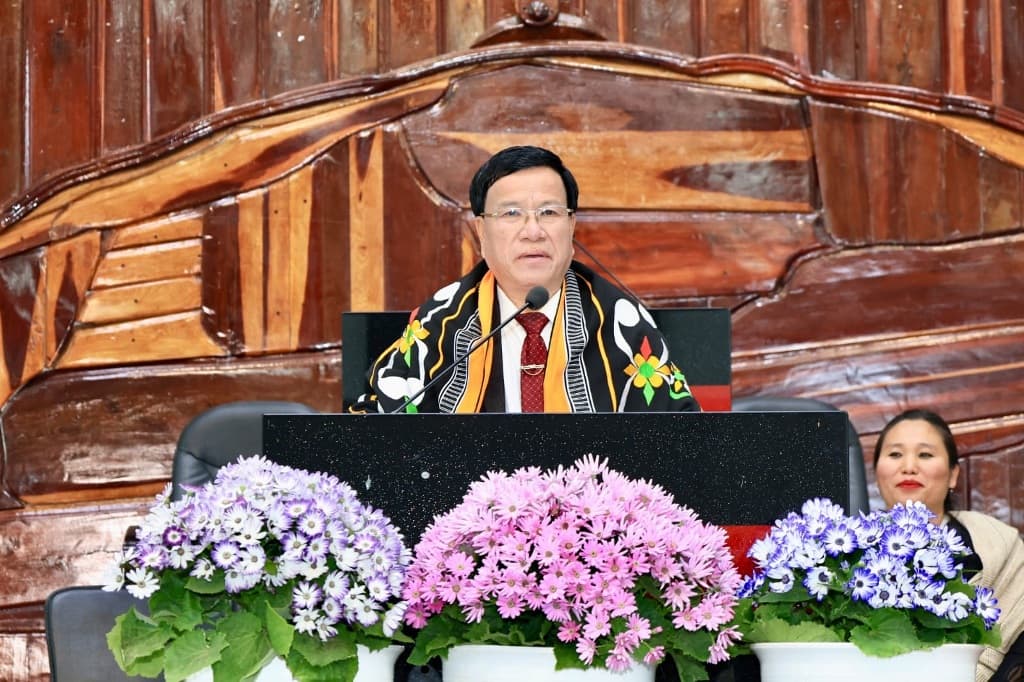
DIMAPUR — The Women Department of the Phek Town Baptist Church (PTBC) observed Women Welfare Day in Phek town on Wednesday on the theme “Preserving tradition and embracing progress”.
Speaking on the occasion, Kedoutsolhi Wetsah, President of the Chakhesang Cultural Organization (CCO), said that the Government of Nagaland has declared Phek district as the "Land of Tradition".
The main purpose of this recognition is to preserve the rich cultural heritage passed down from ancestors, he noted, according to an update.
He said that women in every village actively participate in activities like weaving, handloom, and handicrafts, adding that the Chakhesang Women Welfare Society (CWWS) has been doing exemplary work by promoting weaving, tailoring, and factories providing training and certificates to young girls for self-employment.
Also read: 'The Social Garden' restaurant launched in Mokokchung
So far, the CWWS has secured the Geographical Indication (GI) tag for 18 items of shawls and mekhalas, showcasing traditions on a wider stage, he said.
Touching on the rising unemployment rate due to a lack of work culture, he called upon women to lead the way in instilling discipline, skill-building, and entrepreneurial spirit to preserve “our traditions while embracing progress for a thriving future.”
Wetsah challenged the PTBC Women Department to provide training opportunities for young girls in weaving, create innovative ideas to enhance weaving skills, tailoring, and hands-on learning ensuring proper practice and certification for self-employment. He also encouraged the department to embrace the latest technologies for promotion, like digital marketing and online platforms.
“Through online platforms and digital tools, your products can be sold outside the state in emporiums like Kohima, Dimapur, Delhi, Mumbai, Kolkata, and beyond,” he said.
He stated that the Government of India and the Government of Nagaland, through the departments of Industries and Commerce and Textiles, are promoting traditional handloom and handicrafts, highlighting “our unique, eco-friendly tribal artisan products made from natural fabrics like cotton, bamboo, nettles, and banana fibres.”
Also urging women to preserve culture and traditions in their original form, he said, “Often, during village programmes like golden jubilees or 75th/100th anniversaries, new designs are created for village-specific shawls. We do not object to innovation, but such shawls should be recognised as belonging to that respective village, not as official Chakhesang community shawls until approved by the CPO, CCO, CARB or CWWS.”
He noted that the Chakhesang tribe has a rich variety of shawls and mekhalas, “yet, we have not finalised a common attire for men and women. For instance, in church or village events, you see 5-6 different colours and designs, making it hard to identify the original Chakhesang shawl or mekhala amid the variations.”
In contrast, he said, tribes like Ao, Sema, Lotha, and Angami use one common shawl or mekhala for official events, allowing easy identification of their tribal identity.
He said that the CCO, CPO, CWWS, and CARB will soon identify and finalise common attire for both men and women to wear in general. Further, he challenged the mothers to educate and teach their children to speak their mother tongue confidently.
He stated that under the “One Family, One Product” initiatives, the PTBC Women Department will provide seeds to each family, who will then plant five Naga King Chilli plants to boost local production and livelihoods.