


NVBDCP team reviews malaria and dengue prevention measures, disease surveillance and awareness in Zunheboto.
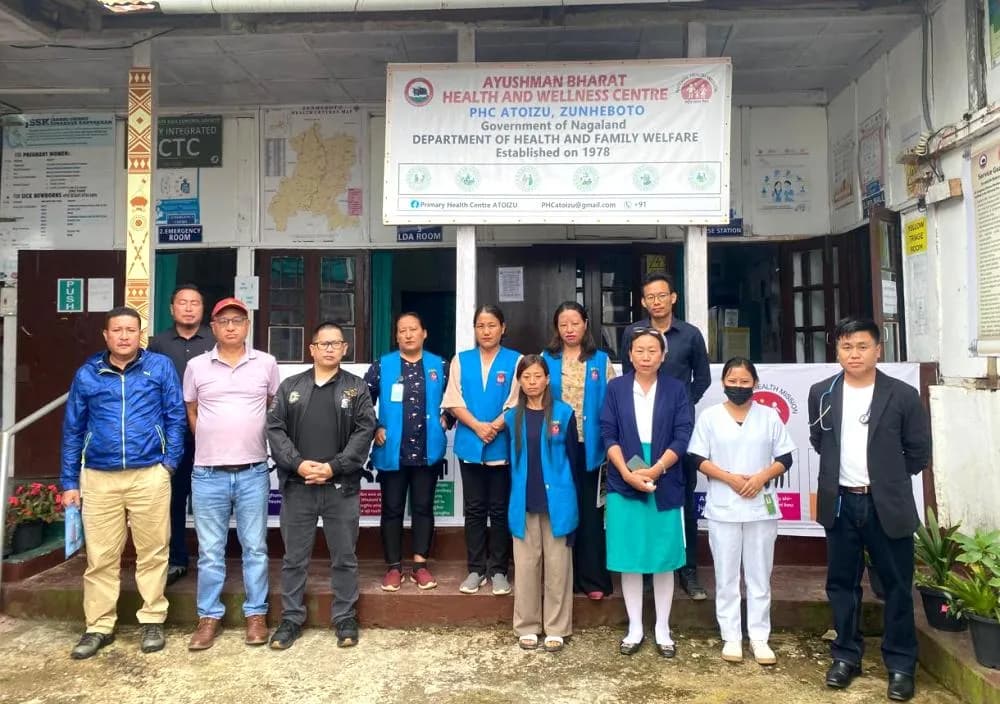
DIMAPUR — A state team from the National Vector Borne Disease Control Programme (NVBDCP), Directorate of Health and Family Welfare, conducted an official tour of the Zunheboto district from October 5 to the 7th to review and strengthen disease prevention and control activities.
According to an update, the team was led by Dr. Imnapokim, State Programme Officer (SPO) of NVBDCP, alongside Dr. Kavito Zhimomi, Deputy Director of NVBDCP. The team visited health units across different blocks of the district to assess programme implementation, review disease surveillance activities, and interact with health personnel.
As part of the visit, a sensitisation programme was held at the deputy commissioner’s conference hall in Zunheboto, attended by officials from government departments, district authorities, churches, civil society organisations, and other stakeholders.
Mudosayi Hurie, Consultant for District Vector Borne Diseases, presented an epidemiological report detailing programme coverage across villages and health units. The report analysed malaria trends from 2018 to 2026 and dengue trends from 2023 to 2026, pointing out the necessity of continued surveillance, timely diagnosis, and intervention.
Read more local news: Stakeholders deliberate on draft Nagaland Community Conserved Areas policy
Dr. Chumben Murry highlights role of community health officers
Delivering the keynote address, Dharam Raj, Deputy Commissioner of Zunheboto, called for sustained and coordinated efforts to tackle the district's vulnerability to vector-borne diseases. He stressed preparedness, community participation, and inter-departmental coordination in controlling diseases such as malaria and dengue, urging regular vector-control measures and proper resource utilisation.
The NVBDCP team outlined the structure and functioning of the District Task Force and District Elimination Committee. The team also presented the dengue and Japanese Encephalitis situation in the district based on entomological data.
Stakeholders were sensitised on key interventions, including the proper use of long-lasting insecticidal nets (LLINs), indoor residual spraying, environmental sanitation, school and church awareness initiatives, and focal spraying. The state team underlined proper LLIN usage as a critical element of malaria prevention.
During the discussion, participants raised queries regarding the safe use of LLINs and focal spraying operations, which were clarified by Dr. Imnapokim.
In the concluding remarks, Dr. Kavito underlined the 3Ts strategy—Testing, Treatment, and Tracking—for the effective management and elimination of malaria.