


NTEP sensitises private practitioners in Dimapur on updated TB management, treatment protocols and public-private collaboration
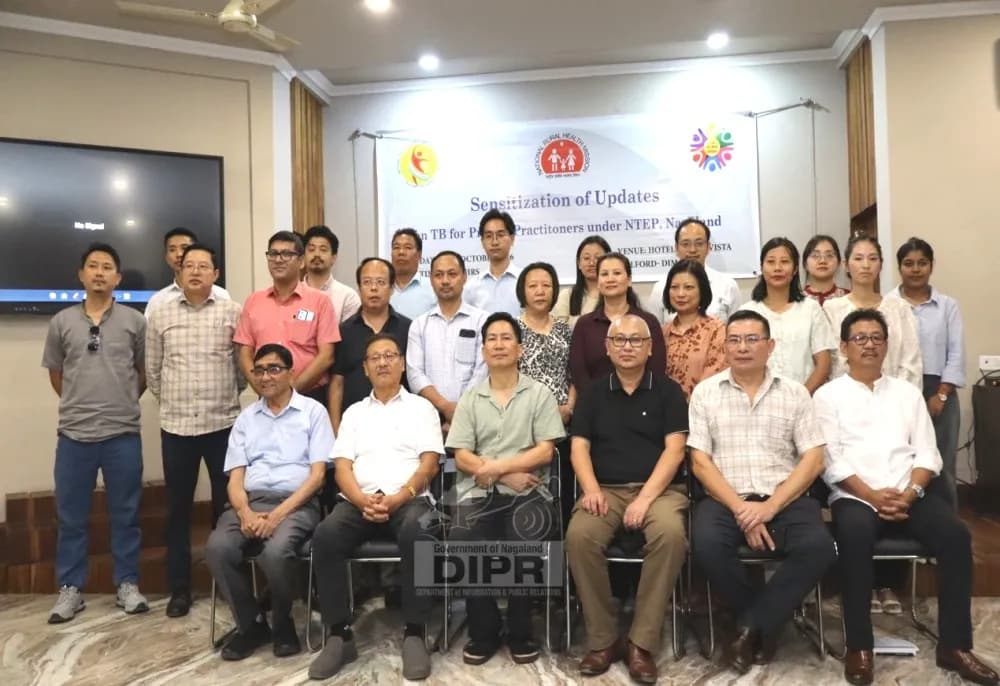
DIMAPUR — The National Tuberculosis Elimination Programme (NTEP) organised a sensitisation programme for private practitioners on the latest developments in tuberculosis (TB) prevention, diagnosis and treatment at Hotel Grand Vista, Dimapur, on October 23, emphasising the need for stronger public-private collaboration to achieve TB elimination.
Addressing the programme, Chief Medical Officer Dr. T Yetovi Tuccu highlighted the importance of keeping healthcare providers updated on the latest developments in TB management and ensuring coordinated efforts to combat the disease, a DIPR report stated.
He stressed that private practitioners must adhere to government-prescribed guidelines and treatment protocols, warning that inconsistent treatment practices could have serious consequences for patients and public health.
Tuccu noted that private healthcare providers played a crucial role in TB elimination, as many patients sought treatment from private clinics, hospitals and individual practitioners.
Also read: Nagaland’s missing TB cases: WHO consultant flags detection gap
He urged them to remain familiar with government policies and updated treatment guidelines to ensure appropriate diagnosis and management.
Highlighting the situation in Nagaland, he stated that the state continued to report a significant number of TB cases, with Dimapur district recording the highest number among the districts, raising concerns over the disease burden.
Citing the World Health Organisation's Global Tuberculosis Report 2024, Tuccu stated that an estimated 10.7 million people developed TB worldwide in 2023, resulting in approximately 1.25 million deaths.
India accounted for around 25–28% of the global TB burden, he noted, underscoring the need for sustained efforts to control the disease.
He identified malnutrition, high population density, diabetes, tobacco use and alcohol consumption as major factors contributing to TB prevalence.
He also highlighted the association between diabetes and TB as an important concern requiring greater awareness and preventive measures.
Emphasising the importance of treatment adherence, Tuccu observed that financial difficulties and limited access to healthcare could lead some patients to discontinue medication after experiencing initial relief. Such interruptions could increase the risk of relapse and drug-resistant TB, he cautioned.
He urged private practitioners to counsel patients on the importance of completing the prescribed course of treatment and to refer those requiring additional assistance to government healthcare facilities.
Patients referred to the government sector could access free diagnostic services and medical treatment, along with eligible government support schemes, including nutritional assistance, he informed.
Tuccu called for stronger collaboration between private practitioners and the government health system to ensure that every diagnosed TB patient received appropriate treatment and completed the prescribed course of medication.
He said coordinated efforts were essential to preventing treatment interruptions, reducing drug resistance and advancing the goal of TB elimination.
The programme commenced with a welcome address and introduction by State TB Officer Dr. Akum Jamir, who also delivered a presentation on the TB Mukt Bharat Abhiyaan strategy, highlighting initiatives aimed at accelerating efforts towards a TB-free India.
Dr. Collins Z Sono, Medical Consultant with the World Health Organisation (WHO), spoke on recent updates in the management of drug-resistant tuberculosis (DR-TB) and the new regimen for TB preventive therapy.
Temjenochetla Ao, State PPM Coordinator, NTEP, conducted a session on partnerships for TB care, focusing on strengthening public-private collaboration in TB prevention, diagnosis and treatment.
Dr. DR Sharma, President of the Indian Medical Association (IMA), presented the response from private practitioners, highlighting their role in supporting TB elimination efforts.
Dr. Hutokha Hesso, Senior Medical Officer, delivered a presentation on National AIDS Control Programme (NACP) goals.
In his opening remarks, Tuccu also referred to the long history of TB, noting that evidence of the infection had been found in ancient Egyptian mummies and human skeletal remains.
He recalled the discovery of Mycobacterium tuberculosis by Robert Koch in 1882 and the introduction of the Bacillus Calmette–Guérin (BCG) vaccine in 1921, observing that TB continued to be one of the leading causes of death from infectious diseases despite more than a century of medical progress.
The programme concluded with a vote of thanks delivered by District TB Officer, Dimapur, Dr. Mlato Shikhu.
The sensitisation programme is expected to strengthen private healthcare providers' awareness of updated TB management protocols and improve coordination with NTEP, contributing to collective efforts towards tuberculosis elimination.