


Bachelor of Social Work students of NEISSR participate in 10-day rural camp at Shoixe village.
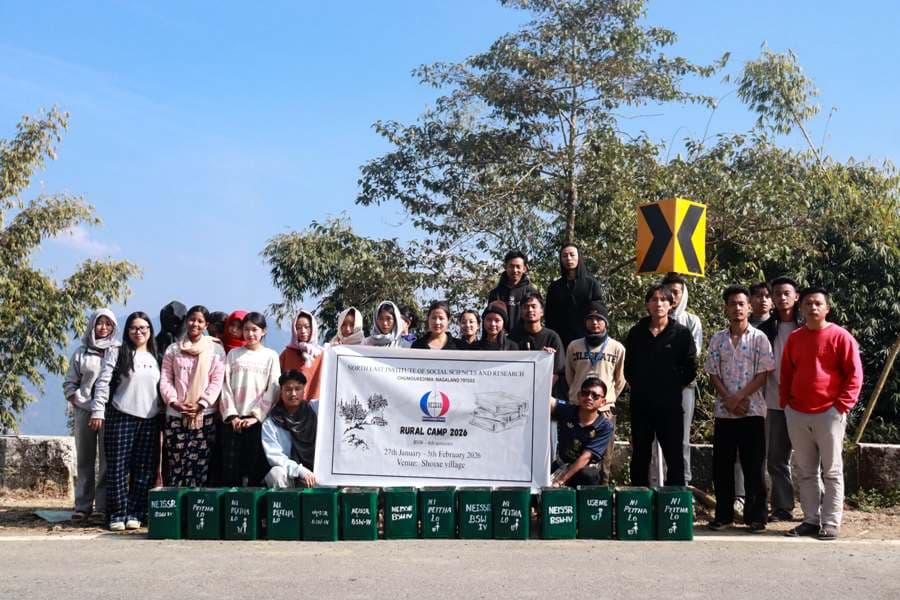
DIMAPUR — To gain first-hand exposure to rural life and apply social work methods in field settings, the fourth-semester trainees of the Bachelor of Social Work (BSW) programme at the North East Institute of Social Sciences and Research (NEISSR), Chümoukedima, participated in a 10-day rural camp at Shoixe village in the Sataka block of Zunheboto district from January 27 to February 5.
The rural camp was organised as an integral component of the institute’s fieldwork and community engagement requirements, aimed at providing trainees with experiential learning in rural development processes, participatory research methods and community organisation, said an update from NEISSR.
During the 10-day-long camping, the trainees undertook Participatory Rural Appraisal (PRA) activities, including social mapping, seasonal mapping, resource mapping, matrix ranking and timeline exercises, to understand the village profile, available resources and prevailing living conditions.
They conducted home visits to facilitate direct interaction with households and to obtain insights into the socio-economic conditions of the community, said the update, adding that a socio-economic survey of selected households was also carried out as part of the academic requirements.
Related: NEET-JEE foundation programme launched at Pilgrim Higher Secondary School Dimapur
The trainees organised various community events, including an awareness programme on drug addiction, highlighting its social, health and economic consequences and emphasising preventive measures and community responsibility in addressing substance abuse.
As part of community development initiatives, they assisted villagers in clearing forest land and undertook cleanliness drive in collaboration with the NSS Unit, NEISSR. Dustbins were installed at selected locations in the village to promote sanitation and environmental awareness, said the update.
They also organised a sports meet, which saw active participation from villagers, and a picnic to promote peer bonding and teamwork among the trainees, it added. World Cancer Day was observed February 4.
‘The camp concluded with a cultural programme themed Celebrating Culture, Unity and Community, which featured cultural performances, folklore presentations, a talk on the preservation of indigenous culture and special performances by trainees and community members,’ read the update.
The institute has expressed its appreciation to the Shoixe Village Council, Village Development Board, Church authorities, Youth Forum, Students’ Union and residents of the village for their cooperation and support during the exposure camp.