


SARS and Watsü Mungdang collect 26 traditional recipes from nine Naga communities to preserve indigenous food traditions
SARS, Watsü Mungdang training seeks to document Naga cuisines, foster food entrepreneurship
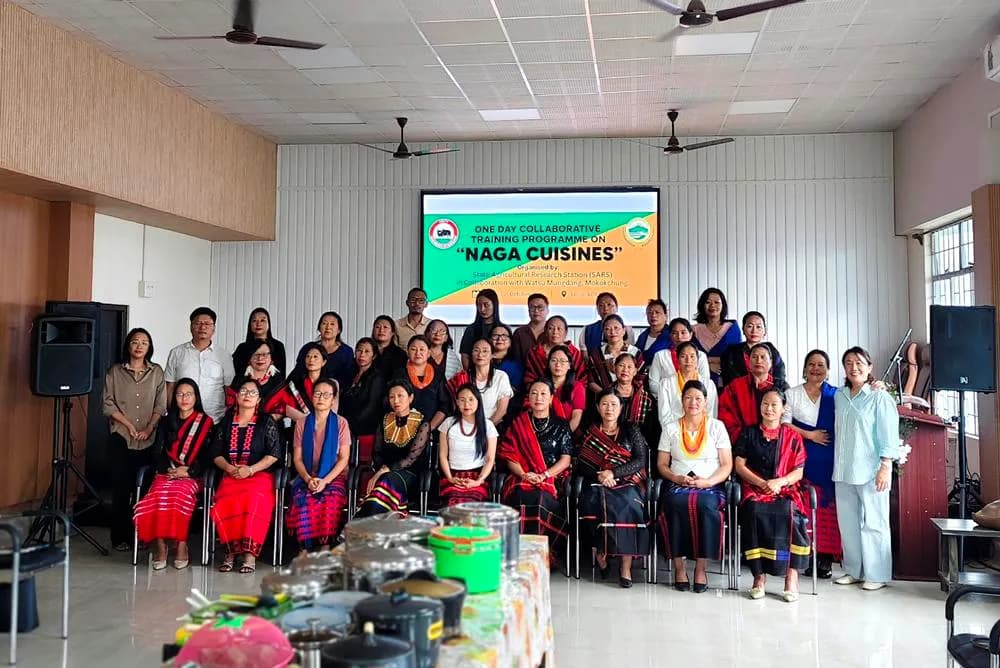
MOKOKCHUNG — The State Agricultural Research Station (SARS), Yisemyong, in partnership with Watsü Mungdang, organised a one-day collaborative training programme on “Naga Cuisines” at AOR Kilem, Mokokchung, on October 31.
Representatives from various Naga tribes gathered to share traditional dishes, exchange culinary knowledge and explore ways of preserving indigenous food practices through documentation and entrepreneurship.
In all, 26 traditional recipes were collected from nine Naga communities — Ao, Lotha, Sumi, Phom, Konyak, Chang, Sangtam, Khiamniungan and Yimkhiung. The Tenyimi community could not participate.
Delivering the keynote address, I Lipokonen Jamir, Joint Director, SARS, Yisemyong, said the programme sought to promote the exchange of traditional culinary knowledge while linking indigenous food systems with agricultural conservation and economic opportunities.
He noted that SARS has been working to conserve indigenous crops through seed preservation, collection, cultivation and gene banking. The preservation of traditional food systems, he observed, is closely tied to the conservation of agricultural biodiversity, since many indigenous dishes rely on locally grown crops and produce.
Also read: Udyam, FSSAI registrations exceed targets in Nagaland
Promoting traditional Naga cuisines, Jamir said, could indirectly benefit farmers by generating demand for indigenous agricultural produce. When food-based enterprises are built around traditional dishes, the cultivators of the ingredients also stand to gain.
Explaining the collaboration with Watsü Mungdang, he pointed out that women play a vital role in safeguarding traditional cooking practices and transmitting culinary knowledge across generations. Although the programme could have been organised with students or other groups, women were particularly relevant because of their central role in preserving food traditions, he said.
Jamir encouraged women to look beyond conventional kitchen responsibilities and explore entrepreneurship in the food sector.
By developing businesses centred on indigenous cuisine, he said, they could contribute not only to their household economies but also to the wider state economy.
On the potential of food tourism, he observed that while Nagaland’s traditional dances and songs already form part of its cultural identity, food tourism holds promising opportunities.
Even within a single tribe, dishes and tastes vary, and the culinary traditions of different Naga tribes offer a far wider range of food experiences.
He urged participants to learn from one another and find ways to turn traditional dishes into viable enterprises, stressing that indigenous Naga people themselves should take the lead in establishing and promoting businesses rooted in their culinary heritage.
Regarding documentation, Jamir informed that each participating tribe had initially been asked to bring two dishes, which would have yielded 18 recipes from the nine communities.
Several participants, however, brought additional dishes, raising the total to 26. These recipes will be documented and compiled into a small recipe book.
Much of the traditional culinary knowledge has been passed down orally through generations, and written documentation would help preserve the recipes for the future, he added.
The technical session on food safety standards was conducted by N Hamche Phom, food technician, Food Safety Department, Health & Family Welfare.
Phom underlined the importance of food safety for anyone intending to convert traditional food products into commercial ventures.
Explaining the role of the Food Safety and Standards Authority of India (FSSAI), Phom said the regulatory body oversees food-related activities including manufacturing, distribution, storage, sale and import to ensure that food remains safe for consumption.
Food safety, the speaker explained, involves preparing, handling, storing and serving food under conditions that prevent contamination and food-borne illnesses.
Referring to a past food poisoning incident in Longleng, Phom highlighted the serious consequences of consuming contaminated food and the need to follow prescribed safety practices.
The session also covered FSSAI registration and the requirements for food packaging and labelling.
Packaged food products must display the FSSAI registration number, product name, batch identification, ingredients and nutritional information.
Potential allergens must be declared, and appropriate vegetarian or non-vegetarian identification provided.
Maintaining batch-wise production records is essential for traceability and product recall if contamination is detected. Participants were advised to use food-grade packaging materials, especially for acidic products such as pickles.
On sanitation and hygiene, Phom emphasised personal cleanliness, proper handwashing, trimmed nails, and the use of protective clothing and gloves during food preparation.
Vegetarian and non-vegetarian items, utensils and storage containers should be kept separate to avoid cross-contamination.
Proper storage of perishable and high-risk foods such as milk, meat and eggs requires adequate refrigeration and temperature control to prevent microbial growth.
Clean preparation areas, sufficient lighting and proper sanitation were also identified as essential.
Prospective food entrepreneurs were urged to understand and comply with food safety regulations before entering the market. Proper registration, packaging, labelling and hygiene practices, Phom noted, help build consumer confidence.
In a short address, Watsü Mungdang president Tianaro underlined the significance of traditional cuisine as an expression of Naga identity and belonging.
She highlighted the rich diversity of Naga culture, including its food traditions, and the need to recognise and preserve their value.
The event concluded with a lunch featuring all 26 dishes prepared by the participating tribes.