


ICAR Nagaland showcases newly developed high-yielding rice varieties with 30 to 40 per cent higher yield at Sechü-Zubza
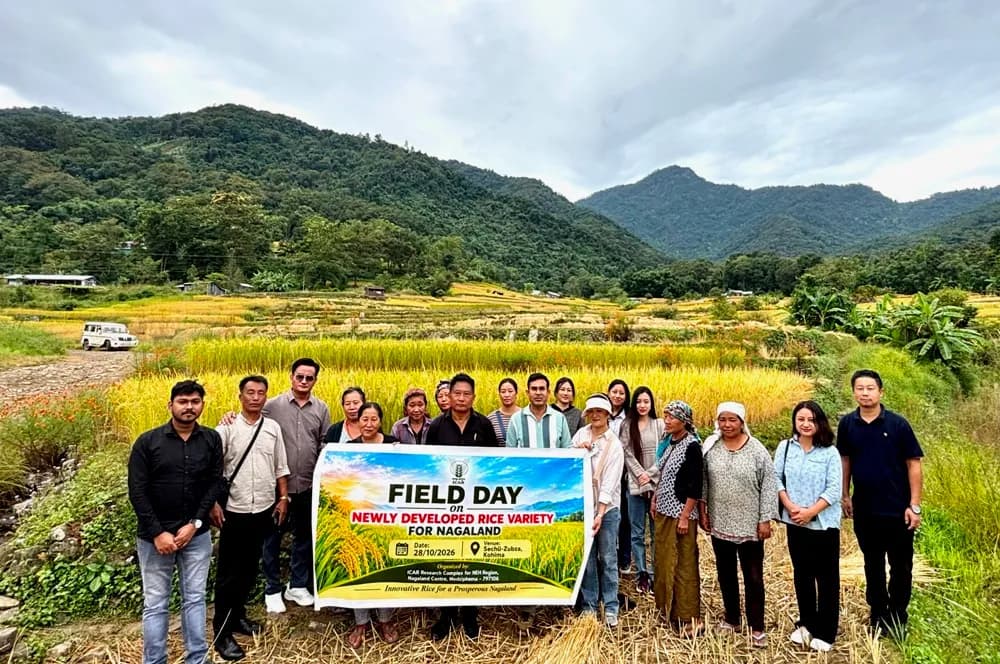
DIMAPUR — Four newly developed rice varieties have demonstrated an estimated yield advantage of 30 to 40 per cent over locally cultivated varieties and traditional landraces under farmers’ field conditions at Sechü-Zubza in Kohima district.
The performance was showcased during a field day organised by the ICAR Research Complex for NEH Region, Nagaland Centre, in collaboration with the Department of Agriculture, Kohima, on Wednesday to encourage their adoption among local farming communities, according to an update.
The varieties demonstrated were Sekrenyi-lha 138, Ahuna-khi 395, Patkai Pearl 131, and Aoleang Tahwan 295.
Farmers who cultivated these varieties alongside their traditional cultivars and local landraces observed improved field performance and early maturity, providing greater flexibility in managing cropping calendars.
Also read: Nagaland: New rice variety Hornbill Gold 308 shows high yield
Nagaland eyes digital shift in labour licensing
Speaking on the scientific significance of the varieties, Dr. Harendra Verma, Scientist in Plant Breeding and Genetics at ICAR Nagaland Centre, stated that the varieties were developed through sustained rice-breeding efforts to address key challenges faced by rice farmers, including prolonged crop duration, disease susceptibility, and limited opportunities for cropping intensification.
Dr. Verma explained that the varieties have a maturity period of approximately 115 to 120 days, which can enable farmers to harvest rice earlier and establish subsequent rabi crops such as potato, onion, toria, and field pea within an appropriate planting window. He also stressed the importance of timely transplanting and appropriate crop management practices to realise the full potential of the improved varieties.
A total of 28 farmers attended the programme alongside the sub-divisional agriculture officer, agriculture officer, agricultural inspector, and other personnel from the Department of Agriculture, Kohima, as well as technical staff from ICAR Nagaland Centre.