


Nagaland University study calls for scientific approach using geospatial technology to mitigate the impacts of soil erosion.
Share


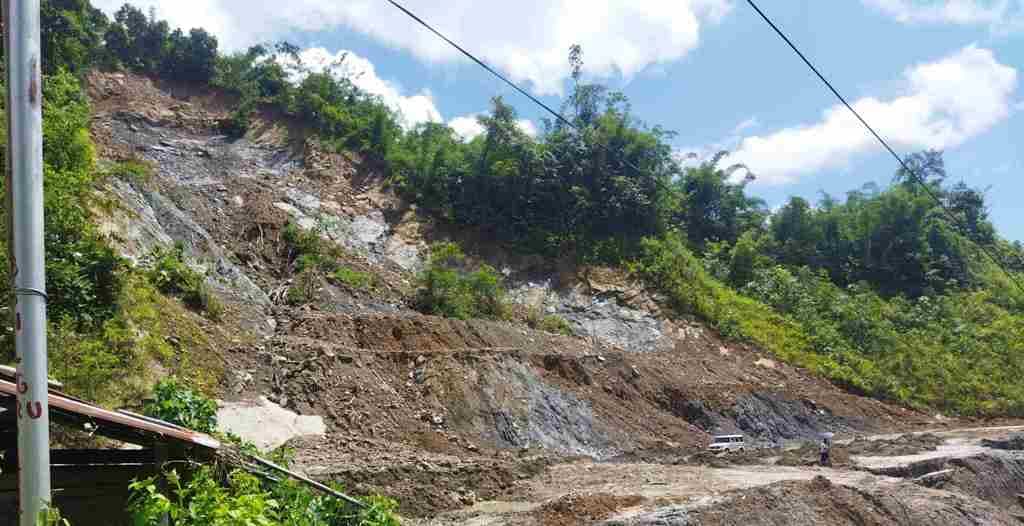
DIMAPUR — A study by Nagaland University (NU) has called for a scientific approach using geospatial technology to mitigate the impacts of soil erosion in the northeastern hilly region of India, emphasising that such an approach not only helps control erosion but also supports long-term environmental sustainability, improves agricultural productivity and enhances water availability.
An update from the university stated that soil erosion is emerging as a serious environmental and ecological issue in the eastern Himalayan region, affecting agricultural productivity, water resources and overall ecological balance. It added that the problem is further aggravated by factors such as steep slopes, high rainfall, deforestation, unscientific land use practices and increasing human interventions including shifting cultivation, mining and infrastructure development.
The study focuses on the Siji watershed, a part of the Gai River Basin in Assam, which represents one of the most erosion-prone regions in the northeast. Using the revised universal soil loss equation (RUSLE) integrated with GIS-based modelling, the research assesses soil erosion and sediment transport by analysing key factors such as rainfall intensity, soil characteristics, slope, land use patterns and conservation practices.
Also read: Akehta Sangtamlarü Thsingmüjang condemns alleged murder attempt
The research paper was co-authored by Prof. MS Rawat, Department of Geography, School of Sciences, Nagaland University, along with research scholar Tulumoni Gogoi and Dr. Pradeep Kumar Rawat, consultant professor at Asian International University, Manipur.
Speaking on the significance of the study, Prof. Jagadish K Patnaik, vice chancellor of Nagaland University, said, “The recent study on GIS-based solutions for soil erosion marks a significant step towards addressing one of the most pressing environmental challenges in northeast India. Integrating geospatial technology can effectively guide conservation efforts, ensuring reduced soil degradation while promoting sustainable land use practices. Such research contributes to long-term environmental sustainability, strengthens agricultural productivity, and improves water resource management in the region.”
The findings show that areas with dense forest cover and gentle slopes experience minimal erosion, while regions with steep slopes, croplands, barren land and human disturbances such as road construction and mining are at significantly higher risk. In some cases, erosion rates were found to be extremely high, indicating serious threats to land stability and local ecosystems.
Elaborating on how the study proposes addressing those challenges, Prof. MS Rawat said, “We recommend an integrated watershed management (IWM) approach. This includes developing sustainable land use plans and implementing mechanical and biological measures such as contouring, terracing and vegetation cover to reduce soil loss and improve water management.”
It mentioned that the watershed-based modelling approach allows for a more detailed and location-specific understanding of how different natural and human factors interact within a defined drainage area. By integrating spatial data layers, the model identifies erosion hotspots and quantifies soil loss across micro-level units within the watershed. This will make it possible to prioritise high-risk zones and design targeted interventions rather than applying uniform solutions across the region.
Researchers emphasised that such an approach not only helps control erosion but also supports long-term environmental sustainability, improves agricultural productivity and enhances water availability. They maintained that the model could also guide policymakers and planners in making informed decisions about land use and conservation.
The study suggested that the proposed framework could be adapted for other regions with similar geographical and environmental conditions, both within India and globally.
The research further highlighted the need for future work, including the development of flood prediction models and better monitoring systems in the region. Given the increasing impact of human activities and climate-related factors, it recommended that timely intervention is crucial to prevent further environmental degradation.