


Nagaland University inaugurates a two-day international seminar on ecotourism, livelihood, and development in Northeast India
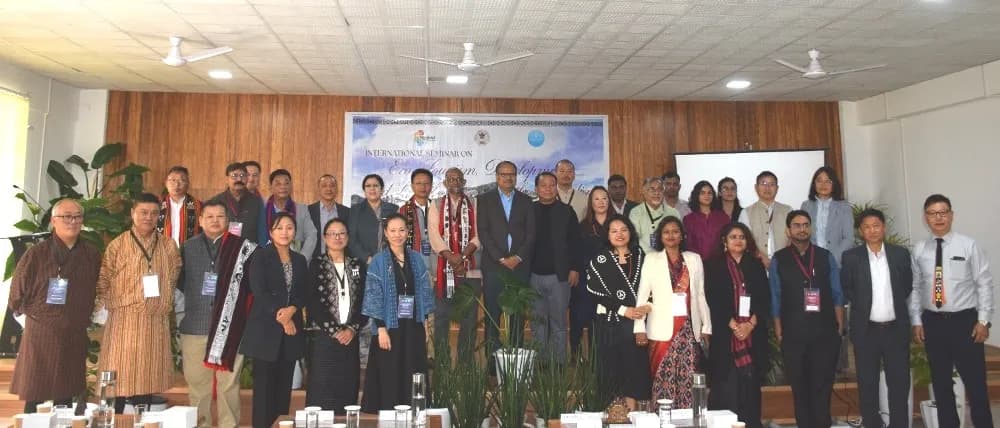
DIMAPUR — Nagaland University inaugurated a two-day international seminar on “Ecotourism, Livelihood and Development in Northeast India” in Lumami, Zunheboto, on Thursday.
Jointly organised by the departments of Sociology and Geography, Nagaland University, the seminar is aimed at discussing the role of tourism in promoting sustainable livelihoods and development in the Northeast.
The keynote address was delivered by Ashish Kothari, an environmentalist working on issues relating to development, biodiversity, and environmental policy, according to a press release.
He called for a rethink of conventional development models, pointing out that economic growth often comes at the cost of environmental damage and the displacement of local communities.
Drawing on examples of community-led initiatives, including organic farming, conservation, and alternative education, he highlighted the importance of traditional knowledge, local decision-making, and self-reliance. He added that ecotourism should support existing livelihoods rather than become the only source of income for local communities.
Also read: PACES training programme launched in Dimapur
Kovi Meyase, Commissioner and Secretary, Department of Tourism, highlighted the state’s potential for ecotourism, cultural tourism, and community-based tourism.
He highlighted practical initiatives such as promoting homestays, encouraging local entrepreneurship, improving infrastructure, and reducing plastic waste. He also stressed the importance of involving local communities in tourism activities so that they can directly benefit from the opportunities created.
Addressing the gathering, J K Patnaik, Vice-Chancellor of Nagaland University, spoke about the challenges of pursuing development in the Northeast while protecting its natural environment and indigenous livelihoods.
He raised concerns about the commercialisation of ecotourism and questioned whether tourism benefits reach local communities or largely go to commercial operators. He stressed the importance of preserving traditional cultures and ensuring that development policies reflect the needs of local people.
Earlier, the welcome address was delivered by Toshimenla Jamir, Co-convenor and Head of the Department of Sociology. Dr. Sandeep Gupta, Co-convenor, introduced the seminar and outlined its objectives, highlighting the need to look beyond the economic benefits of tourism and consider its impact on local communities, natural resources, and cultural practices.
The two-day seminar will continue on November 20 with further discussions and academic presentations.