


Nagaland reports tuberculosis incidence at 160 per lakh, with over 200 villages TB-free, as officials stress continued community-led efforts to eliminate the disease.
KOHIMA — Tuberculosis incidence in Nagaland has declined to about 160 cases per lakh population, with over 200 villages declared TB-free, even as health officials on Tuesday called for sustained, community-led efforts to eliminate the disease.
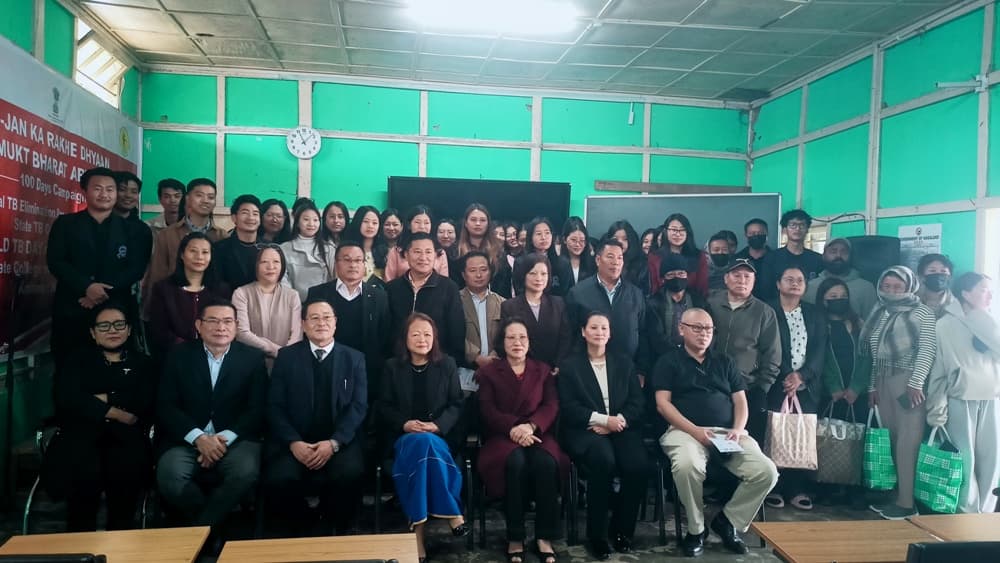
The update was shared during the World TB Day 2026 programme held at the State College of Teacher Education (SCTE), Kohima, where officials highlighted both progress made and the challenges that remain in achieving TB elimination targets.
State TB Officer (NTEP) Dr. Akum Jamir said the programme aims to reduce TB incidence from 237 cases per lakh population in 2015 to 44 by 2030 under the UN Sustainable Development Goals. He noted that India currently records around 187 cases per lakh, while Nagaland has brought its incidence down to about 160, with some districts nearing 70.
He also informed that over 200 villages in the state have been declared TB-free, attributing the achievement to community participation, ASHA workers and local support systems. He emphasised that TB remains a notifiable disease and said most districts have recorded treatment success rates of over 90%.
Highlighting the importance of adherence to treatment, Dr. Jamir said TB treatment lasts at least six months and cautioned that incomplete treatment can lead to drug resistance. He also urged people to reduce stigma and called for greater awareness, patient support and adherence to treatment.
Also read: Nagaland wins award at World Tuberculosis Day 2025 Summit
Mission Director of National Health Mission, Dr. Keveduyi Theyo, in his address, stressed that early detection and timely, quality treatment are critical to ending TB. He said tuberculosis is an infectious disease caused by Mycobacterium tuberculosis and spreads through respiratory droplets, adding that a single untreated patient can infect 10 or more people in a year.
He said the National TB Elimination Programme (NTEP) focuses on four key strategies—detect, treat, prevent and build—and that diagnostic facilities have been expanded across the state, including CBNAAT and Truenat machines in almost every health block, along with ultra-portable handheld X-ray machines in all districts.
WATCH MORE:
Dr. Theyo added that free treatment is available for both drug-sensitive and drug-resistant TB cases, along with nutritional assistance provided under Nikshay Poshan Yojana.
Referring to the World TB Day 2026 theme, “Yes! We Can End TB: Led by countries, powered by people,” he said the focus is on strengthening community participation under the TB Mukt Bharat Abhiyaan. He noted that India has recorded a 21% decline in TB incidence since 2015, more than double the global average, and has established over 9,300 rapid molecular testing laboratories.
He also highlighted the rollout of a 100-day intensified campaign aimed at identifying “missing” TB cases, reducing mortality and preventing new infections.
Calling for continued efforts, Dr. Theyo said, “As we reach the target years for our national mission, our work is not done. We must identify cases early through advanced screening technologies, support patients without stigma, and ensure completion of treatment to prevent drug-resistant TB.”
In a thematic address, Dr. Swuduvelu underscored the need for stronger community participation alongside national leadership, stating that while progress has been made, TB continues to remain one of the deadliest infectious diseases globally.
She highlighted priorities such as strengthening health systems, adopting a multisectoral approach, increasing investments and ensuring people-centred, stigma-free TB care.
The programme also featured a testimonial by a TB survivor and distribution of food baskets to patients under Nikshay Mitras. The event was chaired by State IEC Officer Thungchanbeni M Humtsoe, with a welcome address by Dr. Runi Nakro, Vice-Principal, SCTE, and vote of thanks by Vilekho Bio, Finance Consultant, NTEP.