


State-level workshop in Kohima highlights animal welfare and veterinary services initiatives in Nagaland.
Share


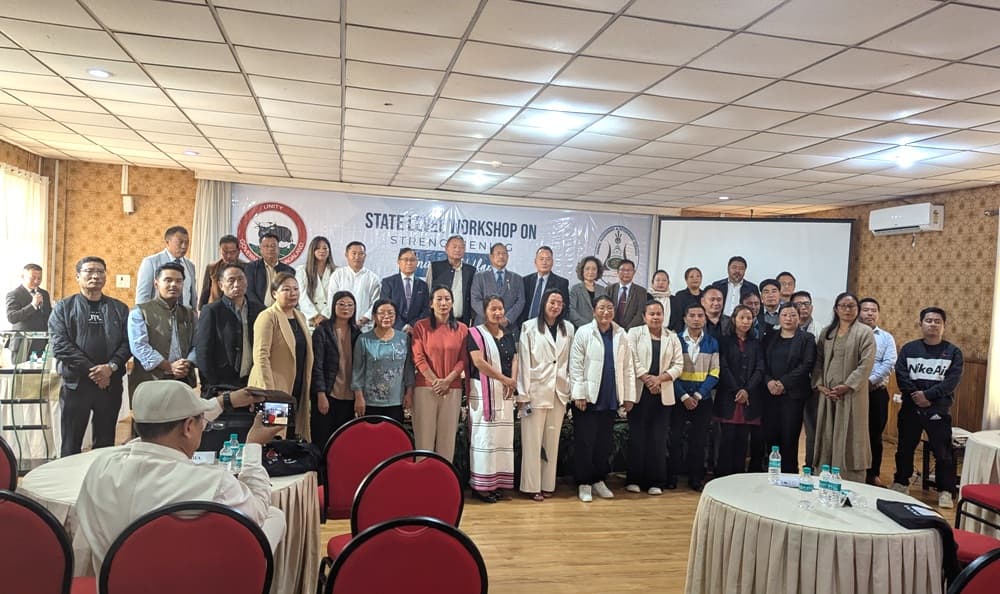
KOHIMA — A state level workshop on strengthening animal welfare was held in Kohima on Thursday.
Addressing the inaugural session, Advisor of Animal Husbandry & Veterinary Services, Kazheto Kinimi said that every citizen must understand that animal welfare is a shared responsibility.
Proper feeding, shelter, vaccination, and humane treatment of animals must become a part of daily practice, the advisor emphasised.
Kinimi called for working together to create a future where animals are treated with dignity, farmers prosper through livestock farming, and Nagaland becomes a model for responsible and sustainable animal welfare.
He said that in Nagaland, livestock farming and animal husbandry have long been an integral part of our culture and economy.
Many rural households depend on livestock such as pigs, poultry, cattle, and goats for income, nutrition, and employment.
Therefore, ensuring proper care and welfare of animals is not only a moral responsibility but also an economic necessity for the development of our state, he said.
Also read: Nagaland faces 55.44% shortfall in animal husbandry products
The advisor outlined the government’s initiatives undertaken to strengthen veterinary and animal welfare services.
He informed that new veterinary hospitals and offices are being constructed in different districts to provide better medical care for livestock and pets.
These facilities will also help farmers receive timely treatment, vaccination, and health services for their animals.
Mobile veterinary units have been introduced, bringing services directly to farmers in remote and rural areas.
The focus is also on strengthening animal welfare through the State Animal Welfare Advisory Board, Nagaland (SAWAB-N), a statutory body of the Government of India established per the direction of the Supreme Court of India, which mandates that all states constitute State Animal Welfare Advisory Boards and District Societies for the Prevention of Cruelty to Animals (SPCAs).
Accordingly, the Government of Nagaland established SAWAB-N, which operates under the Animal Welfare Board of India (AWBI), to promote animal welfare and protect animal rights from unnecessary pain and suffering.
Kinimi further encouraged farmers and youth to participate in livestock and dairy farming.
Advisor of Urban Development and Municipal Affairs, Zhaleo Rio, encouraged the ULBs to work in close coordination with the Veterinary department for animal related initiatives.
He also directed the department to conduct separate workshop on animal welfare, livestock production and regulating slaughtering houses, meat selling etc.
Zhaleo commended the Mokokchung Municipal Council for setting an example by maintaining its own revenue generation and urged rest of ULBs to take example from it.
He further encouraged the ULBs to set priorities and focus on building amenities instead of ‘fighting over some benefits’.
Deputy Chairperson of MMC, Lanuakum, emphasised on the role of municipal and town councils in promoting animal welfare, stating that animal welfare is not only a legal obligation but a reflection of a humane and progressive society.
He noted the Nagaland Municipal Act 2023, particularly Chapter VI, clearly entrusts municipalities and town councils with the responsibility of preventing cruelty to animals.
This mandate is further strengthened by the Prevention of Cruelty to Animals Act, 1960, a landmark legislation enacted to prevent infliction of unnecessary pain and suffering on animals and places responsibility on owners and caretakers to ensure the well-being of animals.
With such responsibilities, he said the ULBs must act with clear purpose and direction, he said.
Organising secretary of the workshop, Dr. Ilang, cited the latest data of the Department of Fisheries, Animal Husbandry & Dairying, Government of India, indicating gain in the livestock sector and contributions made in the national Gross Value Added for the last 10 years from 4% in 2014-15 to 5.5% in 2024-25.
Other highlights included technical sessions on Prevention of cruelty to Animals Act, 1960, and roles and challenges in promoting animal welfare in Nagaland.