


Nagaland processes only 67 of 265 tonnes of daily solid waste, leaving a major treatment gap, according to a report submitted to the National Green Tribunal.
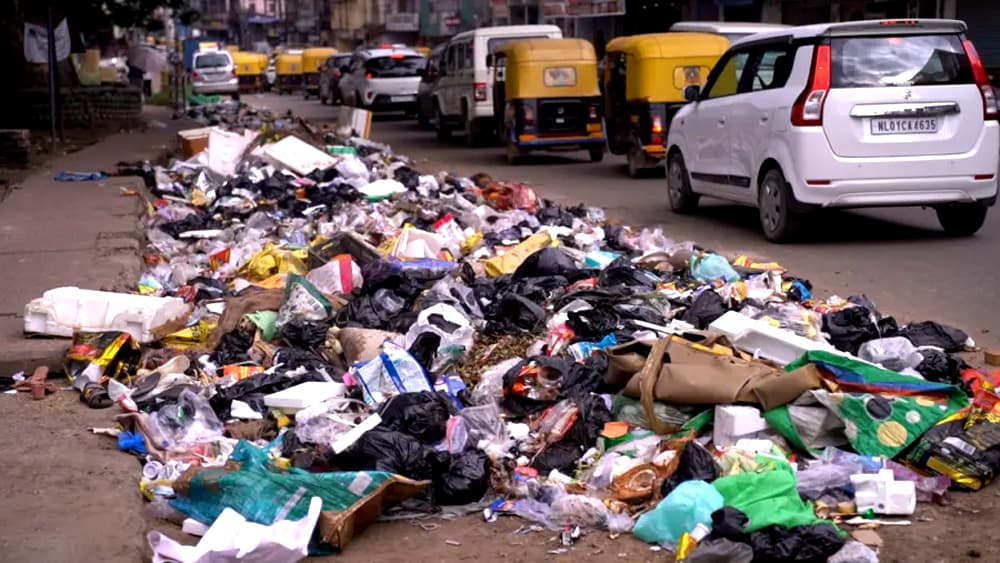
KOHIMA — Nagaland generates 265.39 tonnes of solid waste per day (TPD), of which only 67.13 TPD is currently being processed, leaving a treatment gap of 198.26 TPD, according to the state's latest Action Taken Report on solid and liquid waste management submitted to the National Green Tribunal (NGT).
The report was submitted in compliance with the tribunal's order dated November 24, 2022, in a case pending since 2018.
It stated that the six-month progress report covering the period from July to December 2025 was submitted through the chief secretary's office via email on March 2, 2026.
To bridge the existing gap in solid waste management, the state informed the tribunal that a comprehensive action plan has been prepared for all 39 urban local bodies (ULBs), proposing a total waste-processing capacity of 306 TPD along with an implementation timeline.
Also read: Nagaland tightens waste management enforcement after Supreme Court directive
Nagaland Home department issues guidelines on solid waste management
The report added that a detailed project report (DPR) has been prepared and presented before the state-level technical committee on February 10, 2026, and is awaiting approval from the National Advisory and Review Committee (NARC), the competent authority under Swachh Bharat Mission (Urban).
According to the report, door-to-door waste collection and segregation currently covers 45.61% of households across the 39 ULBs, while 49% of the solid waste generated is being segregated.
The state has also identified 12 legacy solid waste dumpsites—sites that have existed for more than 10 years under SBM-U guidelines.
The total quantity of legacy waste stands at 408,946 tonnes, with remediation work currently underway. Most of the identified sites are expected to be remediated by October 2026.
Liquid waste management
The report also stated that Nagaland generates 43.59639 million litres of sewage per day (MLD).
In compliance with the NGT's directions, an action plan has been prepared for all 39 ULBs under Swachh Bharat Mission (Urban) to strengthen sewage management through Faecal Sludge Treatment Plants (FSTPs), Sewage Treatment Plants (STPs), interception and diversion (I&D) systems, and standalone I&D projects.
The proposed plan aims to create a total treatment capacity of 50.058 MLD at an estimated cost of INR 224.60 lakh.
In addition, an action plan for establishing FSTPs with a combined capacity of 210 KLD in 13 ULBs at an estimated cost of INR 5,967.69 lakh is being implemented by the Public Health Engineering department under the National River Conservation Plan of the Ministry of Jal Shakti.
The first phase is targeted for completion by November 30, 2026.
The report added that the department is also revising Phase II of the FSTP project for submission and approval.
Nagaland currently has one sewage treatment plant, located in Dimapur district, with a treatment capacity of 25.43 MLD against a sewage generation of 17.4 MLD in the urban local body.
However, the report stated that the plant is presently non-functional after sustaining damage during the 2025 monsoon, although its performance had previously remained within prescribed standards.
It also informed the tribunal about the state's approach towards improving household connectivity to community sewage treatment facilities.
The NGT had sought details regarding the creation of a ring-fenced account as well as the utilisation and performance of Aerobio bacteria used for improving septic tank functioning in the state.
In its Action Taken Report, the state informed that the Finance department has approved the opening of the ring-fenced account and that operational modalities are currently being finalised.
Regarding the Aerobio bacteria initiative, the report stated that it has been implemented across all 39 ULBs, covering 1,21,288 households and approximately 5,89,653 people, with 33,333 units distributed.
The state informed that it is working towards ensuring compliance with the Solid Waste Management Rules, 2016, across all 39 ULBs while implementing measures for effective solid and liquid waste management in urban areas and model villages.