


Nagaland launched an initiative documenting disability terminology to promote inclusive, respectful language and challenge stigma across diverse communities
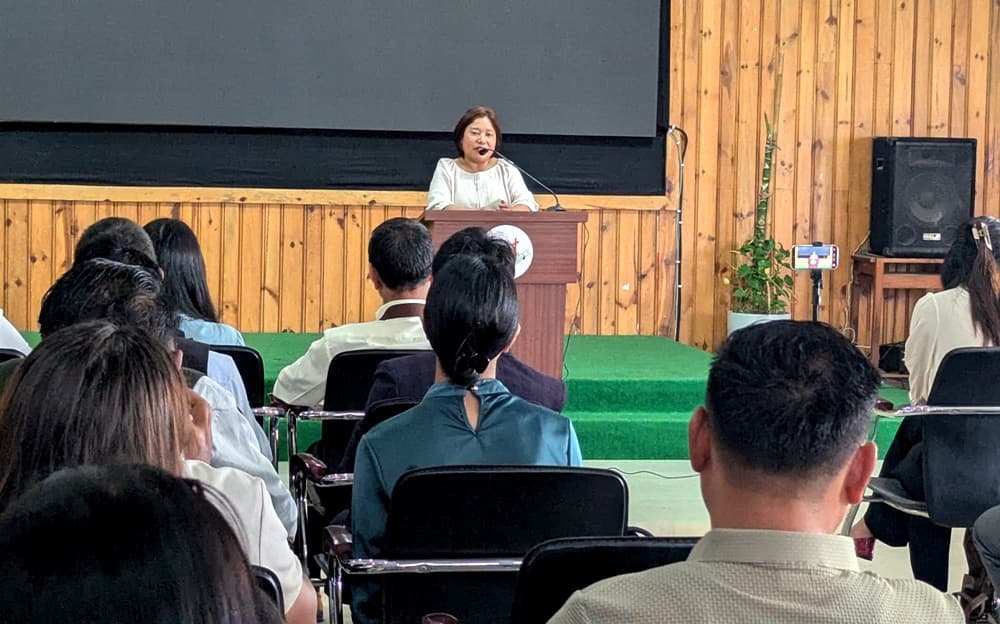
KOHIMA — In a first-of-its-kind initiative aimed at eliminating stigma and promoting inclusion, Nagaland on Thursday launched an exercise to document how different Naga and non-Naga communities refer to persons with disabilities (PwDs), with the goal of encouraging respectful, rights-based terminology across society.
The consultation workshop, organised by the Office of the State Commissioner for Persons with Disabilities (SCPD) in collaboration with Prodigals' Home, Dimapur, brought together disability rights advocates, church leaders, literature boards and representatives of various communities at the Nagaland Baptist Church Council (NBCC) Platinum Hall in Kohima.
The initiative seeks to document terms used for 21 categories of disabilities and examine how language influences public attitudes, inclusion and the dignity of persons with disabilities.
Delivering the keynote address, State Commissioner for Persons with Disabilities Tongpang L Jamir said using appropriate terminology reflects respect for the dignity, rights and individuality of PwDs.
"It helps prevent the use of stigmatising, discriminatory or offensive language and promotes inclusion, equality and non-discrimination in society," he said, adding that people should be recognised for their abilities and potential rather than being defined by their disabilities.
Also read: Nagaland: NSHRC Chairman Jamir urges legal reform and societal shift to combat stalking
Director of Prodigals' Home K Ela said the project was conceived jointly by the SCPD office and the organisation in 2023 but could not be implemented earlier due to unavoidable circumstances. She expressed hope that the initiative would continue as a sustained effort.
Former State Commissioner for Persons with Disabilities Diethono Nakhro said language plays a critical role in shaping society's perception of disability.
Referring to the government of India's introduction of the term Divyangjan in 2015, she said the word, though intended to convey dignity, was criticised by disability rights advocates for reinforcing a charity-based approach rather than recognising PwDs as equal citizens with rights.
"In many ways, disability is still viewed through the lens of pity, charity, shame or dependence rather than dignity, rights and equal participation," she said.
Nakhro said documenting disability-related terminology across Nagaland's diverse tribes and communities was not merely about recording words but understanding the beliefs and perceptions they carry.
"This exercise gives us an opportunity to reflect on whether our language promotes inclusion or unintentionally reinforces outdated attitudes," she said, adding that real change would come when PwDs are recognised as equal citizens with rights, responsibilities and leadership potential.
NBCC General Secretary Rev. Mar Pongener said language reflects culture and shapes attitudes.
Referring to Genesis 1:27, he said using derogatory terms for persons with disabilities contradicts the Biblical teaching that every individual is created in the image of God. He urged people to adopt person-first language, citing "a person with visual impairment" instead of "the blind man" as an example.
Nagaland State Disability Forum (NSDF) president Fatima Kera shared her personal experiences of discrimination, recalling that people often identified her by her disability rather than by her name.
She said she was mocked as a child and that such experiences affected her confidence and forced her to withdraw socially.
Kera also said terms such as "differently abled" or "special child" made her uncomfortable because they created a false sense of distinction instead of recognising persons with disabilities as ordinary members of society.
Having once viewed her disability as a source of shame, she said it had now become her strength and confidence.
She appealed to society to address persons with disabilities by their names rather than by their disabilities and to adopt more respectful and inclusive language.
The workshop concluded with a business session involving literature boards representing Naga and non-Naga communities to discuss documenting and standardising disability-related terminology across Nagaland.
Reported by Alingla T Sangtam and Kekhriesenuo Kire, Mass Communication students of Oriental College, Kohima, who are currently interning with Eastern Mirror.