


Nagaland Medical Council visited Zunheboto to review healthcare services, compliance and medical regulation measures.
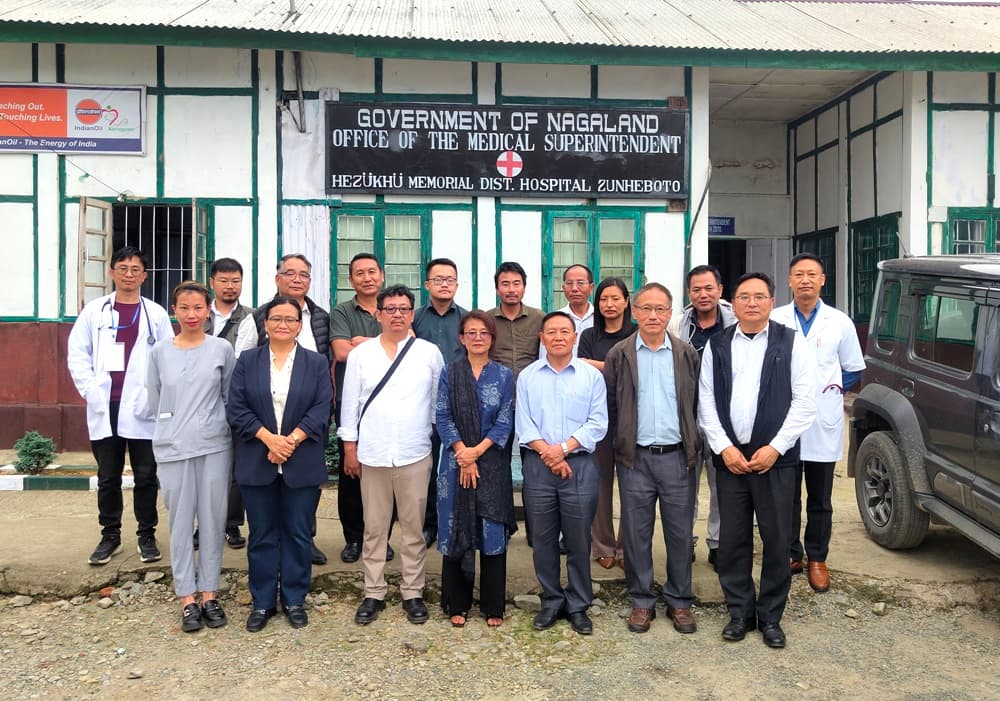
DIMAPUR — The Nagaland Medical Council (NMC) conducted an official visit to Zunheboto on June 4 as part of its ongoing efforts to strengthen healthcare governance, professional accountability, and regulatory compliance across the state.
The NMC delegation was led by president Dr. Puse Liegise and included executive members Dr. Ahokhe Shikhu, Dr. Vikeyie Losu and Dr. Kezhalezo Angami, along with registrar Dr. Kevilhulie Meyase.
During the visit, the team visited the Office of the Chief Medical Officer (CMO), inspected the ongoing construction of the new district hospital, and interacted with members of the medical fraternity at District Hospital, Zunheboto, an update stated.
The delegation was accompanied by Chief Medical Officer, Zunheboto, Dr. Antoly Suu, and Medical Superintendent Dr. Kiholi. The council also held a brief meeting with Deputy Commissioner of Zunheboto, Dharam Raj.
Addressing doctors during the interaction, the council reiterated the mandatory requirement for registration of all allopathic doctors practising in both government and private sectors. It emphasised that renewal of registration every five years is a statutory requirement and essential to avoid legal and service-related complications.
Read more local news: NFHS-6: Tobacco and alcohol use on the rise in Nagaland
Dr. Liegise briefed participants on the functions and responsibilities of the council and stressed the importance of adhering to ethical standards and regulatory provisions governing medical practice. He also highlighted the need for compliance with the Nagaland Health Care Establishments Act and the importance of maintaining professional integrity in healthcare delivery.
The council deliberated on the conduct of medical camps and clarified that specialist doctors from outside the state must obtain temporary registration with the NMC and secure prior approval from the district health authority before conducting consultations, procedures or outreach services in Nagaland.
Members were also briefed on provisions of the Nagaland Health Care Establishments Act and the need to bring all healthcare facilities under its regulatory framework. Discussions further focused on medical education, ethical conduct, Continuing Medical Education (CME) and Continuing Professional Development Activities (CPDA) to enhance the competency and professionalism of healthcare providers.
The interaction also covered measures to strengthen basic healthcare services and ensure optimal utilisation of available hospital infrastructure, machinery and equipment for improved patient care.
The council emphasised that medical certificates, fitness certificates and other statutory documents should only be issued by duly registered medical practitioners. Medical professionals were urged to uphold the highest standards of integrity, professionalism and ethical conduct.
Issues relating to land ownership of healthcare establishments and matters concerning Foreign Medical Graduates (FMGs), including registration procedures and internship requirements, were also discussed.
In addition, updates were shared on the Healthcare Professional Registry (HPR) and the Ayushman Bharat Digital Mission (ABDM) Registry. Medical practitioners were encouraged to complete their registrations and regularly update their professional records to facilitate efficient healthcare administration and digital health integration.
The visit concluded with the council reaffirming its commitment to strengthening healthcare regulation, promoting ethical medical practice and supporting quality healthcare delivery across Nagaland.