


Media professionals in Nagaland were urged to protect children’s identities by avoiding identifying details, photographs and sensational reporting in cases involving abuse or children in conflict with the law.
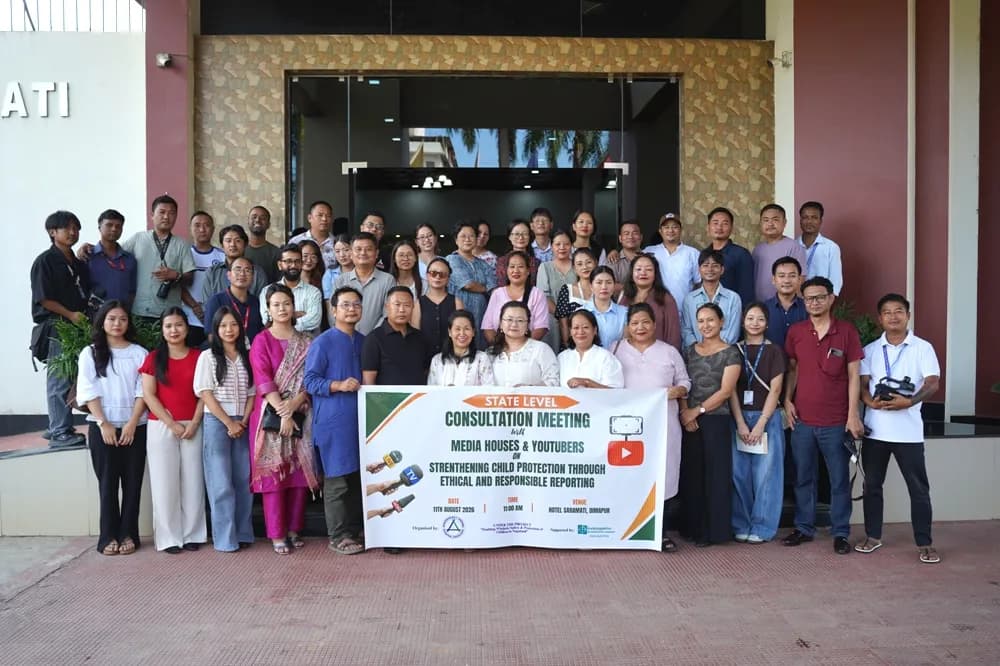
DIMAPUR — Associate Editor of The Morung Express, Dr. Moalemba Jamir, has cautioned media professionals against publishing seemingly harmless details that could indirectly reveal the identity of children involved in cases of abuse or conflict with the law.
Jamir was speaking at a state-level consultation with media houses and YouTubers on strengthening child protection through ethical and responsible reporting, organised by Prodigals’ Home at Hotel Saramti, Dimapur, on Tuesday.
Addressing the session on “Protecting Children and Identity: From Law to Newsroom Practice,” Jamir said details such as a child’s locality, school, family, neighbourhood and photographs could lead to identification and expose the child to further stigma and trauma.
He noted that statements issued by civil society groups, student bodies and tribal organisations expressing solidarity, condemnation or demands for swift justice could sometimes unintentionally cross legal boundaries by including information that identifies a child.
“Press statements often contain details such as the accused’s name, locality, school or neighbourhood,” he said, adding that such information, when published without adequate scrutiny, could indirectly identify a child victim or a child in conflict with the law.
Jamir also highlighted the rapid circulation of information through social media, noting that details often reach families, friends and community groups before journalists and are quickly shared through Facebook, Instagram and WhatsApp.
Once circulated online, such information can be difficult to remove completely, he said.
He urged media organisations not to reproduce press releases without first assessing whether the information could lead to a child’s identification. The responsibility, he said, extends beyond traditional media to digital platforms and independent content creators.
Referring to safeguards under the POCSO Act, 2012, and the Juvenile Justice Act, 2015, Jamir stressed that protecting a child’s privacy and dignity requires more than withholding the child’s name.
Other identifying details, photographs, videos, school uniforms and surroundings can also reveal identity.
He said journalists and editors must assess all information before publication, stressing that consent from parents or organisations cannot override the media’s responsibility to protect the child’s best interests.
Jamir also called for restraint in headlines and reporting, warning against sensationalism and unnecessary details that could cause further trauma or secondary victimisation.
He said blurring a child’s face may not be sufficient if the location, school or other surroundings remain identifiable.
He suggested three checks for newsrooms before publishing child-related reports: whether family members or acquaintances could identify the child; whether the locality or community could reveal the identity; and whether online searches could lead to identification.
Jamir further noted that families, village authorities and community groups may sometimes seek private settlements or request that cases not be reported.
Journalists, however, must remain mindful of their legal obligations while ensuring sensitive reporting does not interfere with ongoing investigations.
He also highlighted the gap between official crime statistics and the actual incidence of violence against children, noting that stigma, social pressure and informal settlements may prevent cases from being reported, particularly when abuse occurs within families or communities.
On child labour and informal guardianship, Jamir cautioned that children brought under the promise of education or care may instead face exploitation, stressing the need for greater awareness of child protection and labour laws.
He said journalists have an important role in exposing abuse and ensuring accountability, but reporting should not further harm or stigmatise victims.
Sharing field experiences, Eastern Mirror sub-editor Prasanjit Dutta said gathering information on cases involving children in conflict with the law or underage victims remains difficult outside urban centres such as Dimapur and Kohima.
Fear and stigma often prevent cases from coming to light, while limited access to district child protection offices and updated district-wise data pose additional challenges.
Dutta said experienced journalists may be familiar with legal safeguards, but newcomers require stronger guidance from editors and desk staff.
He also pointed to condemnation statements containing details that could indirectly identify children and instances where families and church representatives approached journalists seeking to withhold reports following private settlements.
Meanwhile, Nagaland TV senior reporter Musaraf Ali said a major challenge in reporting child abuse cases is the assumption that anyone carrying a microphone or camera is a journalist, despite possible gaps in knowledge of child protection laws and reporting protocols.
Ali noted that child abuse can be sexual, physical or mental, with perpetrators often being people close to the victims.
While the POCSO Act requires journalists to protect children’s identities, such identities are sometimes exposed by families, community groups and social media before information reaches the media.
He highlighted pressure from families, influential individuals and tribal or clan groups to suppress reports, stressing that the welfare of the child should take precedence over social stigma and reputation.
The consultation concluded with an open-house discussion, followed by a vote of thanks from Prodigals’ Home Director K Ela.