


The Nagaland Government Teachers’ Association began a peaceful sit-in in Kohima demanding their salary component be shifted to the State Non-Development Expenditure budget.
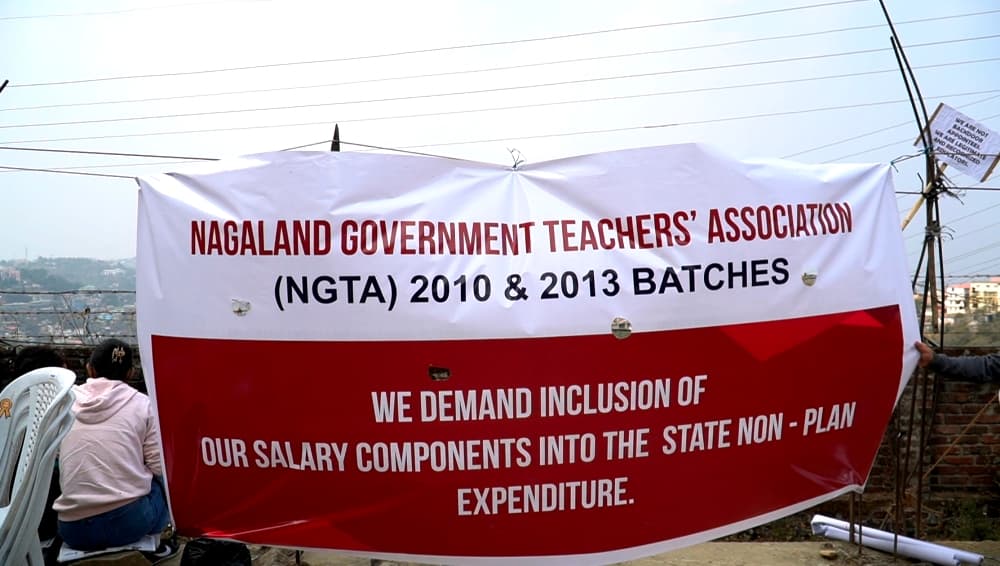
KOHIMA — The Nagaland Government Teachers’ Association (NGTA) of 2010 and 2013 batches on Thursday began a peaceful sit-in outside the Directorate of School Education in Kohima, demanding inclusion of their salary component under the State Non-Development Expenditure.
The peaceful protest started in the backdrop of a two-day pen-down strike held on February 24 and 25 after the expiry of a seven-day ultimatum submitted to the principal director seeking resolution of their grievances.
Around 1,500 teachers from across the state turned up on the first day of the sit-in. The association represents a total of 2,293 government teachers.
NGTA Dimapur district unit president Alemkala told media persons that the teachers were appointed in 2010 and 2013 and were mainstreamed into the state cadre in September 2022.
Related: Salary row: Nagaland Government Teachers’ Association to begin democratic protest from February 26
Salary head decision rests with state, not employees, says Nagaland School Education department
She said that although they were categorised under Sarva Shiksha Abhiyan (SSA) and Rashtriya Madhyamik Shiksha Abhiyan (RMSA) by the department, they had been regular appointees since the time of advertisement and appointment.
“For this reason, the teachers have been fighting for over 13 years to be treated on par with other state cadre employees. Our salary component is funded from the CSS, and we are demanding that it be shifted to the state non-development budget,” she said.
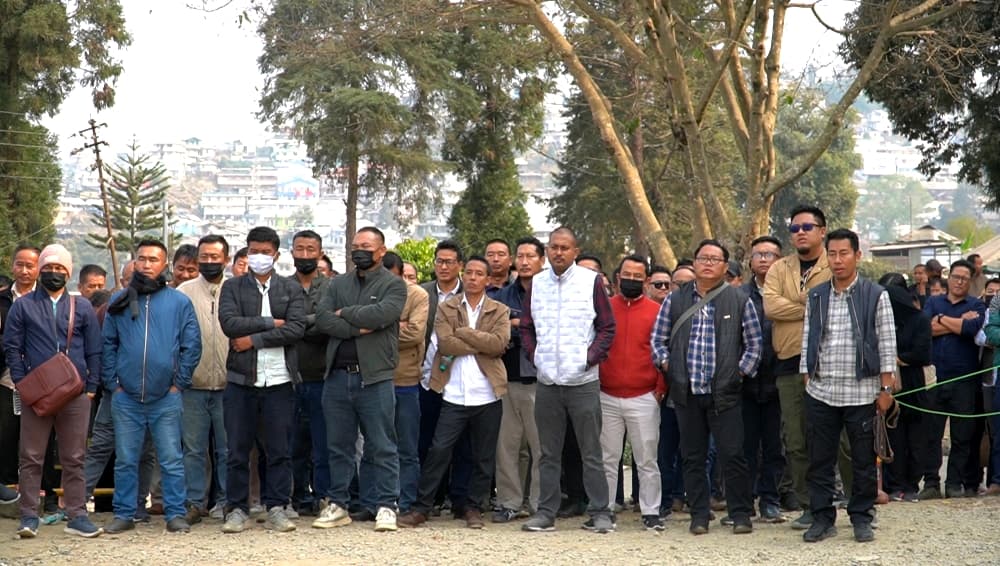
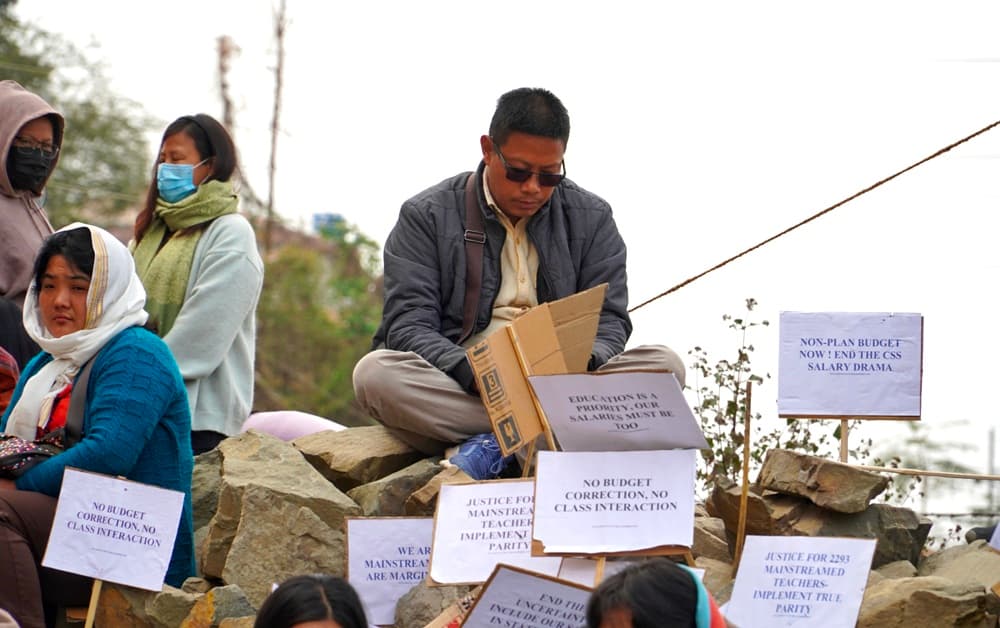
She added that the association had submitted multiple representations and an ultimatum, which expired on February 23. The pen-down strike was the first phase of the agitation, followed by Thursday’s peaceful sit-in.
She expressed hope that the department and the government would address the issue at the earliest.
NGTA (2010 and 2013 batches) president Peihau said that in an October 2018 Cabinet meeting, the two batches were accepted “in principle” as state education cadre.
WATCH MORE:
Accordingly, they were required to fulfil certain criteria, which were completed by April 2022, after which they were inducted into the state education cadre.
“Now it is the responsibility of the government to honour the mainstreaming order by shifting our salary component from CSS funding to the non-development fund,” he said.
He stated that the association would continue its peaceful agitation until the government complies with their demand.
Responding to the department’s clarification that it is not within the prerogative of state employees to determine the budget head from which salaries are drawn, Peihau said that since they are state cadre employees, they should be accorded the same treatment.
He cited that salaries of state cadre employees across departments are borne under the state non-development plan.