


The Nagaland Pradesh Congress Committee has accused the Bharatiya Janata Party of linking women’s reservation to delimitation, alleging political motives ahead of elections.
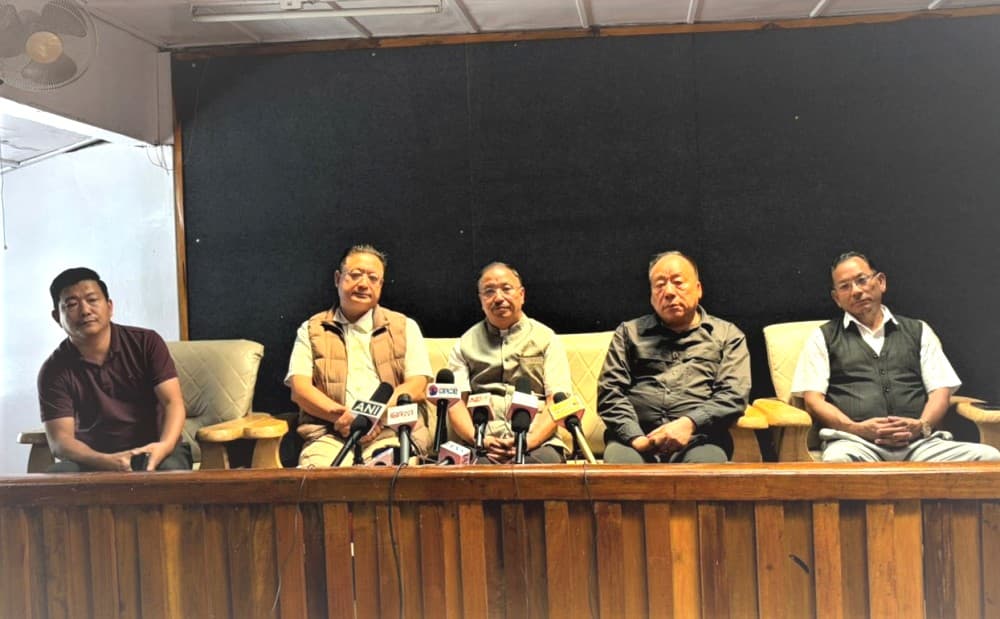
KOHIMA — The Nagaland Pradesh Congress Committee (NPCC) on Tuesday alleged that the BJP-led government is deliberately linking implementation of women’s reservation with delimitation to serve its political interests, and questioned the Centre’s intent to roll out the provision within a defined timeline.
Addressing a press conference at Congress Bhavan in Kohima, NPCC president S Supongmeren Jamir said the constitutional framework for women’s reservation is already in place, but its implementation has been tied to the completion of census and delimitation, effectively delaying the process.
He alleged that the move reflects a political strategy ahead of the 2029 elections, claiming the BJP is attempting to shape future parliamentary representation in its favour. Referring to the Nari Shakti Vandana Act, 2023, he said provisions already exist under Articles 239AA, 330A and 332A, but their implementation has been deferred pending fresh census data.
Jamir, who is also the Lok Sabha MP from Nagaland, said Parliament held discussions on April 16 and the 17th covering women’s reservation, delimitation and adjustments in legislative bodies, and alleged that the Centre’s approach indicates a lack of urgency in implementing the quota.
He further claimed that attempts were made to increase Lok Sabha seats from 816 to 850 in a manner that would favour the ruling party, but the move did not materialise due to the requirement of a two-thirds majority.
Also read: Women's Reservation Act: Nagaland BJP Mahila Morcha organises two-wheeler rally
Stating that the INDIA bloc has raised the issue, Jamir said the opposition has demanded that if the government is serious, women’s reservation should be implemented by 2029. He also questioned whether the BJP is willing to appoint women to key positions such as Prime Minister or Speaker, as done during previous Congress regimes.
On census delays, he pointed out that the 2011 census faced litigation issues, the 2021 census was delayed due to the pandemic, and the next census is still in process, suggesting that linking reservation to these processes will push implementation further.
Jamir also criticised the BJP Mahila Morcha for accusing Congress of opposing women’s reservation, alleging instead that the ruling party is using the issue for political mileage in states such as West Bengal and Tamil Nadu.
On delimitation, he said smaller states like Nagaland may gain one seat, but raised concerns about how 33 per cent reservation for women would be ensured. He stressed the need to safeguard representation for women in the state and noted that while Nagaland has implemented reservation in municipal bodies, similar representation is yet to be ensured in higher legislative institutions.
He further said northeastern states must approach delimitation cautiously in view of ongoing political negotiations and settlements in the region, and urged all parties not to politicise the issue.
Procedure, timing questioned
NPCC working president Khriedi Theunuo termed the special session a “politically miscalculated move”, stating that implementation of reservation cannot proceed without an updated census and delimitation exercise.
He said that although the Women’s Reservation Bill was passed in both Houses of Parliament in September 2023 and later received presidential assent, procedural steps remain pending.
Theunuo alleged that raising the issue now appears aimed at influencing elections in states where women voters play a significant role. He also clarified that Jamir had participated in the parliamentary debate, countering claims regarding his absence.
Working president C Apok Jamir said delays in notification of the law until April 2026 reflect a lack of seriousness on the part of the government. He further alleged that convening discussions during an ongoing election period indicates “malafide intent” to gain political advantage.
He also criticised statements by the Prime Minister on social media, accusing him of shifting blame onto the opposition, and said voters, particularly women, are aware of the political intent behind the move.